
The Best Fluffy Pancakes recipe you will fall in love with. Full of tips and tricks to help you make the best pancakes.

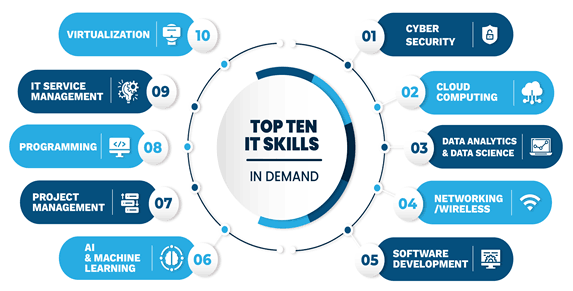
Ask ten people to define ‘Information Technology’ and you’ll likely get ten different answers — everything from ‘the guy who fixes computers’ to a full career field spanning cybersecurity, cloud infrastructure, and AI. It’s a term everyone uses confidently and almost no one can pin down precisely.. It covers everything from the person who fixes your office Wi-Fi to the engineer building AI infrastructure at a major tech company — a field broad enough to include dozens of genuinely different careers under one umbrella term.
This guide breaks down what Information Technology actually covers, how the field has shifted in 2026, and which roles and skills are worth focusing on if you’re considering a career which roles and skills are worth betting your time on — whether you’re eyeing a career switch or just trying to make sense of where the industry is actually headed, rather than where the headlines say it’s headed
What Is Information Technology?
Information Technology (IT) refers to the use of computers, networks, software, and systems to store, process, transmit, and manage data. In a business context, IT covers everything that keeps an organization’s digital infrastructure running — servers, networks, software applications, cybersecurity, technical support, and increasingly, the systems and pipelines that power AI tools.
It’s worth distinguishing IT from Computer Science, which is often confused with it. Computer Science focuses more on the theory and development of computing systems and software, while IT is generally more focused on applying, maintaining, and securing the technology that already exists within an organization — though the line between the two has blurred considerably as software development has become central to more IT roles.
The State of IT Hiring in 2026
The IT job market in 2026 looks different than it did just a few years ago. Overall tech hiring has grown more selective, with several major companies continuing to trim broader teams while simultaneously hiring aggressively for specialized, high-impact roles. In practice, this means IT professionals with narrow, in-demand specializations are seeing stronger opportunities than generalists, and employers are increasingly prioritizing skills and demonstrated ability over job titles alone.
AI has become the dominant force reshaping the field — AI-related skills now appear in the significant majority of IT job postings, and several of the fastest-growing tech roles this year are directly tied to AI implementation rather than traditional software development alone. This doesn’t mean traditional IT roles are disappearing, but it does mean AI fluency has become a near-universal expectation across the field, not just a specialization reserved for AI-focused teams.
Top IT Career Paths in 2026
1. Cybersecurity
Security roles remain one of the most persistent talent shortages in IT, with demand continuing to outpace the supply of qualified professionals. As organizations digitize more of their operations and AI systems introduce new categories of risk, cybersecurity has become one of the most stable, high-demand specializations in the entire field.
2. Cloud Computing and DevOps
As organizations continue migrating infrastructure to cloud platforms like AWS, Azure, and Google Cloud, professionals who can design, manage, and secure cloud environments remain in strong demand. DevOps roles, which blend software development and IT operations, continue to be central to how modern companies deploy and maintain software.
3. Data Engineering and Data Analytics
The explosion of data generated across digital systems has created strong demand for professionals who can build the pipelines, storage systems, and analytics infrastructure that both traditional business intelligence and AI systems depend on.
4. AI and Machine Learning Implementation
Rather than just AI research, the fastest-growing demand is for professionals who can implement, deploy, and maintain AI systems within existing business infrastructure — a more applied, IT-adjacent AI role than the research-focused positions often associated with the field.
5. Software and Application Development
Still one of the largest and most foundational IT career paths, with strong ongoing demand for developers who can build and maintain the applications businesses rely on, particularly those with skills that complement rather than compete with AI-assisted coding tools.
6. Systems Administration and IT Support
More traditional IT roles — systems administrators, help desk support, network technicians — remain essential, though this category has seen the most exposure to AI-driven efficiency and automation, making it increasingly important for professionals in these roles to develop adjacent skills in cloud, security, or automation.
Key IT Skills Worth Building in 2026
“Cloud platform proficiency — Hands-on comfort with AWS, Azure, or Google Cloud has quietly become table stakes rather than a specialty, showing up as a baseline expectation across job postings that have nothing to do with a dedicated ‘cloud’ title..
Cybersecurity fundamentals — Even outside dedicated security roles, a working understanding of security principles has become an expected baseline across most IT positions, not just a specialist skill.
AI and automation literacy — Understanding how to work alongside AI tools, evaluate their outputs, and integrate them into existing systems has become relevant across nearly every IT role, not just AI-focused positions.
Programming fundamentals — Even in non-development roles, basic scripting and programming knowledge (Python remains particularly widely used) increasingly separates candidates who can automate and troubleshoot from those who can’t.
Soft skills and business alignment — As AI handles more routine technical tasks, the ability to translate business needs into technical solutions and communicate clearly with non-technical stakeholders has become a more valuable differentiator than it was in previous years.
Do You Need a Degree to Work in IT?
A traditional computer science or IT degree remains a strong pathway into the field, but it’s no longer the only one. Certifications (such as CompTIA A+, Security+, or cloud-specific certifications from AWS and Microsoft), coding bootcamps, and self-directed learning combined with practical projects have all become legitimate paths into IT careers, particularly for entry-level and support-focused roles. That said, more advanced or specialized positions, particularly in cybersecurity and AI implementation, increasingly benefit from formal education or substantial hands-on experience, since employers are being more selective given the current hiring climate.
Certifications Worth Considering
Rather than pursuing certifications broadly, it’s generally more effective to choose ones aligned with a specific career path:
- CompTIA A+/Network+/Security+ — Strong foundational certifications for entry-level IT support and networking roles
- AWS/Azure/Google Cloud certifications — Valuable for cloud-focused career paths, and increasingly expected even outside dedicated cloud roles
- CISSP or CompTIA Security+ — Relevant for cybersecurity-focused career paths, with CISSP generally suited to more experienced professionals
- Project management certifications (PMP, CAPM) — Useful for IT professionals moving toward project or team leadership roles
If you’re weighing a career shift into IT and want a broader framework for evaluating skill investments and long-term value, our smart home technology guide touches on some of the same underlying technology trends, like AI integration and connected systems, from a consumer rather than career perspective.
Remote Work and IT: Where Things Stand in 2026
Remote and hybrid work remain a high priority for IT job seekers, and many roles — particularly software development, cloud engineering, and cybersecurity — continue to support fully remote or hybrid arrangements. That said, some organizations have pulled back on fully remote policies compared to a few years ago, and competitive remote roles increasingly go to candidates who can clearly demonstrate strong, specialized skills, since employers reviewing remote applicants often have a much larger and more geographically diverse candidate pool to choose from.
Common Misconceptions About IT Careers
Myth: IT is just tech support. Tech support is one small part of a field that also includes cybersecurity, cloud architecture, data engineering, software development, and increasingly, AI implementation — each with very different skill requirements and career trajectories.
Myth: AI is making IT careers obsolete. AI is changing which specific tasks are automated, particularly in routine support roles, but overall demand for skilled IT professionals continues to grow, especially in cybersecurity, cloud, and AI-adjacent implementation roles.
Myth: You need to be a “computer genius” to work in IT. Many successful IT careers are built on practical, learnable skills and consistent hands-on experience rather than innate genius — persistence and continuous learning tend to matter more than raw natural aptitude.
Frequently Asked Questions
What’s the difference between IT and Computer Science? IT generally focuses on applying, maintaining, and securing existing technology systems within organizations, while Computer Science focuses more on the theoretical and development side of computing, though the two fields overlap significantly in practice.
Is IT still a good career choice in 2026? Yes, though success increasingly depends on specialization rather than general IT knowledge alone — cybersecurity, cloud computing, and AI implementation roles remain in particularly strong demand.
Do I need to learn AI to work in IT? Not necessarily to enter the field, but AI fluency has become an increasingly expected skill across most IT roles, even those not explicitly focused on AI development or implementation.
What’s the fastest way to start a career in IT? Entry-level certifications like CompTIA A+ combined with hands-on practice (home labs, volunteer IT work, or help desk roles) offer one of the more accessible starting points, though the right path depends on which IT specialization you’re ultimately aiming for.
Conclusion
Information Technology in 2026 is less a single career path than a wide field of specializations, with cybersecurity, cloud computing, and AI implementation currently seeing the strongest demand. Success in the field increasingly depends on choosing a focused specialization and building genuinely practical skills, rather than assuming a general IT background alone is enough in an increasingly competitive and AI-influenced job market.
For current, detailed IT employment data and career outlook projections, the U.S. Bureau of Labor Statistics’ Occupational Outlook Handbook for Computer and IT Occupations is a reliable, authoritative source.