
The Best Fluffy Pancakes recipe you will fall in love with. Full of tips and tricks to help you make the best pancakes.

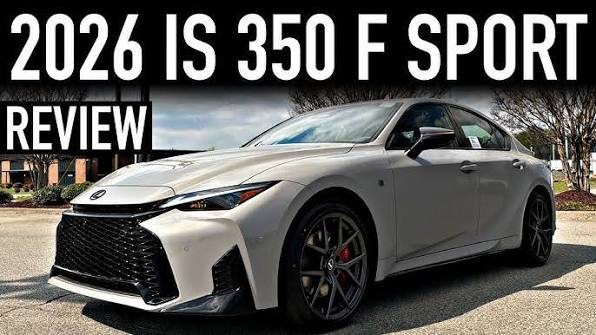
In a market where most sport sedans have moved to turbocharged four-cylinders and increasingly digital, disconnected driving experiences, the 2026 Lexus IS 350 F Sport sticks to a simpler formula: a naturally aspirated V6, rear-wheel drive, and a driver-focused cabin. It’s one of the last true compact luxury sport sedans still built the traditional way, and for 2026, Lexus has given it a meaningful technology update without touching the core driving experience that’s kept it relevant for over a decade.
This guide breaks down what’s new for 2026, real pricing, performance specs, and how it stacks up against the competition, so you can decide if it’s the right car for you.
2026 Lexus IS 350 F Sport: Quick Facts
- Starting price: Around $47,950–$49,158 for RWD F Sport, roughly $49,950 for AWD F Sport
- Engine: 3.5-liter naturally aspirated V6, 311 horsepower
- Drivetrain: Rear-wheel drive (8-speed automatic) or all-wheel drive (6-speed automatic)
- Fuel economy: 19 city / 27 highway / 22 combined MPG (EPA-estimated)
- Length: 185.8 inches
- Weight: Approximately 3,900 pounds
Prices are U.S. MSRP before destination fees, taxes, and dealer markups, and vary by trim, options, and region — always confirm current pricing with a local dealer before buying.
What’s New for 2026
The biggest change for 2026 is inside the cabin rather than under the hood. Lexus has standardized a new 12.3-inch Lexus Interface touchscreen across F Sport trims, paired with a fully customizable 12.3-inch digital instrument cluster that lets drivers prioritize navigation, performance data, or safety alerts based on preference. The system also adds a standard voice assistant activated with “Hey Lexus,” bringing the IS’s interior tech noticeably closer to modern expectations after years of lagging behind newer rivals in this area.
Mechanically, the formula remains intentionally familiar: the 311-horsepower 3.5-liter V6 continues as the standard engine across F Sport Design and F Sport grades, with rear-wheel-drive models paired to an eight-speed Sport Direct-Shift automatic and all-wheel-drive models using a six-speed automatic.
F Sport vs. F Sport Design: What’s the Difference?
Lexus offers two distinct F Sport trim levels, and the difference matters more than the near-identical name suggests:
F Sport Design focuses primarily on the visual and interior upgrades associated with the F Sport package — sportier styling cues, unique wheels, and an aggressive appearance — without necessarily including the full performance-oriented hardware.
F Sport (non-Design) adds genuine performance hardware on top of the styling package, including Adaptive Variable Suspension and a Torsen limited-slip rear differential, which meaningfully improves handling and traction, particularly when exiting tight corners at speed.
If sharper, more engaging handling matters more to you than styling alone, the non-Design F Sport trim is worth the price difference over F Sport Design.
Performance and Driving Experience
The IS 350 F Sport’s core appeal remains its naturally aspirated V6 — an increasingly rare configuration as competitors shift toward smaller turbocharged engines for efficiency reasons. While that means slightly lower fuel economy than some rivals, it also delivers the kind of smooth, linear power delivery and engine sound that naturally aspirated engines are known for, without the turbo lag some drivers dislike in newer competitors.
Reviewers have consistently praised the IS 350 F Sport’s handling balance, describing it as a car built around genuine driving enjoyment rather than gimmicks or flashy tech for its own sake. The combination of rear-wheel drive, sharp steering, and the available limited-slip differential gives it a more connected, engaging feel than many segment rivals that have leaned harder into comfort-oriented tuning in recent years.
Interior and Technology
Beyond the new 12.3-inch touchscreen and digital cluster, the IS 350 F Sport’s cabin emphasizes a driver-focused layout, quality materials, and Lexus’s typically excellent build quality and long-term reliability reputation — a meaningful consideration in a segment where some competitors have had more mixed reliability records. That said, some reviewers note the rear seats and trunk are relatively snug for the segment, which is worth considering if rear-seat passenger space or cargo capacity is a priority for how you’ll use the car.
Fuel Economy and Running Costs
At 19 city / 27 highway / 22 combined MPG, the IS 350’s naturally aspirated V6 is thirstier than several turbocharged four-cylinder rivals in the segment, which is the primary trade-off for its more traditional engine character. Over a 5-year ownership period, cost-to-own estimates place the IS 350 F Sport Design in the middle range for its class when factoring in fuel, insurance, maintenance, and depreciation — reasonably competitive, though not a standout on pure running costs compared to more efficiency-focused competitors.
Safety Features and Warranty
The 2026 IS 350 F Sport comes with Lexus Safety System+, a suite of standard driver-assistance features that typically includes adaptive cruise control, lane departure alerts, and automatic emergency braking, bringing it in line with expected safety standards for the segment. Lexus’s standard warranty coverage and the brand’s strong dependability track record also add a layer of long-term ownership confidence that’s harder to quantify on a spec sheet but matters considerably over years of ownership, particularly for buyers planning to keep the car well past the initial loan or lease term.
How the IS 350 F Sport Compares to Rivals
The compact luxury sport sedan segment has thinned out considerably in recent years, but the IS 350 F Sport still competes primarily against the BMW 3 Series, Mercedes-Benz C-Class, and Genesis G70 — each of which has moved toward turbocharged four- or six-cylinder engines, unlike the Lexus’s naturally aspirated V6. What the IS 350 F Sport offers that’s harder to find elsewhere in the segment is Lexus’s long-standing reliability reputation combined with genuinely engaging rear-wheel-drive dynamics, at a starting price that’s often competitive with or below rivals once comparable trims and options are factored in.
If ride comfort and Lexus’s traditional strengths in build quality matter more to you than outright agility, the F Sport Design trim leans further into that direction, while the standard F Sport trim’s adaptive suspension and limited-slip differential push it closer to genuinely sporty rival trims like BMW’s M340i or Genesis’s G70 3.3T. Test driving both trims back to back, if possible, is worth the extra time before deciding, since the difference in feel between them is more noticeable behind the wheel than the spec sheet alone suggests.
Who Should Buy the 2026 Lexus IS 350 F Sport
This car is best suited to buyers who specifically want a traditional rear-wheel-drive sport sedan experience — genuine driver engagement, a naturally aspirated engine, and Lexus reliability — over the latest turbocharged tech or maximum efficiency. It’s also a strong fit for buyers who plan to keep a car for many years rather than trading in every two or three, since Lexus’s reliability track record tends to pay off most over a longer ownership horizon. If you’re comparing it against other premium vehicle purchases and want a broader framework for evaluating what you’re actually paying for in a luxury vehicle, our luxury SUV buying guide covers similar considerations like trim differences, options, and value across a different vehicle category.
Who Might Want to Look Elsewhere
Buyers prioritizing maximum rear-seat space, cutting-edge turbocharged performance, or the absolute latest in driver-assistance technology may find newer-platform rivals like the current BMW 3 Series or Genesis G70 more compelling, particularly since the IS platform itself dates back to its last full redesign in 2014, even with the meaningful 2026 technology update.
Frequently Asked Questions
Is the Lexus IS 350 F Sport a fast car? With 311 horsepower and rear-wheel drive, it offers strong, engaging performance for the segment, though it isn’t positioned as an outright performance flagship the way Lexus’s higher-performance models are.
What’s the difference between F Sport and F Sport Design trims? F Sport Design focuses mainly on styling and appearance upgrades, while the standard F Sport trim adds genuine performance hardware, including Adaptive Variable Suspension and a Torsen limited-slip differential.
Is the Lexus IS 350 reliable? Lexus has a strong long-term reliability reputation across its lineup, and the IS 350’s mechanically conservative, naturally aspirated V6 platform tends to reinforce that reputation compared to more complex turbocharged rivals.
Should I get RWD or AWD? RWD delivers a more traditional, engaging sport sedan driving feel and pairs with the more advanced 8-speed transmission, while AWD adds all-weather traction at a modest price premium but uses a 6-speed transmission instead.
Conclusion
The 2026 Lexus IS 350 F Sport remains a compelling choice for buyers who want a genuine, traditional sport sedan experience — a naturally aspirated V6, rear-wheel drive, and Lexus’s dependable build quality — now paired with meaningfully improved interior technology. It won’t win on raw efficiency or the latest turbocharged specs, but for drivers who value the driving experience itself, it remains one of the more honest options left in its segment.
For independent testing data and additional trim-by-trim comparisons, Edmunds’ 2026 Lexus IS 350 F Sport page is a reliable source to check current pricing and reviews before buying.