
The Best Fluffy Pancakes recipe you will fall in love with. Full of tips and tricks to help you make the best pancakes.

Introduction
The digital world is evolving rapidly, and blockchain technology has become one of the most talked-about innovations of the past decade. While many people first heard about blockchain because of cryptocurrencies like Bitcoin, its impact now reaches industries such as healthcare, finance, logistics, real estate, and even government services.
At its core, blockchain offers a new way to store and share information securely without relying on a central authority. This approach improves transparency, strengthens security, and reduces the risk of data manipulation.
In this guide, you’ll discover what blockchain technology is, how it works, its key advantages and challenges, real-world applications, and why experts believe it will continue shaping the future of digital business.
What Is Blockchain Technology?
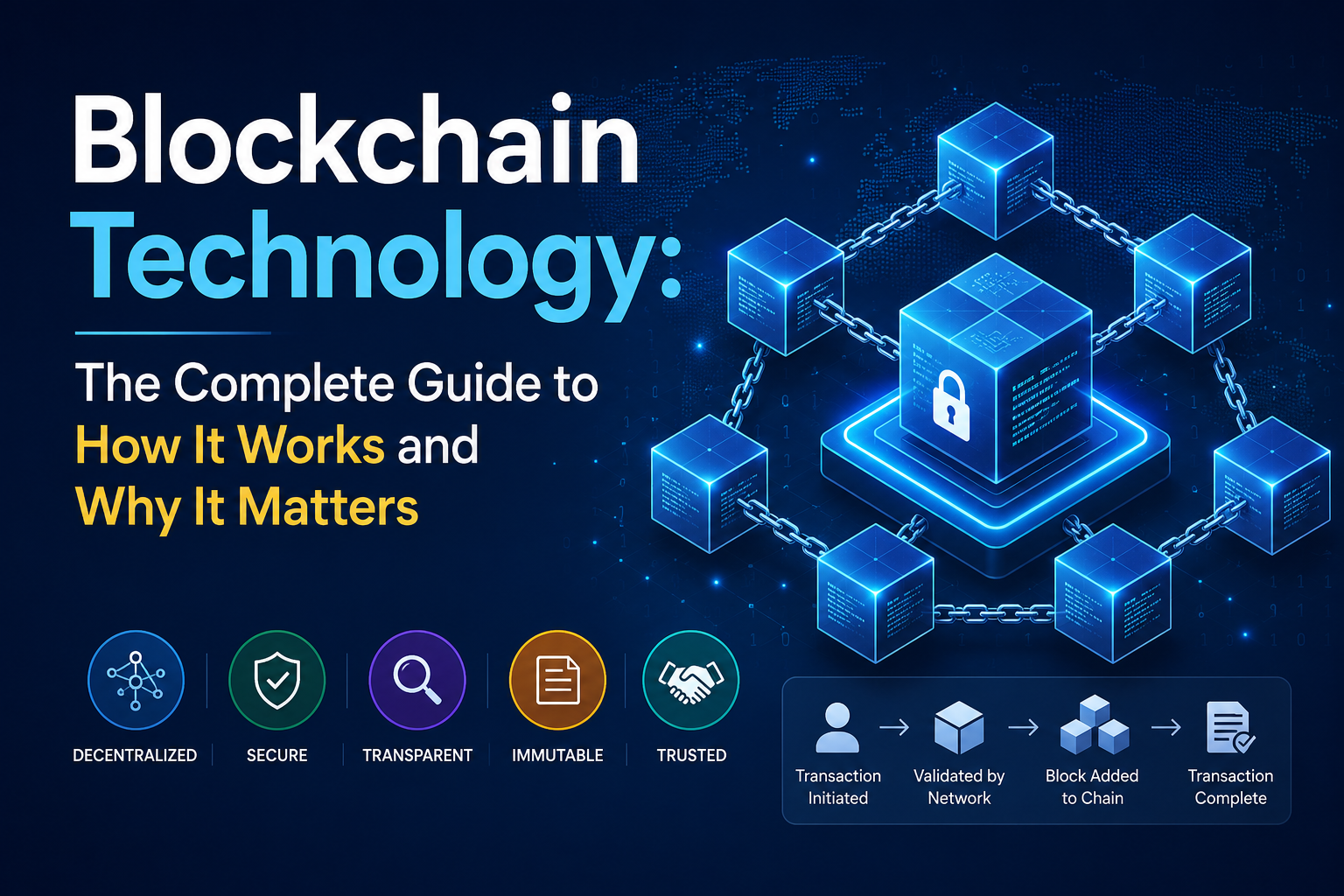
Blockchain technology is a decentralized digital ledger that records transactions securely across multiple computers. Every transaction is stored in a block, and each new block is permanently linked to the previous one, forming a chain of records.
Unlike traditional databases controlled by a single organization, blockchain distributes identical copies of data across the network. This makes unauthorized changes extremely difficult because every participant shares the same verified information.
Key Features of Blockchain Technology
- Decentralized network
- Secure cryptographic protection
- Transparent transaction history
- Immutable records
- Consensus-based verification
- Improved trust between participants
Imagine a shared digital notebook where everyone owns an identical copy. Once a page is added, it cannot be secretly edited without everyone noticing. That’s the basic idea behind blockchain.
How Does Blockchain Technology Work?
Understanding blockchain becomes much easier when broken into simple steps.
Step 1: A Transaction Is Initiated
A user starts a transaction, such as transferring digital assets, signing a digital contract, or recording important information.
Step 2: The Network Verifies the Request
Computers called nodes validate the transaction according to predefined rules.
Step 3: A New Block Is Created
Verified transactions are grouped together into a new digital block.
Step 4: The Block Joins the Blockchain
The new block connects securely to previous blocks using cryptographic algorithms.
Step 5: The Ledger Updates
Every participant receives the updated version of the blockchain, ensuring all copies remain synchronized.
This decentralized verification process is what makes blockchain highly secure and trustworthy.
Benefits of Blockchain Technology
Organizations worldwide continue investing in blockchain because it solves many challenges associated with traditional recordkeeping.
Enhanced Security
Every transaction is encrypted and linked to previous records, making unauthorized changes extremely difficult.
Greater Transparency
Participants can verify transaction histories without depending entirely on a single organization.
Improved Efficiency
Blockchain automates many verification processes, reducing paperwork and minimizing manual errors.
Lower Operational Costs
Removing unnecessary intermediaries can reduce transaction fees and administrative expenses.
Better Traceability
Businesses can monitor products throughout the supply chain, helping identify counterfeit goods and improving quality control.
Real-World Applications of Blockchain Technology
Blockchain is no longer limited to cryptocurrency. Today, organizations across many industries are using it to improve efficiency and security.
Financial Services
Banks and payment providers use blockchain to speed up international money transfers, improve fraud detection, and simplify settlements.
Example
Cross-border payments that traditionally take several days can often be processed much faster using blockchain-based systems.
Supply Chain Management
Companies track products from manufacturing to delivery, providing complete visibility across the supply chain.
Example
Food manufacturers can trace contaminated products within minutes instead of days, helping reduce waste and improve consumer safety.
Healthcare
Hospitals and healthcare providers use blockchain to securely manage patient records while maintaining privacy.
Benefits Include
- Faster record sharing
- Better data accuracy
- Improved patient privacy
- Reduced administrative duplication
Smart Contracts
Smart contracts are self-executing digital agreements that automatically carry out their terms once predefined conditions are met, all without the need for intermediaries.
Once specific conditions are met, the agreement automatically carries out the required action without requiring manual approval.
These contracts are increasingly used in finance, insurance, and real estate transactions.
Digital Identity Verification
Blockchain allows individuals to control their digital identities while reducing identity theft and fraud.
Governments and financial institutions are exploring blockchain-based identity systems to improve security and simplify verification.
Types of Blockchain Technology
Different organizations require different blockchain structures depending on their goals.
Public Blockchain
Open to everyone and maintained by a decentralized community.
Examples include Bitcoin and Ethereum.
Private Blockchain
Access is restricted to approved participants.
Businesses often choose private blockchains when handling confidential information.
Consortium Blockchain
Several organizations jointly manage the network rather than relying on a single owner.
This model is popular in banking and healthcare collaborations.
Hybrid Blockchain
Combines features of both public and private networks, allowing organizations to decide which information remains private and which becomes publicly accessible.
Challenges of Blockchain Technology
Although blockchain offers significant advantages, it also presents certain limitations.
Scalability
Some blockchain networks process fewer transactions per second than traditional payment systems.
Energy Consumption
Certain consensus mechanisms require substantial computing power, although many newer blockchain platforms use more energy-efficient methods.
Regulatory Uncertainty
Governments continue developing laws and regulations surrounding blockchain and digital assets.
Integration Costs
Implementing blockchain solutions may require substantial investment in infrastructure and employee training.
Blockchain Technology vs Traditional Databases
| Feature | Blockchain Technology | Traditional Database |
|---|
| Control | Managed collectively through a decentralized network | Controlled by a single organization or administrator |
| Security | Advanced cryptographic protection with strong resistance to tampering | Relies on centralized security measures and access controls |
| Transparency | Transactions are visible and verifiable across the network | Data visibility is limited to authorized users |
| Data Modification | Records become virtually immutable once validated | Data can be updated, edited, or deleted by authorized administrators |
| Trust | Trust is established through network consensus rather than a central authority | Trust depends on the organization responsible for managing the database |
For businesses requiring secure, transparent, and tamper-resistant records, blockchain often provides advantages over traditional databases.
Common Myths About Blockchain Technology
Myth 1: Blockchain Is Only for Cryptocurrency
Reality: Blockchain supports healthcare, logistics, education, insurance, voting systems, and many other industries.
Myth 2: Blockchain Is Completely Anonymous
Reality: Most blockchain transactions are transparent, although identities may be pseudonymous rather than fully anonymous.
Myth 3: Blockchain Cannot Be Hacked
Reality: While blockchain itself is highly secure, poorly designed applications or compromised user accounts can still create vulnerabilities.
The Future of Blockchain Technology
Blockchain adoption continues to expand as organizations seek secure and transparent digital solutions.
Future developments may include:
- More efficient cross-border payments
- Smarter supply chains
- Decentralized finance (DeFi)
- Digital identity systems
- Tokenized real-world assets
- AI and blockchain integration
- Improved healthcare data management
As the technology matures, blockchain is expected to become an important part of everyday digital infrastructure.
Frequently Asked Questions
What is blockchain technology in simple words?
Blockchain technology is a secure digital ledger that stores information across multiple computers, making records transparent and difficult to alter.
Is blockchain only used for Bitcoin?
No. Blockchain supports applications in healthcare, banking, logistics, insurance, real estate, digital identity, and many other industries.
Why is blockchain considered secure?
It uses cryptographic encryption, decentralized validation, and linked blocks that make unauthorized modifications extremely difficult.
Can small businesses use blockchain?
Yes. Many cloud-based blockchain platforms now offer affordable solutions for businesses looking to improve security, transparency, and operational efficiency.
Conclusion
Blockchain technology is much more than the foundation of cryptocurrency. It represents a modern approach to managing digital information with greater security, transparency, and efficiency. From improving global supply chains to protecting medical records and enabling smart contracts, blockchain continues to create new opportunities across industries.
While challenges such as scalability and regulation remain, ongoing innovation is making blockchain more practical for businesses and individuals alike. Understanding how this technology works today can help you make better decisions as digital transformation continues to reshape the world.
Ready to learn more? Stay informed about emerging blockchain trends and explore how this innovative technology could benefit your business, career, or everyday digital life.