
The Best Fluffy Pancakes recipe you will fall in love with. Full of tips and tricks to help you make the best pancakes.

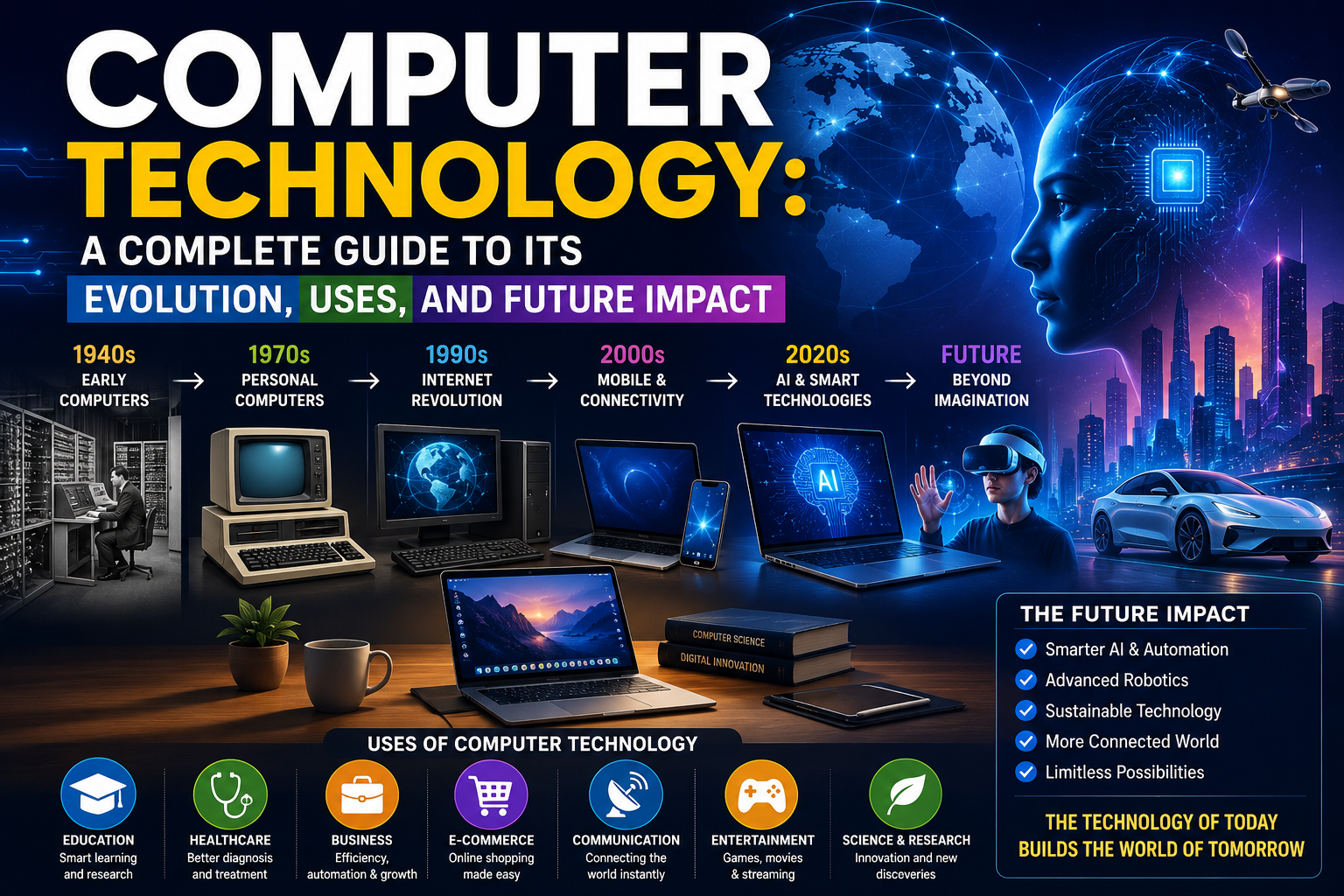
Introduction: Understanding the Power of Computer Technology
Computer Technology has transformed the way people live, work, learn, and communicate. From smartphones and online banking to artificial intelligence and cloud computing, technology has become an essential part of everyday life. What once required large machines and complex systems can now be handled through compact devices that fit in our hands.
For individuals, businesses, and organizations, understanding Computer Technology is no longer optional. It helps people make smarter decisions, improve productivity, protect information, and adapt to a rapidly changing digital world.
This guide explains what Computer Technology means, how it has evolved, its major applications, benefits, challenges, and future trends. Whether you are a student, professional, or general technology user, this overview will help you understand how computers continue to shape modern society.
Table of Contents
ToggleWhat Is Computer Technology?
Computer Technology refers to the use of computer systems, hardware, software, networks, and digital tools to process, store, manage, and share information. It includes everything from personal computers and mobile devices to advanced systems used in industries such as healthcare, finance, education, and engineering.
At its core, Computer Technology allows machines to perform tasks faster and more accurately than humans could manage alone. Computers can calculate data, store large amounts of information, automate processes, and connect people across the world.
The Main Components of Computer Technology
Computer Technology is powered by a combination of essential elements that work together to process information, enable digital operations, and create efficient computing solutions.
Hardware
Hardware refers to the physical parts of a computer system, including:
- Processors (CPU)
- Memory (RAM)
- Storage devices
- Keyboards and monitors
- Smartphones and other connected devices
Hardware provides the foundation that allows computers to operate.
Software
Software consists of programs and applications that tell computer systems what to do. Examples include:
- Operating systems
- Web browsers
- Office applications
- Mobile apps
- Security programs
Without software, computer hardware would not be able to perform useful tasks.
Networks and Connectivity
Modern Computer Technology depends heavily on networks. The internet, wireless connections, and cloud systems allow devices to communicate and share information instantly.
The Evolution of Computer Technology
From Early Machines to Modern Computing
The history of Computer Technology shows how quickly innovation can change society. Early computers were large machines designed mainly for scientific calculations. As technology advanced, computers evolved from large, expensive machines into smaller, faster, and more affordable devices accessible to people worldwide.
The development of personal computers in the late 20th century brought computing into homes and offices. Later, the rise of smartphones and cloud services made digital technology accessible almost everywhere.
Today, computers are no longer limited to traditional devices. They are built into vehicles, household appliances, medical equipment, and industrial systems.
How Computer Technology Has Changed Over Time
Major stages in computer development include:
- First generation computers: Large machines using vacuum tubes
- Personal computer era: Computers became common in homes and workplaces
- Internet era: Global communication and online services expanded
- Mobile technology era: Smartphones and tablets became everyday tools
- Artificial intelligence era: Machines began learning and making advanced decisions
This continuous development shows why Computer Technology remains one of the fastest-changing fields in the world.
Applications of Computer Technology in Daily Life
Computer Technology in Education
Education has greatly benefited from digital tools. Students can access online courses, digital libraries, and interactive learning platforms from almost anywhere.
Teachers use technology for:
- Virtual classrooms
- Online assignments
- Digital presentations
- Educational software
Computer Technology has made learning more flexible and accessible for people of different ages and backgrounds.
Computer Technology in Business
Businesses use computer systems to improve efficiency, communication, and decision-making. Companies rely on technology for:
- Customer management
- Online sales
- Data analysis
- Employee collaboration
- Automated processes
Small businesses can now compete globally by using digital platforms that were previously available only to large organizations.
Computer Technology in Healthcare
Healthcare has experienced major improvements through digital innovation. Hospitals and medical professionals use technology for:
- Electronic health records
- Medical imaging
- Remote consultations
- Patient monitoring systems
These tools help improve accuracy, reduce delays, and provide better patient care.
Benefits and Importance of Computer Technology
Why Is Computer Technology Important?
Computer Technology is important because it improves efficiency, increases access to information, and helps solve complex problems across many industries.
Some key benefits include:
Faster Communication
Technology allows people to communicate instantly through email, video calls, messaging apps, and online platforms.
Increased Productivity
Businesses and individuals can complete tasks faster using automation, digital tools, and software solutions.
Better Access to Information
The internet provides access to educational resources, research, news, and professional knowledge from around the world.
Innovation and Problem Solving
Computer Technology supports advancements in areas such as scientific research, engineering, transportation, and environmental solutions.
Challenges and Concerns in Computer Technology
Cybersecurity and Data Protection
As technology becomes more connected, protecting personal and business information has become increasingly important. Cyber threats such as hacking, scams, and data theft can affect individuals and organizations.
Users can improve security by:
- Creating strong passwords
- Using trusted software
- Updating devices regularly
- Avoiding suspicious links and messages
Digital Skills Gap
Another challenge is that not everyone has equal access to technology or the skills needed to use it effectively. Digital education and affordable access are important for ensuring more people benefit from technological progress.
Privacy Concerns
Many digital services collect user information to provide personalized experiences. Understanding privacy settings and managing personal data can help users maintain control over their information.
Future Trends in Computer Technology
Artificial Intelligence and Machine Learning
Artificial intelligence is one of the most important developments in modern Computer Technology. AI systems can analyze information, recognize patterns, and assist with tasks such as customer service, research, and automation.
Cloud Computing
Cloud technology allows users to store data and access applications through the internet instead of relying only on local devices. This makes collaboration easier and provides flexible solutions for businesses.
Internet of Things (IoT)
The Internet of Things connects everyday objects to digital networks. Examples include smart homes, wearable devices, and connected vehicles.
Quantum Computing
Quantum computing represents a new approach to processing information. While still developing, it has the potential to solve certain complex problems much faster than traditional computers.
Frequently Asked Questions About Computer Technology
What Are Examples of Computer Technology?
Examples include laptops, smartphones, software applications, cloud services, artificial intelligence systems, and computer networks.
How Does Computer Technology Help Society?
Computer Technology helps society by improving communication, education, healthcare, business operations, and access to information.
What Skills Are Important for Learning Computer Technology?
Useful skills include basic computer knowledge, cybersecurity awareness, programming fundamentals, problem-solving, and digital communication skills.
Conclusion: Embrace the Future of Computer Technology
Computer Technology continues to influence nearly every part of modern life. From improving workplace productivity to creating new opportunities in education and healthcare, computers have become powerful tools for innovation and progress.
As technology continues to evolve, learning how computer systems work and understanding their benefits and challenges can help individuals stay prepared for the future.
Whether you are building digital skills, exploring a technology career, or simply trying to use devices more effectively, now is the right time to engage with Computer Technology and discover how it can improve your personal and professional life

Uzair Hussain
Hey there! I'm Uzair Hussain — a young blogger from
Pakistan with a passion for exploring Health, Tech,
Lifestyle, and Travel topics. I believe that the right
information can change your life. This blog is my way
of sharing what I learn, discover, and experience.
Glad you're here!