
The Best Fluffy Pancakes recipe you will fall in love with. Full of tips and tricks to help you make the best pancakes.

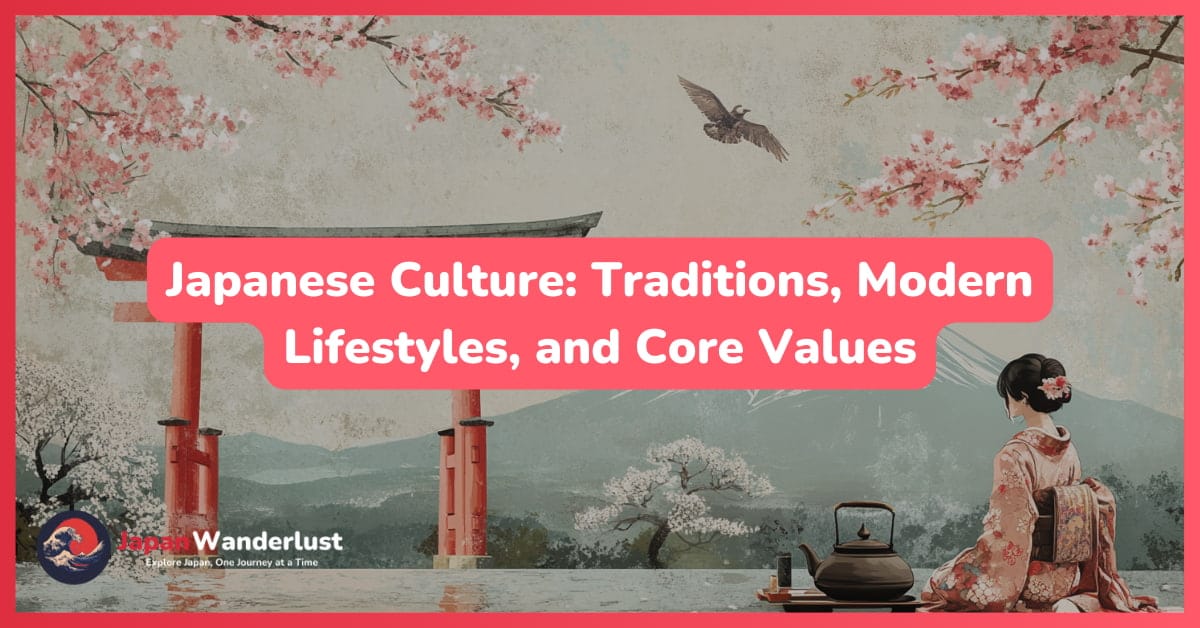
Few cultures balance tradition and modernity as visibly as Japan’s. It’s a country where centuries-old tea ceremonies and Shinto shrines exist within walking distance of some of the most advanced technology and densest, most efficient cities in the world. Understanding Japanese culture means understanding both halves of that balance — not choosing between “ancient Japan” and “modern Japan,” but recognizing how deeply the two are intertwined in everyday life.
This guide covers the historical and religious foundations of Japanese culture, along with the customs, etiquette, and daily life that define Japan today.
Historical and Religious Foundations
Shinto: Japan’s Native Spiritual Tradition
Shinto, meaning “the way of the gods,” is Japan’s indigenous spiritual tradition, centered on kami — spirits or divine forces believed to inhabit nature, objects, and ancestors. Rather than a religion built around a single doctrine or founder, Shinto is deeply woven into Japanese cultural practices, visible in shrine visits, seasonal festivals, and rituals marking life events like births and coming-of-age ceremonies.
Buddhism’s Arrival and Influence
Buddhism arrived in Japan from mainland Asia around the 6th century and has coexisted with Shinto ever since, rather than replacing it. It’s common for Japanese people to participate in both Shinto and Buddhist practices without seeing any contradiction — Shinto shrines are often used for celebratory occasions like weddings, while Buddhist temples are more commonly associated with funerals and ancestral remembrance.
The Samurai Era and Bushido
For centuries, Japan was shaped by a feudal warrior class, the samurai, and the code of conduct associated with them, known as bushido — emphasizing loyalty, discipline, and honor. While the samurai class was formally abolished in the late 19th century, bushido’s values continue to influence Japanese cultural ideals around discipline, respect, and dedication to craft, visible even in modern contexts far removed from warfare.
Isolation and Modernization
For over two centuries, Japan maintained a policy of near-total isolation from the outside world before opening to international trade in the mid-19th century, followed by rapid modernization. This compressed transition from a feudal society to an industrial power in just a few decades is part of why Japan’s blend of deeply preserved tradition alongside rapid technological adoption feels so distinct compared to many other nations.
Core Values in Japanese Culture
Wa: Harmony and Group Cohesion
Wa, often translated as harmony, is a foundational value in Japanese social life, emphasizing group cohesion, avoiding open conflict, and prioritizing collective wellbeing over individual assertion. This value shows up constantly in daily interactions — indirect communication, deference to group consensus, and a general cultural preference for avoiding confrontation wherever possible.
Respect and Hierarchy
Respect for age, seniority, and social position is deeply embedded in Japanese language and behavior, most visibly through keigo — a formal, honorific level of speech used to show respect based on social context and relationship. This extends into workplace culture, family dynamics, and everyday interactions with strangers.
Omotenashi: Hospitality Without Expectation
Omotenashi refers to a distinctly Japanese style of hospitality — anticipating others’ needs and providing thoughtful service without expecting anything in return, even a tip. This concept is often cited as a reason tipping isn’t customary in Japan, since genuine hospitality is considered something offered freely, not something transactional.
Japanese Food Culture
Japanese cuisine (washoku) emphasizes seasonality, fresh ingredients, and presentation as much as flavor, and is recognized by UNESCO as part of the world’s Intangible Cultural Heritage. Staples include rice, which remains culturally central beyond just being a food source, miso soup, and an enormous range of regional specialties well beyond the sushi and ramen most familiar internationally. Meals are often built around balance — variety in ingredients, cooking methods, and colors on the plate — rather than a single large dish.
Dining etiquette carries real cultural weight: saying “itadakimasu” before eating (roughly, “I gratefully receive”) and “gochisousama” afterward reflects appreciation for the meal and those who prepared it, a small ritual observed even in casual daily meals.
Etiquette and Social Customs
Bowing remains a common greeting and sign of respect, with the depth and duration of a bow reflecting the level of respect or formality intended, though handshakes have become more common in international business contexts.
Removing shoes before entering homes, and often certain traditional restaurants or temples, remains standard practice, reflecting a broader cultural emphasis on cleanliness and clearly marking the transition between outside and inside spaces.
Gift-giving follows its own set of customs, including careful attention to how a gift is wrapped and presented, and reciprocal gift-giving is common in both personal and business relationships.
Public behavior tends to emphasize quiet consideration for others — phone calls on trains are generally avoided, for example — reflecting the broader cultural value placed on not disrupting shared, harmonious spaces.
Modern Japanese Culture and Daily Life
Technology and Tradition Side by Side
Japan is frequently associated with cutting-edge technology, from robotics to some of the world’s most advanced public transit systems, yet this coexists comfortably with deeply traditional practices — a bullet train station might sit blocks from a centuries-old shrine, and both are treated as unremarkable parts of daily life rather than a contradiction.
Pop Culture’s Global Reach
Japanese pop culture — anime, manga, video games, and J-pop — has become one of the country’s most significant cultural exports, shaping global entertainment far beyond Japan’s borders and introducing many people internationally to Japanese aesthetics and storytelling before they encounter more traditional aspects of the culture.
Work Culture
Japanese work culture has historically emphasized long hours, strong company loyalty, and group-oriented decision-making, though this has been gradually shifting in recent years amid growing public and governmental attention to work-life balance and overwork-related health concerns, leading to slow but real changes in workplace norms at many companies.
Seasonal Awareness
An acute cultural attentiveness to the changing seasons runs through Japanese life — from seasonal foods and seasonal-themed sweets to major cultural events like cherry blossom viewing (hanami) in spring, when parks fill with people picnicking beneath blooming trees, a tradition with roots stretching back over a thousand years.
Japanese Festivals and Celebrations
Japan observes numerous seasonal and cultural festivals (matsuri) throughout the year, often tied to Shinto shrines and local communities. Hanami in spring celebrates cherry blossoms, while summer brings festivals featuring fireworks, traditional dance, and street food. New Year’s (Oshogatsu) is among the most significant holidays, involving shrine visits, special foods, and family gatherings, reflecting a blend of Shinto tradition and modern family customs.
Common Misconceptions About Japanese Culture
Myth: Japan is uniformly ultra-modern or uniformly traditional. Japan is neither exclusively — it’s a genuine, everyday blending of both, not a country split between “old” and “new” districts or eras.
Myth: All Japanese people practice religion the same way. Many Japanese people engage in Shinto and Buddhist practices as cultural custom rather than strict religious devotion, and religious identity in Japan often functions differently than in many Western contexts.
Myth: Japanese culture is only what’s seen in anime and pop culture. While Japanese pop culture is a major and legitimate part of modern Japanese identity, it represents one export among many facets of a culture with far deeper historical and social dimensions.
Why Japanese Culture Continues to Influence the World
Beyond pop culture exports, Japanese design philosophy, culinary traditions, and concepts like wa and omotenashi have influenced global business practices, hospitality standards, and design aesthetics well beyond Japan’s borders. If you’re interested in how other nations similarly balance deep historical tradition with distinctly modern national identity, our guide to Egyptian culture explores a similarly layered relationship between ancient heritage and contemporary life.
Frequently Asked Questions
What is the main religion in Japan? Most Japanese people practice a blend of Shinto and Buddhist customs rather than exclusively identifying with one religion, and religious practice in Japan often functions as cultural tradition rather than strict doctrinal belief.
Why do people bow in Japan instead of shaking hands? Bowing is a traditional greeting and sign of respect in Japanese culture, with its depth and duration reflecting the level of formality or respect intended, though handshakes have become more common in international business settings.
Is tipping expected in Japan? No — tipping isn’t customary in Japan and can even be considered awkward or confusing in some contexts, tied to the cultural concept of omotenashi, where genuine hospitality is offered without expectation of extra payment.
What does “wa” mean in Japanese culture? Wa refers to harmony and group cohesion, a foundational cultural value that shapes communication styles, workplace behavior, and social interactions throughout Japanese life.
Conclusion
Japanese culture is best understood not as a contrast between ancient tradition and modern innovation, but as a genuine, everyday coexistence of both. From Shinto shrines and seasonal festivals to cutting-edge technology and globally influential pop culture, Japan’s identity is shaped by values like harmony, respect, and hospitality that run consistently through both its historical foundations and its modern daily life.
For further reading on Japanese cultural heritage and UNESCO-recognized traditions, the UNESCO World Heritage listings for Japan are a reliable, authoritative resource.