
The Best Fluffy Pancakes recipe you will fall in love with. Full of tips and tricks to help you make the best pancakes.

Introduction
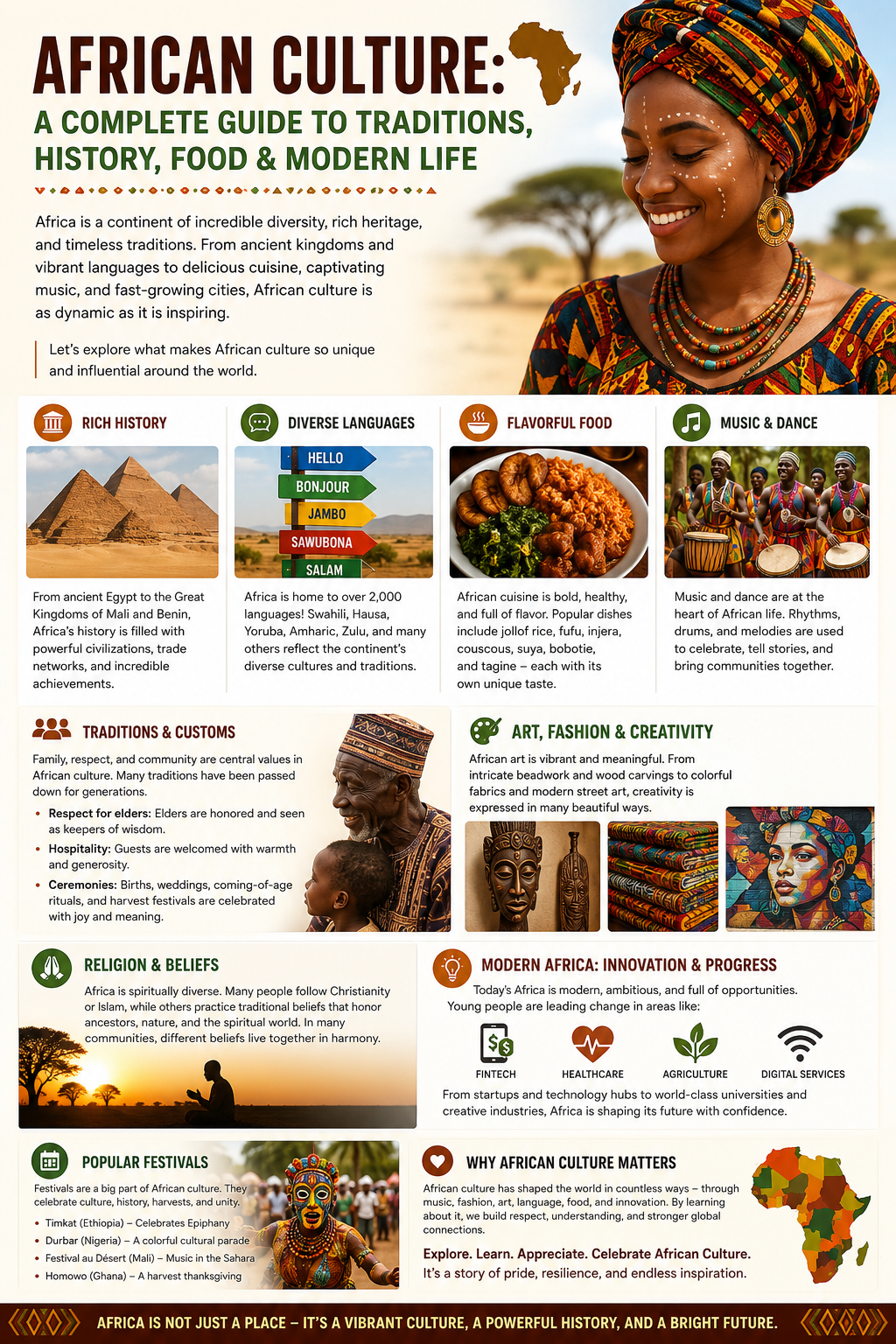
Africa is a continent of incredible diversity, home to more than 1.4 billion people, thousands of ethnic groups, and a rich heritage that has influenced the world for centuries. From colorful festivals and traditional music to delicious cuisine and strong family values, African culture reflects a unique blend of history, creativity, and community.
Whether you’re planning a trip, studying world cultures, or simply curious about Africa, this guide will introduce you to the traditions, beliefs, customs, and modern lifestyle that make African culture so fascinating.
What Is African Culture? (Featured Snippet)
African culture refers to the traditions, customs, languages, beliefs, arts, music, food, and social values shared by the diverse peoples of Africa. Rather than being a single culture, it is a collection of thousands of unique cultural identities spread across 54 countries, each with its own history and traditions.
The Rich History of African Culture
Understanding today’s African culture begins with its remarkable history.
Africa is widely recognized as the birthplace of humanity, with civilizations dating back thousands of years. Ancient kingdoms such as Egypt, Mali, Ghana, Songhai, Great Zimbabwe, and Kush became centers of trade, education, and innovation long before many modern nations existed.
Throughout history, African communities developed advanced farming techniques, artistic traditions, architecture, and powerful trading networks. Although colonization changed many societies, African nations have preserved their cultural identities while embracing modern development.
Historical Highlights
- Ancient civilizations shaped global history.
- Oral storytelling preserved knowledge across generations.
- Traditional kingdoms built thriving economies.
- Independence movements strengthened national identities.
Today, history continues to influence everyday customs, celebrations, and community values.
African Traditions and Customs
One of the most admired aspects of African culture is its emphasis on community and respect.
Across many African societies, family plays a central role. Grandparents, parents, children, and extended relatives often maintain close relationships, creating strong support systems.
Respect for Elders
Many communities teach children to greet elders politely, seek their advice, and show appreciation for their wisdom. Respect is viewed as an important foundation of social harmony.
Hospitality
Visitors are often welcomed warmly. Sharing meals, offering assistance, and treating guests with kindness are common traditions throughout many African cultures.
Traditional Ceremonies
Important life events are celebrated through meaningful ceremonies, including:
- Birth celebrations
- Coming-of-age rituals
- Weddings
- Harvest festivals
- Community gatherings
These events strengthen family bonds while preserving cultural heritage.
Languages and Religion in African Culture
Africa is one of the world’s most linguistically diverse continents.
Experts estimate that more than 2,000 languages are spoken across Africa. While English, French, Portuguese, and Arabic serve as official languages in many countries, indigenous languages remain an important part of everyday life.
Some widely spoken African languages include:
- Swahili
- Hausa
- Yoruba
- Amharic
- Zulu
- Igbo
Religion is equally diverse.
Many Africans practice Christianity or Islam, while others continue traditional spiritual beliefs that emphasize respect for ancestors, nature, and community values.
In many places, traditional customs and modern religions coexist peacefully.
African Food: A Celebration of Flavor
Food is an essential expression of African culture, bringing families and communities together.
Because Africa has diverse climates and regions, cuisine varies greatly from one country to another.
Popular African Dishes
- Jollof Rice
- Injera with stews
- Couscous
- Bunny Chow
- Fufu with soup
- Tagine
- Suya
- Bobotie
Common ingredients include:
- Rice
- Millet
- Maize
- Cassava
- Plantains
- Beans
- Fresh vegetables
- Fish
- Beef
- Chicken
- Spices
Meals are often prepared using recipes that have been passed down through generations, making food an important part of family traditions.
Music, Dance, and Art in African Culture
Music and dance are among Africa’s greatest cultural contributions.
Traditional rhythms use instruments such as drums, koras, balafons, mbiras, and xylophones to accompany storytelling, celebrations, and ceremonies.
Today, African artists continue to shape global music through genres like:
- Afrobeats
- Amapiano
- Highlife
- Afro-jazz
- Afro-fusion
Dance remains an important way to celebrate weddings, festivals, and community events.
African art is equally influential, featuring:
- Wood carvings
- Beadwork
- Textiles
- Masks
- Pottery
- Paintings
- Sculptures
These artistic traditions often carry symbolic meanings connected to history, spirituality, or everyday life.
Modern African Culture and Everyday Life
While traditions remain important, Africa is also experiencing rapid modernization.
Major cities such as Lagos, Nairobi, Johannesburg, Cairo, and Accra are vibrant centers of business, technology, education, fashion, and entertainment.
Today’s young Africans are successfully blending traditional values with modern lifestyles.
Examples include:
Fashion
Many designers combine traditional fabrics with contemporary clothing styles, creating globally recognized fashion trends.
Technology
Across the continent, African entrepreneurs are driving innovation by creating cutting-edge solutions in fintech, healthcare, agriculture, and digital technology.
Sports
Football is the continent’s most popular sport, while athletics, basketball, rugby, and cricket also enjoy widespread support.
This balance between heritage and innovation makes African culture both timeless and forward-looking.
Common Misconceptions About African Culture
Many people mistakenly think Africa has one single culture.
In reality, Africa consists of 54 countries and thousands of unique ethnic communities, each with distinct traditions, languages, foods, clothing, and customs.
Other common misconceptions include:
- Africa is only rural.
- Everyone speaks the same language.
- Traditional culture has disappeared.
- Modern cities do not exist.
The truth is that Africa is incredibly diverse, with thriving metropolitan areas, advanced industries, and vibrant cultural traditions existing side by side.
Why African Culture Matters Today
African culture continues to influence global society through music, fashion, literature, film, sports, and entrepreneurship.
Learning about African traditions helps people:
- Appreciate cultural diversity.
- Build stronger global understanding.
- Respect different perspectives.
- Discover rich artistic and historical achievements.
- Become more informed travelers and global citizens.
Exploring different cultures encourages meaningful connections across communities worldwide.
Frequently Asked Questions
What is African culture known for?
African culture is known for its rich traditions, strong family values, diverse languages, vibrant music, unique art, flavorful cuisine, and deep sense of community.
How many cultures are there in Africa?
Africa is home to thousands of ethnic groups and cultural traditions spread across 54 countries, making it one of the world’s most culturally diverse continents.
What languages are spoken in Africa?
More than 2,000 languages are spoken across Africa, including Swahili, Hausa, Yoruba, Zulu, Amharic, Arabic, English, French, and Portuguese.
Why is African culture so diverse?
Its diversity comes from thousands of years of history, geography, migration, ethnic diversity, and the development of independent civilizations across the continent.
Conclusion
African culture is far more than a collection of traditions—it’s a living expression of history, resilience, creativity, and community. From ancient kingdoms and colorful festivals to modern cities and global cultural influence, Africa offers endless opportunities to learn and be inspired.
Whether you’re planning a journey, researching world cultures, or expanding your knowledge, exploring African culture provides valuable insights into one of the most diverse and dynamic regions on Earth.
Want to discover more fascinating cultures from around the world? Explore our complete collection of cultural guides and broaden your global perspective today.