The Best Fluffy Pancakes recipe you will fall in love with. Full of tips and tricks to help you make the best pancakes.

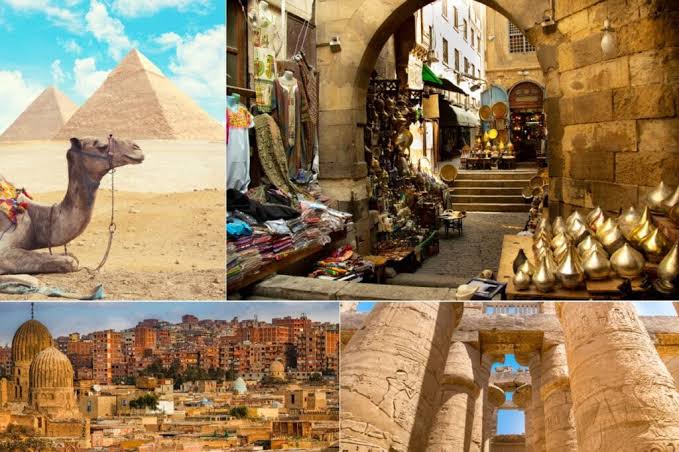
Few cultures span as much history as Egypt’s. It’s a place where 4,500-year-old pyramids sit within view of modern Cairo traffic, where ancient customs still echo through daily family life, and where one of the world’s oldest civilizations continues to shape a modern nation of over 120 million people. This guide covers both sides of Egyptian culture — the ancient legacy that shaped world history, and the living, modern culture that exists in Egypt today.
A Civilization Built Along the Nile
Egyptian culture didn’t develop in isolation — it grew directly out of the Nile River, which made settled agriculture possible in the middle of a desert and allowed one of the world’s earliest and longest-lasting civilizations to flourish for thousands of years. The predictable annual flooding of the Nile enriched the soil, supported large populations, and gave rise to the organized society, writing systems, and monumental architecture that ancient Egypt became known for. Even today, the vast majority of Egypt’s population lives along the Nile’s narrow green corridor, since the rest of the country remains desert.
Ancient Egyptian Culture: The Foundations
Religion and Mythology
Ancient Egyptian religion centered on a vast pantheon of gods tied to natural forces and daily life — Ra, the sun god; Osiris, god of the afterlife; Isis, goddess of magic and motherhood; and Anubis, associated with mummification and the journey to the afterlife, among many others. Religion wasn’t separate from daily life or politics — pharaohs were considered divine or semi-divine rulers, and religious belief shaped nearly every major decision, from architecture to burial practices.
Belief in the Afterlife
“If there’s one part of ancient Egyptian culture almost everyone recognizes, it’s how seriously the Egyptians took what came after death. Egyptians believed the soul continued after death, which is why mummification, burial rituals, and elaborate tombs were so central to their culture — the body needed to be preserved for the soul’s journey into the next world. This belief system is also why the pyramids and the treasures found within tombs like Tutankhamun’s were built with such extraordinary care.
Hieroglyphics and Writing
Ancient Egyptians developed one of the world’s earliest writing systems, hieroglyphics, using a combination of symbols representing sounds, objects, and ideas. For centuries after ancient Egyptian civilization declined, hieroglyphics remained a mystery to modern scholars until the discovery of the Rosetta Stone provided the key to translating them, unlocking a written record of Egyptian history, religion, and daily life that had been unreadable for nearly 1,400 years.
Art and Architecture
Egyptian art followed distinct stylistic conventions that remained remarkably consistent for thousands of years — figures shown in a specific side profile, hierarchical scaling to show importance, and richly detailed tomb paintings depicting daily life, gods, and the afterlife. The pyramids of Giza, built as royal tombs, remain among the most recognizable architectural achievements in human history, and the Great Pyramid held the record as the tallest man-made structure on Earth for thousands of years.
Modern Egyptian Culture and Daily Life
Religion Today
Modern Egypt is a predominantly Muslim country, with roughly 90% of the population identifying as Sunni Muslim and around 10% belonging to Christian communities, primarily the Coptic Orthodox Church, one of the oldest Christian denominations in the world. Religious life plays a significant role in daily routines, family structure, and national holidays, with Islamic and Coptic Christian traditions both visibly present across the country.
Family and Social Life
Family remains the center of Egyptian social life, with strong emphasis on respect for elders, close extended-family ties, and multiple generations often staying closely connected even after children grow up and move out. Hospitality is a deeply held cultural value — guests are typically offered food and tea as a matter of course, and turning down hospitality is often considered impolite.
Egyptian Food
Egyptian cuisine reflects the country’s geography and history, blending influences from the Mediterranean, the Middle East, and North Africa. Staple dishes include koshari (a mix of rice, lentils, pasta, and tomato sauce that’s often considered Egypt’s national dish), ful medames (a slow-cooked fava bean dish eaten widely for breakfast), and molokhia (a leafy green stew served over rice). Bread, particularly aish baladi (a whole wheat flatbread), is central to nearly every meal.
Language
Arabic is Egypt’s official language, though Egyptian Arabic — a distinct dialect spoken daily by the population — differs meaningfully from Modern Standard Arabic used in formal writing and media. Egyptian Arabic has also historically been one of the most widely understood Arabic dialects across the Middle East, largely due to Egypt’s influential film and music industry.
Music, Film, and the Arts
Egypt has long been considered the cultural and entertainment hub of the Arab world, home to a film industry often referred to as the “Hollywood of the Middle East” since the mid-20th century. Egyptian music blends traditional instruments and rhythms with contemporary styles, and legendary Egyptian singers and actors have historically had influence across the entire Arabic-speaking world, not just within Egypt itself.
Egyptian Festivals and Celebrations
Egypt celebrates both religious and national holidays throughout the year. Eid al-Fitr and Eid al-Adha are major Islamic celebrations marked by family gatherings, charity, and festive meals. Coptic Christmas and Easter are significant for Egypt’s Christian communities, often observed on different dates than Western Christian calendars due to the use of the Coptic calendar. Sham el-Nessim, a spring festival with roots tracing back to ancient Egyptian celebrations of the changing seasons, is one of the rare holidays celebrated across religious lines by both Muslim and Christian Egyptians alike — a reminder of how some cultural traditions in Egypt predate the country’s major religions entirely.
Common Misconceptions About Egyptian Culture
Myth: Egypt is only its ancient history. While ancient Egypt understandably dominates global perception, modern Egypt has its own distinct, evolving culture shaped by more recent history, religion, and regional influence — not a place frozen in the era of the pharaohs.
Myth: All of Egypt looks like the desert seen in movies. The vast majority of Egyptians live in dense, green areas along the Nile River and its delta, while the desert — though covering most of the country’s land area — is sparsely populated.
Myth: Egyptian and Arab culture are identical. While Egypt is part of the Arab world and Arabic is the official language, Egyptian culture, particularly its ancient heritage, Coptic Christian population, and distinct dialect, gives it a cultural identity that’s related to but distinct from other Arab nations.
Egypt’s Cultural Heritage as a Living Economy
Ancient Egyptian culture isn’t just preserved in museums — it remains one of the country’s most important economic and cultural assets today. Tourism built around ancient sites like the Pyramids of Giza, the Valley of the Kings, and the temples of Luxor and Karnak draws millions of visitors annually and plays a major role in Egypt’s economy. This creates a unique dynamic where ancient heritage and modern daily life are constantly intertwined — many Egyptians work in fields directly connected to preserving, studying, or sharing a civilization thousands of years older than the country’s current government.
Egypt has also increasingly invested in showcasing this heritage to the world, including major museum openings dedicated to consolidating and displaying its ancient artifacts, reflecting how central this history remains to Egypt’s national identity and its relationship with the rest of the world.
Why Egyptian Culture Still Shapes the World Today
Ancient Egyptian influence extends far beyond archaeology. Elements of Egyptian mythology, symbolism, and architecture have influenced art, design, and popular culture globally for centuries, appearing everywhere from museum exhibits to films to modern fashion. Meanwhile, modern Egypt continues to shape Arabic-language media, music, and film across the Middle East, giving the country an outsized cultural influence relative to its size. If you enjoy exploring how history and modern life intersect within a single culture, our guide to Japanese culture covers a similarly layered relationship between ancient tradition and contemporary life on the other side of the world.
Frequently Asked Questions
What language do Egyptians speak? Arabic is Egypt’s official language, though most Egyptians speak Egyptian Arabic in daily life, a distinct dialect from Modern Standard Arabic used in formal writing and media.
What religion is most common in Egypt? Islam is the majority religion, with the Sunni branch predominant. Egypt is also home to a significant Coptic Christian population, one of the oldest Christian communities in the world.
Why are the pyramids important to Egyptian culture? The pyramids reflect ancient Egyptians’ deep beliefs about the afterlife and the divine status of pharaohs, and they remain a defining symbol of Egyptian identity and a major source of national pride today, alongside their historical and archaeological significance.
Is modern Egyptian culture similar to ancient Egyptian culture? Some traditions, like the Sham el-Nessim spring festival, trace back thousands of years, but modern Egyptian culture has also been heavily shaped by Islamic and Christian history, colonial-era influences, and 20th-century media and politics — making it a blend of ancient roots and much more recent history.
Conclusion
Egyptian culture is rarely just one thing — it’s the layering of an extraordinary ancient civilization onto a modern nation shaped by Islam, Coptic Christianity, Arabic language and media, and deep-rooted family and hospitality traditions. Understanding Egypt means appreciating both halves: the pyramids and pharaohs that shaped world history, and the everyday culture — food, family, festivals, and language — that Egyptians live today.
For further reading on ancient Egyptian history and artifacts, the Smithsonian’s Egyptian collection and research is a reliable, authoritative resource.