
The Best Fluffy Pancakes recipe you will fall in love with. Full of tips and tricks to help you make the best pancakes.

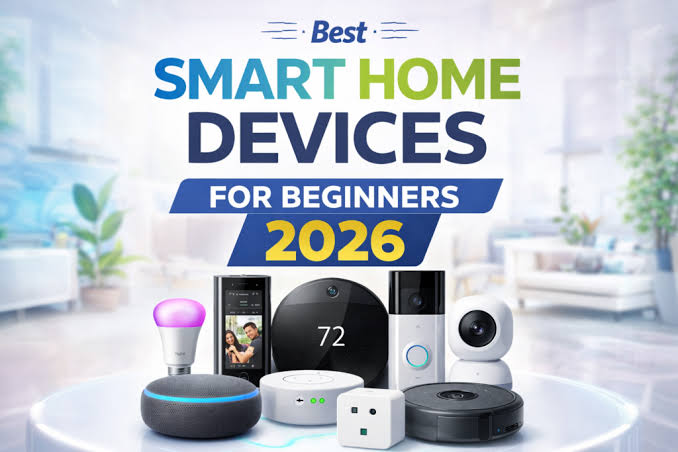
Smart home technology has quietly gone from a novelty for tech enthusiasts to something close to standard in new homes. Nearly half of U.S. households now use at least one connected device, whether that’s a smart thermostat, a video doorbell, or a voice assistant. But for anyone just getting started, the sheer number of brands, standards, and product categories can feel overwhelming.
This guide breaks down what smart home technology actually is, what’s changed in 2026, and how to build a connected home step by step without overspending on gadgets you won’t use.
What Is Smart Home Technology?
Smart home technology refers to internet-connected devices that let you monitor, automate, or remotely control things in your home — lighting, temperature, locks, security cameras, and appliances — usually through a smartphone app or voice assistant. The core appeal isn’t just convenience; automation can also reduce energy waste, improve home security, and, for many households, provide added peace of mind through remote monitoring.
What’s Different About Smart Homes in 2026
The Matter Standard Is Finally Solving Compatibility Problems
For years, the biggest frustration with smart home devices was fragmentation — a lock from one brand, a light from another, and a thermostat from a third, each requiring its own separate app. Matter, a universal smart home standard now supported by over 550 technology companies, is fixing that by letting devices from different brands work together inside a single app or automation routine, rather than requiring a different app for every product category. If you’re buying new devices in 2026, checking for Matter compatibility is one of the simplest ways to avoid ending up with a fragmented, hard-to-manage system.
AI Is Moving From “Responding” to “Predicting”
Earlier smart home devices mostly waited for a command — “turn on the lights,” “set the thermostat to 70.” In 2026, AI-powered systems increasingly learn patterns and act proactively, such as preheating a home before you typically arrive or adjusting lighting based on the time of day and your usual routine, without needing an explicit command each time.
Design Is Becoming Part of the Pitch
Smart home products used to prioritize visible technology — screens, blinking lights, obvious sensors. In 2026, there’s a clear shift toward devices that blend into home design rather than standing out, with manufacturers increasingly treating smart home tech as part of a home’s architecture and interior design rather than as standalone gadgets.
Energy Efficiency Is a Bigger Driver Than Novelty
Rising utility costs have pushed more households toward smart home technology specifically for its energy-saving potential — smart thermostats, energy monitoring plugs, and automated shading systems that can meaningfully reduce electricity and heating bills over time, not just add convenience.
The Main Categories of Smart Home Devices
Smart Lighting
Smart bulbs and switches let you control lighting remotely, set schedules, and adjust brightness or color temperature — often one of the easiest and cheapest smart home upgrades to start with, since many options don’t require any wiring changes.
Smart Thermostats
Devices like the Nest and Ecobee learn your schedule and adjust heating and cooling automatically, often paying for themselves over time through reduced energy usage, particularly in homes with inconsistent occupancy schedules.
Smart Locks and Video Doorbells
These add both convenience (remote unlocking, keyless entry) and security (motion alerts, video recording, visitor logs), and are among the most commonly adopted smart home categories alongside lighting and thermostats.
Smart Security Cameras and Sensors
Beyond basic cameras, 2026’s security-focused smart home products increasingly include specialized sensors — for example, cooktop safety sensors that detect unsafe cooking conditions, which is particularly relevant for households with older adults, since falls and kitchen accidents remain leading causes of home injuries.
Robot Vacuums and Cleaning Devices
Robotic cleaning technology has advanced well beyond simple floor vacuuming, with newer models now able to navigate stairs between floors and handle basic obstacle-clearing tasks, reducing the manual cleaning categories a smart home can realistically automate.
Voice Assistants and Hubs
Devices like Amazon Alexa, Google Home, and Apple Home act as a central control point for other smart devices, letting you manage lighting, locks, thermostats, and more through voice commands or a unified app rather than juggling separate apps for each brand.
What Does a Smart Home Actually Cost?
Smart home spending breaks down roughly into three tiers, and understanding this can help set realistic expectations before you start shopping:
Starter tier (under $200): A handful of smart bulbs, a smart plug or two, and a basic voice assistant speaker. Enough to test whether smart home automation genuinely fits your habits before committing further.
Mid-range tier ($200–$800): Adding a smart thermostat, a video doorbell, and a couple of smart locks. This tier is where most of the practical energy savings and security benefits start showing up.
Full-home tier ($1,000+): Whole-home lighting control, integrated security camera systems, smart shading, and professional installation for more complex automation routines. This tier is where design-forward, “invisible” smart home technology tends to live, since it often involves built-in rather than retrofit solutions.
Most households find the mid-range tier delivers the best balance of noticeable benefit versus cost, while the full-home tier is better suited to new construction or major renovations where the infrastructure is being built from scratch anyway.
How to Start Building a Smart Home Without Overspending
Start with one category, not everything at once. Trying to automate your entire home in one purchase is expensive and often leads to devices that don’t actually get used. Picking one starting point — usually lighting or a thermostat — lets you learn what you actually want before expanding further.
Prioritize Matter-compatible devices. This future-proofs your setup and avoids the fragmentation problem that frustrated earlier smart home adopters, making it easier to add devices from different brands later without needing multiple separate apps.
Consider what actually saves money vs. what’s just convenient. Smart thermostats and energy monitoring devices often have a real, calculable return on investment. Decorative smart lighting or novelty gadgets are more about convenience and enjoyment than savings, which isn’t a bad thing, but it’s worth being clear-eyed about which category a purchase falls into.
Think about your household’s specific needs. A household with young children, older adults, pets, or specific security concerns will benefit from different device categories than someone living alone primarily interested in convenience — there’s no single “right” smart home setup.
If you’re weighing a smart home investment alongside other big purchases this year, our guide to the best electric vehicles of 2026 covers a similar buyer’s-guide approach for comparing upfront cost against long-term savings.
Common Smart Home Concerns Worth Understanding
Privacy and data collection. Many smart home devices collect usage data, and it’s worth reviewing a manufacturer’s privacy policy before buying, particularly for cameras, microphones, and voice assistants that are always listening for a wake word. Choosing established brands with clear data policies is generally safer than opting for the cheapest unknown-brand alternative.
Reliance on Wi-Fi and internet connectivity. Most smart home devices stop functioning as “smart” devices without an internet connection, and it’s worth understanding which devices in your home still work in some basic capacity (like a lock still unlocking manually) versus which become entirely non-functional during an outage.
Ongoing subscription costs. Some smart security and camera systems require a subscription for full functionality, like cloud video storage, which can add a recurring cost beyond the initial device purchase that’s easy to overlook when comparing prices.
Frequently Asked Questions
Do I need a smart home hub to get started? Not necessarily — many individual devices work through their own app without a central hub. A hub becomes more useful once you have several devices from different brands that you want to control and automate together in one place.
Is the Matter standard actually necessary, or just a nice-to-have? It’s increasingly a practical necessity if you plan to buy devices from multiple brands over time, since it prevents the fragmented, multi-app frustration that affected many early smart home setups.
Do smart home devices actually save money? Some categories, particularly smart thermostats and energy monitoring devices, have well-documented energy savings. Others, like smart lighting or voice assistants, are more about convenience than direct cost savings, though they can still indirectly reduce costs through automation.
What’s the easiest smart home device to start with? Smart plugs and smart bulbs are generally the easiest and most affordable entry points, since they require no wiring changes and let you test smart home automation before investing in higher-cost categories like thermostats or security systems.
Conclusion
Smart home technology in 2026 is less about collecting gadgets and more about building a genuinely integrated system — helped significantly by the Matter standard finally solving the compatibility headaches that frustrated early adopters. Start with one category that solves a real problem in your home, prioritize compatibility, and expand gradually rather than trying to automate everything at once.
For neutral, ongoing coverage of new smart home standards and device compatibility, The Verge’s smart home section is a reliable source to check before making a purchase.