
The Best Fluffy Pancakes recipe you will fall in love with. Full of tips and tricks to help you make the best pancakes.

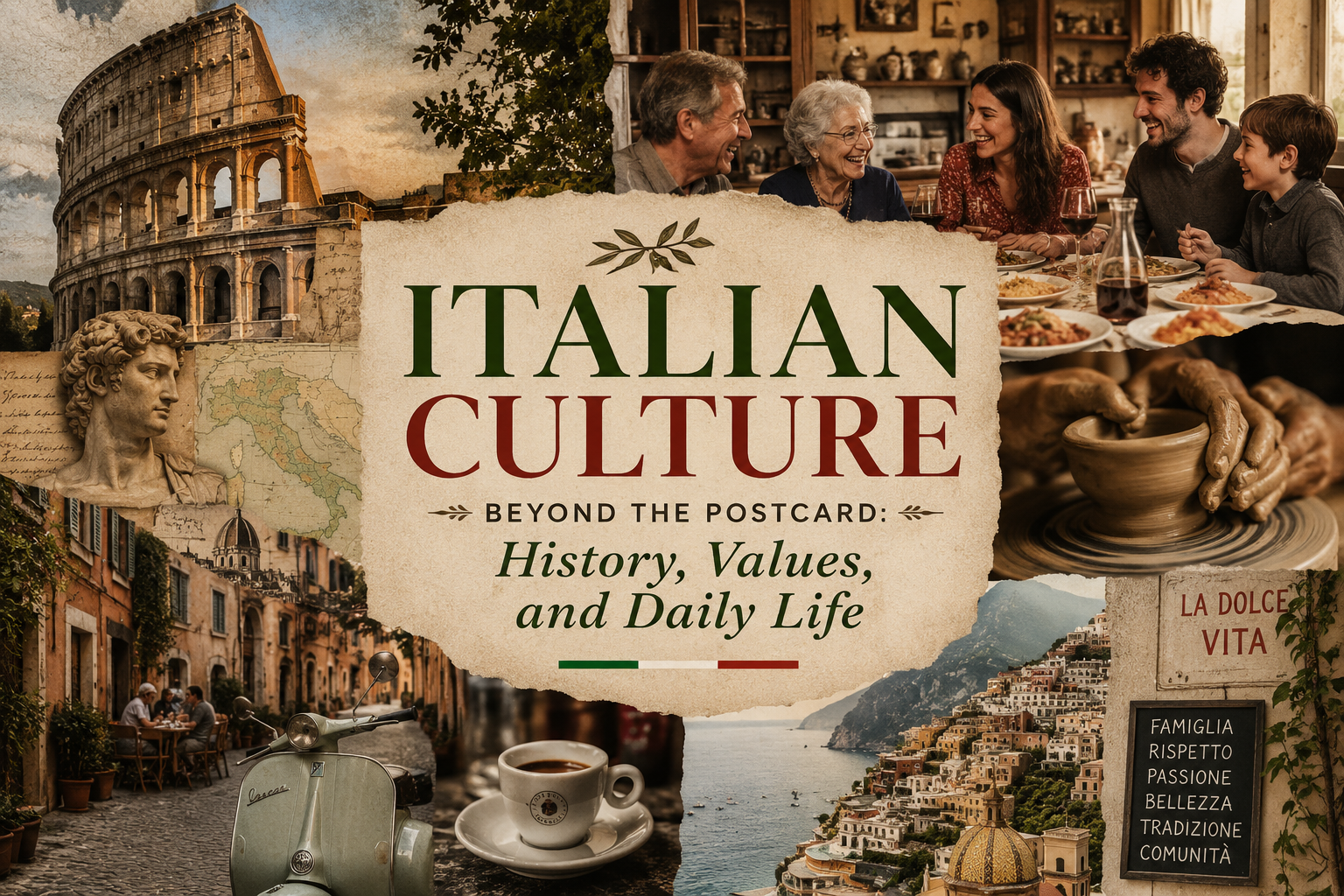
Ask someone to picture Italian culture and you’ll probably get pasta, the Colosseum, and maybe a gondola thrown in for good measure. None of that is wrong exactly — it’s just incomplete, the kind of shorthand that flattens a genuinely complicated national identity into a handful of postcard images. What actually holds Italian identity together isn’t a checklist of landmarks and dishes; it’s a set of deep-rooted values around family, food, and regional pride that shape daily life in ways tourists rarely see, let alone understand.
This guide digs into where Italian culture actually comes from, what genuinely drives it day to day, and how much regional variation hides underneath the single word “Italian.”
A Nation That’s Younger Than It Looks
Italy as a unified nation is younger than most people assume — it only came together in the 19th century, following centuries during which the peninsula was a patchwork of independent city-states, kingdoms, and territories, each developing its own dialect, cuisine, and local customs long before “Italian” identity existed as a national concept. That fragmented history explains something people often miss: regional identity in Italy frequently runs deeper than national identity. Someone might introduce themselves as Sicilian, Tuscan, or Venetian well before they’d call themselves simply Italian, and the cultural differences between regions can be substantial — different dialects, different culinary traditions, sometimes different attitudes entirely.
Rome’s Long Shadow
You can’t talk about Italian culture without acknowledging just how much the Roman Empire still echoes through it. Roman law, engineering, and governance shaped Western civilization broadly, and physical reminders of that legacy — aqueducts, amphitheaters, roads still partially in use — remain scattered across the country, not tucked away in museums but sitting in the middle of everyday cities. Centuries later, the Renaissance reignited another wave of Italian cultural dominance, this time in art, architecture, and intellectual life, producing figures like Leonardo da Vinci and Michelangelo whose work still defines much of the world’s idea of what “high culture” even looks like.
Faith as Cultural Backdrop, Not Just Religion
Catholicism runs deep in Italian cultural identity, partly for the obvious reason that Vatican City sits inside Rome itself. Religious holidays, church architecture, and Catholic customs remain deeply woven into daily life and the national calendar, even among Italians who wouldn’t describe themselves as especially devout. Faith here functions less like a strict, actively practiced doctrine for everyone and more like cultural wallpaper — present in how holidays are celebrated, how life milestones are marked, and how public space is shaped, regardless of how often any individual actually attends Mass.
Family First, Then Everything Else
If there’s one value that shows up consistently across every Italian region despite their differences, it’s the centrality of family. Extended family ties, frequent multi-generational gatherings, and strong obligations toward parents and grandparents remain far more central to Italian life than in many other Western countries. Sunday family lunches, often stretching for hours across multiple courses, aren’t a special occasion — for many Italian households they’re simply how the week is structured, a fixed point everyone plans around rather than an event that needs scheduling in advance.
Food as Identity, Not Just Sustenance
Calling Italian food “cuisine” almost undersells how central it is to cultural identity. Regional variation here is enormous — what counts as authentic pasta, sauce, or bread changes dramatically from Milan to Naples to Palermo, and Italians tend to take genuine, sometimes fierce pride in their specific regional dishes over any generalized national version. Meals themselves follow a distinct structure most non-Italians don’t fully replicate: multiple courses (antipasto, primo, secondo, dolce) eaten slowly, treated as a social event stretched across real time rather than something to rush through between other tasks.
Coffee culture deserves its own mention here too. Espresso in Italy isn’t really the sit-and-work-for-hours ritual it’s become in much of the world — it’s typically consumed quickly, standing at a bar counter, as a brief pause rather than a lingering activity, which surprises a lot of visitors expecting something closer to a café culture built around long stays.
The Art of Appearing Effortless
Italians have a specific concept — bella figura, roughly “making a good impression” — that shapes everything from how people dress to how they carry themselves in public. It’s not pure vanity; it reflects a broader cultural value placed on presentation, dignity, and self-respect in how you show up in the world. This is part of why Italian fashion carries such outsized global influence relative to the country’s size — style here isn’t treated as frivolous, it’s treated as a genuine expression of self-respect.
Craftsmanship as a Cultural Value
Beyond fashion specifically, a broader reverence for skilled craftsmanship runs through Italian culture — leather goods, furniture, automotive design, and countless smaller artisanal trades that have been passed down within families for generations. This isn’t purely nostalgic; it reflects a genuine cultural preference for quality and heritage over mass production, one reason “Made in Italy” still carries meaningful weight internationally as a marker of craftsmanship rather than just a country-of-origin label.
Regional Identity: The Thing Outsiders Underestimate Most
Because Italy unified so late in its history, and because its regions developed such distinct identities beforehand, “Italian culture” genuinely resists easy generalization more than most national cultures do. Northern Italy and Southern Italy in particular differ meaningfully — economically, culturally, sometimes even in general outlook — differences with roots stretching back centuries before unification and still very much alive today. Understanding modern Italy means understanding it isn’t one culture wearing one flag; it’s dozens of regional identities that happen to share a passport.
Festivals That Reveal What Actually Matters
Italy’s calendar is dense with celebrations that reflect both religious tradition and intensely local pride. Carnevale, particularly Venice’s version with its elaborate masks and costumes, draws international attention, but countless smaller regional festivals — sagre, local food and harvest celebrations tied to a specific town or even a single dish — matter just as much to Italian cultural life, if not more, precisely because they’re hyper-local rather than nationally marketed. Christmas and Easter carry deep religious and family significance nationwide, typically built around extended family gatherings and, unsurprisingly, elaborate multi-course meals.
Myths Worth Retiring
The idea that all Italian food is the same from region to region badly undersells just how much cuisine shifts across the country — treating “Italian food” as one uniform thing misses most of what actually makes it interesting. The assumption that Italy is culturally uniform makes the same mistake at a larger scale, ignoring the depth of regional identity that predates the country itself. And the notion that Italians are constantly loud and dramatic flattens a genuinely wide range of regional personalities and communication styles into a single lazy stereotype that doesn’t hold up once you’ve spent real time across different parts of the country.
Why Italian Culture Still Shapes the World
Italian influence on art, architecture, fashion, and food reaches well beyond Italy’s own borders, shaping global aesthetics and culinary standards in ways few countries can match relative to their size. If you’re curious how other nations balance deep historical weight with a strongly regional, sometimes fragmented sense of national identity, our guide to Turkish culture explores a comparable tension between historical layering and modern national identity.
Frequently Asked Questions
What religion is most common in Italy? Catholicism, reflecting the country’s deep historical ties to the Vatican and Rome, though practice varies from strict devotion to a more cultural, background-level connection to the faith.
Why is regional identity so strong in Italy? Italy unified relatively late as a nation, following centuries as a collection of independent city-states and kingdoms, each developing distinct dialects, cuisines, and customs well before a shared national identity existed.
What is “bella figura”? A cultural concept centered on making a good impression through presentation and dignity — it shapes fashion, public behavior, and general self-presentation across Italian culture.
Is Italian food really that different by region? Yes, significantly — regional culinary traditions vary enormously across the country, and Italians frequently take real pride in their specific local dishes over any generalized national version of Italian food.
The Bottom Line
Italian culture is less a single tradition than a layered stack of them — ancient Roman influence, Renaissance artistic legacy, deep Catholic roots, and fiercely distinct regional identities all folded into one national label that barely captures the differences underneath it. Understanding it means looking past the postcard version and toward what actually holds daily life together: family, food treated as ritual rather than routine, and regional pride that runs older and deeper than the country itself.
For further reading on Italian cultural heritage sites and traditions, the UNESCO World Heritage listings for Italy are a reliable, authoritative resource.