
The Best Fluffy Pancakes recipe you will fall in love with. Full of tips and tricks to help you make the best pancakes.

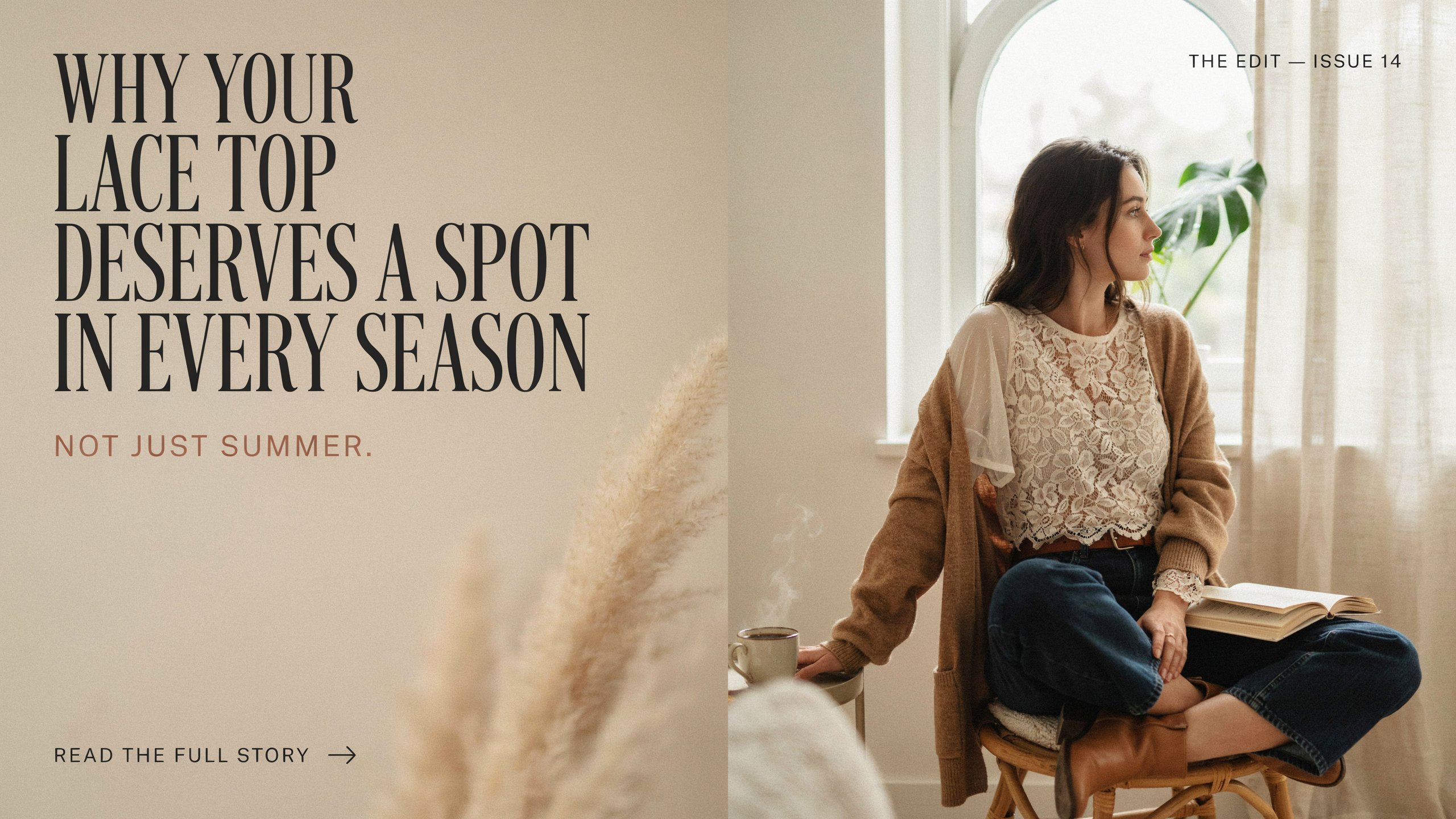
Most closets treat lace like a summer guest that overstays its welcome by exactly one season and then gets shown the door — worn for a few warm months, then shoved to the back of a drawer until next June. That’s a shame, honestly, because the fabric itself has nothing to do with the calendar. Once you know how to layer around it, lace turns out to be one of the more genuinely flexible pieces a wardrobe can have. With the right pairing, the same lace top can move from a warm-weather brunch to a cold-weather layered outfit without looking out of place in either one.
This guide walks through how to actually style lace across all four seasons, so that top stops sitting unused for most of the year.
Blame the Outfit, Not the Fabric
Lace’s reputation as a warm-weather-only fabric comes almost entirely from how it’s typically styled, not from anything inherent to the material itself. Worn alone with shorts, a lace top reads as distinctly summer. Layer the exact same piece under a blazer, over a turtleneck, or with structured trousers instead, and it shifts entirely into fall or winter territory without changing a single thing about the top itself. The fabric stays neutral throughout — it’s everything built around it that tells the season what to expect.
Spring
Spring might be lace’s most natural home, sitting right between the coverage cooler months call for and the lightness summer allows. A cropped jacket or lightweight cardigan thrown over the top, paired with straight-leg jeans or a midi skirt, keeps things easy without losing that seasonal softness, and pastel or floral-print lace leans into spring without tipping into costume territory. If a piece feels too sheer or open-weave for daytime, a thin camisole underneath solves that without adding real bulk. On feet, flats, low block heels, or clean white sneakers keep the whole thing feeling fresh rather than accidentally overdressed.
Summer
This is where lace tops get worn the most, and it makes sense — the typically lightweight, breathable construction suits the heat on its own. Denim shorts, a flowy skirt, or linen trousers make for an easy daytime pairing, while tucking that same top into a high-waisted skirt dresses it up considerably once evening rolls around. The real shift here is restraint: skip the heavier layering that works in cooler months, let the lace stand on its own, and save structured pieces for when they’re actually needed for warmth rather than for show. Sandals, espadrilles, or slide sandals round out a summer lace outfit without pushing it toward formal.
Fall
This is where a lace top starts feeling like a genuinely different piece — purely through layering and color, not through anything about the garment changing. A structured blazer or chunky cardigan over the top, paired with dark denim or tailored trousers, does most of the seasonal heavy lifting, and richer tones like burgundy, forest green, or navy help the piece read as autumn rather than a leftover summer item that wandered into the wrong month. One of the more effective moves for stretching a lighter, short-sleeve or sleeveless lace top into fall: layer a fitted turtleneck or long-sleeve base underneath it, which adds instant warmth and a completely different silhouette without requiring a single new purchase. Ankle boots or loafers finish things off and confirm the shift away from summer’s more casual footwear.
Winter
Winter is the season most people assume rules lace out entirely, but the right layering approach proves that assumption wrong. Worn under a sweater, with the lace peeking through at the collar or cuffs, or beneath a tailored coat over wool trousers and opaque tights, the top becomes an accent layer rather than something expected to carry the outfit, or the warmth, on its own. That’s really the key winter shift: lace as an underlayer, a textural detail glimpsed rather than the outermost piece doing all the work. Knee-high boots or heeled ankle boots complete the more structured, layered silhouette cold weather tends to call for.
From Errand-Running to Dinner Reservations
The same lace top can move through wildly different settings depending entirely on what surrounds it. Paired with denim and simple flats or sneakers, kept deliberately light on accessories, it reads as effortless daytime wear rather than anything special-occasion. Layer it under a blazer with tailored trousers or a pencil skirt — ideally in a more structured or opaque lace rather than a highly sheer one — and the exact same top shifts into genuinely professional territory. Tuck it into a fitted skirt, add statement jewelry and heels, and it dresses up considerably for an evening out, no separate formal wardrobe required.
Accessories carry more of this seasonal weight than people usually give them credit for. In spring and summer, delicate jewelry and lighter-weight scarves or bags keep the whole look airy, matching the lace’s own texture. Come fall and winter, switching to chunkier jewelry, a more structured bag, and richer-toned accessories helps the same top feel intentionally seasonal instead of like a summer piece that wandered in by accident. As a general rule, match the weight and formality of your accessories to whatever’s layered around the lace, not to the lace itself — the surrounding pieces do most of the work signaling what season it actually is.
Not Every Lace Top Flexes Equally Well
A few specific qualities determine how far a given lace top can actually stretch across seasons and occasions. Fully sheer lace demands more layering thought — a camisole, something structured underneath — while semi-opaque lace can often stand on its own in more situations without that extra step. Sleeve length matters too: long sleeves extend naturally into cooler weather, while sleeveless or short-sleeve versions need more deliberate layering to work outside the warmer months. And color plays its own role — neutrals like black, white, and cream transition across seasons far more easily than bright or pastel prints, which tend to read as tied to one specific time of year by association alone.
If you’re building a wardrobe around pieces that genuinely earn their keep like this, our guide on building a capsule wardrobe on a budget covers the same underlying idea — choosing things that work across multiple contexts instead of buying for a single use case.
Keeping Delicate Fabric Wearable Season After Season
Lace is more delicate than most everyday wardrobe staples, and how it’s cared for has a real effect on how long it stays wearable through repeated seasonal use. Hand washing, or a gentle cycle inside a mesh laundry bag, goes a long way toward preventing snagging, and air-drying rather than machine drying protects the delicate weave far better than heat exposure ever does — heat is what tends to cause shrinking or outright damage over time. Storing pieces folded rather than hung, or using padded hangers when hanging is unavoidable, also helps prevent the stretching or misshaping that thinner, more delicate weaves are especially prone to.
A Few Ways People Get This Wrong
Assuming lace is automatically formal is probably the most common misstep — casual pairings like denim, sneakers, and minimal accessories can make the exact same top read as completely everyday, nothing special-occasion about it. Piling too many heavy layers on top of something this delicate is another one; it tends to bury the detail entirely and adds bulk nobody needs, when one thoughtful layer usually accomplishes more than three competing ones. And overlooking opacity when picking an outfit for the occasion — wearing something highly sheer without the right layering underneath for a work setting, for instance — creates a mismatch that has less to do with the lace itself and more to do with not thinking through the context it’s headed into.
Frequently Asked Questions
Can lace tops actually be worn in winter? Absolutely, once you stop expecting the lace to keep you warm. Its job in a winter outfit is to peek through — under a sweater, at a collar, at the cuffs — while everything else around it handles the actual temperature.
What should go underneath a sheer lace top? Something plain in a color close to the lace itself, usually a fitted cami or bralette. It fills in the gaps without flattening the pattern or making the sheer part look like an accident.
Is a lace top ever actually appropriate for work? It can be — the context around it does most of the deciding. Add a blazer, keep the bottom half tailored, and lean toward something with more coverage than a sheer piece, and it slides into a professional setting without much fuss. The fabric itself was never the obstacle.
How do you stop a lace top from snagging in the wash? Put it in a mesh bag before the machine ever gets near it, or skip the machine altogether. Tossing it loose with everything else in a regular load is basically an invitation for the delicate threads to catch on zippers, hooks, or rougher fabric.
The Bottom Line
Nobody decided lace only works in July. That idea comes from habit, not from anything true about the fabric — swap the layers, shift the colors, change the shoes, and the exact same top can carry you from a summer patio to a snowed-in evening without ever looking like it wandered into the wrong season. What actually changes across those outfits is everything surrounding the lace, not the lace itself. Treat it that way, and it stops being a piece you reach for three months a year and becomes one you reach for constantly.
For more general fabric care guidance, Good Housekeeping’s laundry and fabric care guides offer reliable, practical advice worth referencing for delicate garments like lace.