
The Best Fluffy Pancakes recipe you will fall in love with. Full of tips and tricks to help you make the best pancakes.

Skip the commute, skip the small talk by the coffee machine, skip the dress code entirely — remote work fixed a genuinely long list of annoyances, and it’s hard to find anyone who’s made the switch and actually wants to go back It also quietly created a few new ones. Without a physical separation between “work” and “home,” it’s easy to end up sitting for ten straight hours, skipping meals until you’re starving, and going entire days without a real conversation that isn’t over Slack.
None of that is inevitable. It’s just what happens by default when nobody’s building the structure for you anymore. Here’s how to build healthy habits into a remote work setup that doesn’t come with any of the built-in routines an office naturally provided.
The Office Was Doing More for You Than You Realized
In an office, you’re forced into a certain amount of movement and structure without trying — walking to meetings, standing at the printer, a lunch break that pulls you away from your desk because everyone else is leaving too. Take the office away and all of that built-in structure disappears with it, and most people never actually replace it with something intentional — they just let the gap sit thereThe result isn’t usually one dramatic health problem — it’s a slow accumulation of small ones: worse posture, disrupted sleep, less movement, and less real social contact, none of which feel urgent enough to fix until they’ve been building for months.
Getting Your Body Through the Day Intact
Working from a couch or bed might feel comfortable short-term, but it tends to produce poor posture and body strain over the course of a full workday. A dedicated desk and chair — even a simple, inexpensive setup — makes a meaningful difference over months of daily use, and it also helps create a mental boundary between “work mode” and “home mode” that a couch simply can’t provide.
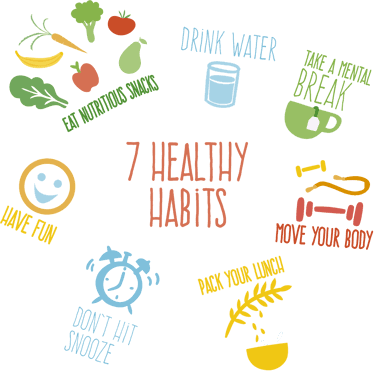
Since remote work removes the built-in walking that comes with commuting and office life, movement has to get added back in on purpose. This doesn’t require a formal workout — short walks between meetings, stretching breaks, or even pacing during phone calls all count, and consistency across a week matters more than any single intense session ever will.
Eating lunch at the desk while still working is an easy trap to fall into, especially without coworkers pulling you away from it, but stepping away from the screen for actual breaks supports both physical health (reduced eye strain, movement) and mental focus for the rest of the day. Treating breaks as optional rather than built-in tends to mean they quietly disappear from the routine entirely over time.
Monitor height, chair support, and keyboard position all add up to real physical strain across a full remote workday, even when each individual factor seems minor on its own. Small adjustments — raising a laptop to eye level, adding an external keyboard, positioning a chair for proper back support — head off the kind of chronic discomfort that builds gradually and often isn’t noticed until it’s already become a genuine problem.
Keeping Your Head in a Reasonable Place
Without a commute acting as a natural transition, work can bleed into the rest of the day with no clear stopping point. A specific end-of-day ritual — closing the laptop, a short walk, changing clothes — recreates some of that lost transition and signals to your brain that work is actually finished, not just paused for now.
Remote work can be genuinely isolating, even for people who wouldn’t describe themselves as especially social to begin with. Scheduling regular video calls, virtual coworking sessions, or in-person meetups with colleagues or friends helps offset the social contact that used to happen automatically just by showing up to an office.
A common misconception treats reduced productivity as remote work’s main risk, but plenty of remote professionals actually struggle with the opposite — working longer hours than they ever would in an office, since there’s no natural “everyone’s leaving” cue and the work is always physically within reach. Setting genuine boundaries around work hours protects against burnout just as much as staying motivated protects against underproductivity, arguably more so.
Screen-based jobs already demand a full day of screen time, which makes it worth being intentional about screen use during breaks and after work too, since piling on more of it can compound mental fatigue that’s already building from the job itself. If this feels like a bigger issue day to day, our guide on digital detox covers practical ways to build in intentional breaks from constant screen exposure.
Protecting Sleep When Nobody’s Forcing You To
Remote work’s flexibility can quietly erode sleep consistency — staying up later since there’s no early commute the next morning, or sleeping in since the “walk” to work takes about thirty seconds. A consistent sleep and wake time, even with genuinely flexible work hours, supports energy and focus far more reliably than an inconsistent schedule ever does. Our guide on how to improve sleep quality naturally covers specific habits that support this in more depth.
Working from home can also mean spending an entire day indoors without much conscious thought about it, which affects both mood and circadian rhythm regulation over time. Even a short stretch of outdoor time, or sitting near a window with natural light in the morning, helps anchor the body’s internal clock in a way indoor artificial lighting just doesn’t replicate.
And without coworkers heading to lunch together as a natural cue, it’s remarkably easy to lose track of regular eating while absorbed in work, leading to skipped or delayed meals that drag down energy and focus later in the day. Setting even a rough, loosely held meal schedule helps maintain steadier energy across a full remote workday.
Rebuilding What the Office Used to Handle For You
The common thread across every one of these habits is that remote work removes structure an office used to provide automatically, and healthy remote work really just means deliberately rebuilding that structure rather than assuming it’ll show up on its own. If you’re working on building sustainable habits more broadly, not just for remote work specifically, our guide on self-improvement tips for beginners covers a gradual approach to building new habits without overwhelming an already full schedule.
Where This Tends to Go Wrong
Mistaking flexibility for permission to drop structure altogether trips up more people than almost anything else on this list — flexible hours are a real perk, sure, but strip out every bit of structure underneath them and days start blurring into each other, quietly chipping away at both productivity and wellbeing
Assuming isolation isn’t affecting you until it clearly, undeniably is tends to catch people off guard, since social isolation from remote work usually builds gradually, and by the time it’s by the time it’s obviously dragging down mood or motivation, it’s typically been quietly building for weeks, not days.
Working from bed “just this once” has a way of repeating itself.Working from bed ‘just this once’ has a way of repeating itself. One lazy morning under the covers won’t do any real damage, but let it become a pattern and it starts eroding both your posture and the mental line between work and rest that a dedicated workspace is supposed to draw a separate workspace is supposed to provide.
And brushing off physical symptoms until they’re impossible to ignore is one of the more avoidable mistakes on this list — a nagging bit of back pain, tired eyes, or a recurring headache from a bad setup gets waved off as nothing worth mentioning far too often. as normal until they’ve turned into a chronic, much harder problem to fix.
Frequently Asked Questions
Realistically, how much movement does a remote worker actually need in a day? There’s no magic number to hit, but scattering short movement breaks across the whole day tends to counteract a sedentary job far better than saving all your activity for one workout bookended at either end of it.
Does working from home actually take a bigger toll on mental health than office life? Not on its own, no — it trades one set of stressors for another. Commuting and office politics disappear, but isolation and blurry boundaries move in to take their place. Which way it actually tips depends almost entirely on whether you’ve built intentional habits to handle the specific problems remote work brings with it.
How do I stop working late into the evening when I work from home? Two things do most of the work here: a specific ritual to mark the end of the day, and a workspace that’s physically separate from where you relax. Together they rebuild the boundary a commute used to provide for free, making it much easier to actually leave work behind at a consistent time instead of drifting back to it all evening.
Do I have to spend a fortune on a home office to actually work healthily?No — proper monitor height, decent back support, a desk that isn’t the kitchen table can all be sorted out on a modest budget. Sticking with good habits consistently matters far more than how much you spent getting there.”
The Bottom Line
An office hands you structure without asking — a commute that bookends the day, a lunch cue from coworkers, a moment when everyone visibly logs off. Take that office away and none of it shows up on its own; you have to build it back yourself. A real workspace, movement and breaks that are actually scheduled rather than hoped for, sleep that’s protected on purpose, and social contact you didn’t leave to chance — that’s really the whole list. Nothing here demands a total life overhaul, just the kind of small, consistent choices an office used to make for you without you ever noticing.
The (https://www.cdc.gov/physical-activity-basics/guidelines/adults.html) for adults back this up directly — it’s the movement scattered throughout your day, not just a dedicated workout, that does the real work of offsetting how much prolonged sitting costs your health, which is exactly the trap a lot of remote jobs quietly set without anyone noticing.”