
The Best Fluffy Pancakes recipe you will fall in love with. Full of tips and tricks to help you make the best pancakes.

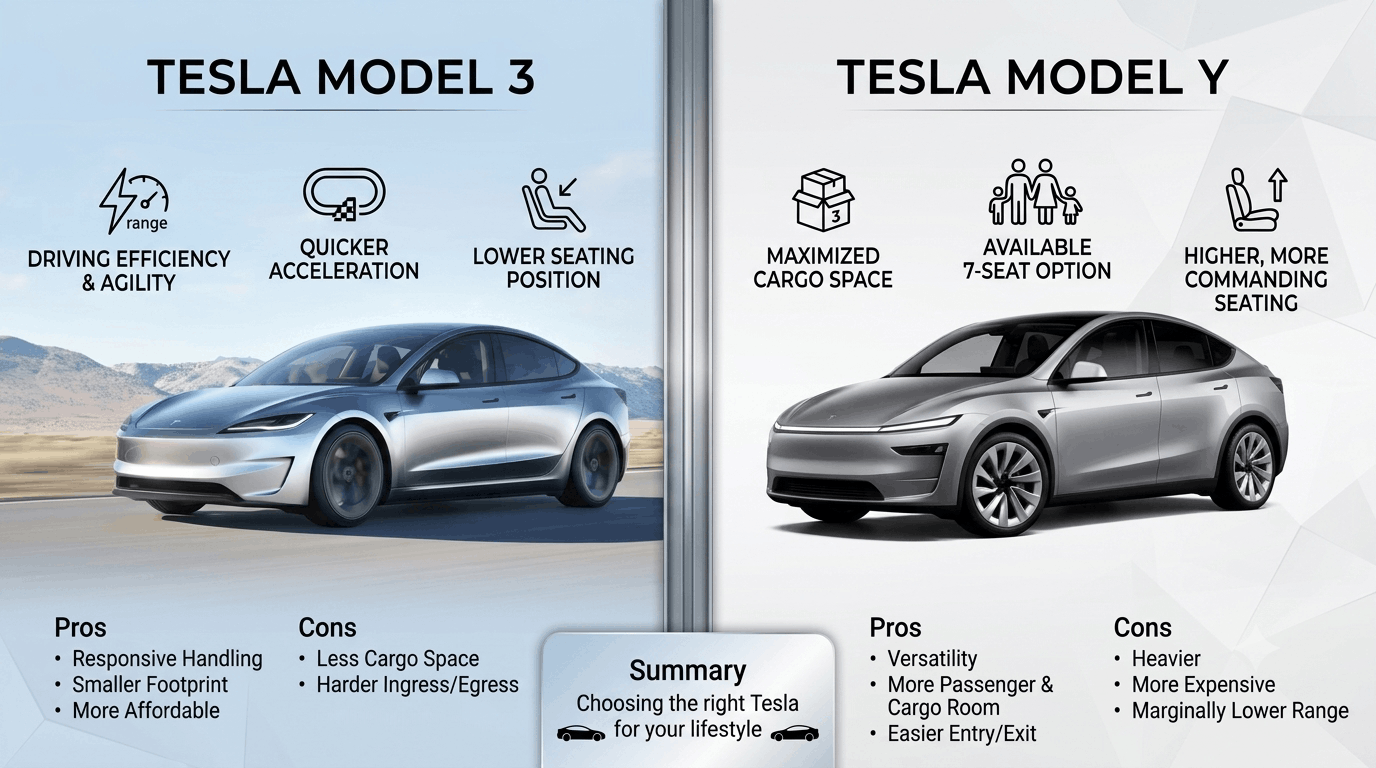
Tesla’s two most popular models sit close enough in price that the decision rarely comes down to budget alone. The Model 3 is the sedan, lower to the ground and more efficient. The Model Y is the SUV built on largely the same underlying platform, taller, roomier, and more practical for anyone who regularly hauls more than a couple of passengers or a trunk’s worth of cargo. Both share most of the same technology, the same Supercharger access, and a similar ownership experience — which is exactly what makes the choice between them genuinely tricky rather than obvious at first glance.
This guide breaks down where the two actually diverge, so the decision comes down to what fits your life rather than a coin flip between two similarly priced options.
Shared DNA, Different Bodies
Underneath the different sheet metal, the Model 3 and Model Y share a substantial amount of engineering — similar battery technology, similar drive units, and largely the same infotainment system and software experience. That shared foundation means neither model is meaningfully behind the other on core Tesla features like Autopilot capability, over-the-air software updates, or the minimalist touchscreen-controlled interior both are known for. The real differences come down to body style and everything that follows from it — size, efficiency, cargo capacity, and how the two actually feel to drive day to day.
Range and Efficiency Favor the Sedan
The Model 3’s lower stance and smaller frontal area give it a genuine efficiency advantage over the Model Y, translating into longer EPA-estimated range on a comparably sized battery. For drivers who prioritize maximum range per charge, or who do a lot of highway driving where aerodynamics matter more, the Model 3 typically has the edge. The Model Y’s taller, boxier shape trades some of that efficiency for significantly more interior volume, which matters more to some buyers than a modest range difference ever will.
This Is What You’re Actually Paying Extra For
This is the most straightforward differentiator between the two. The Model Y offers meaningfully more cargo space, a higher seating position, and — depending on configuration — an optional third row that the Model 3 simply doesn’t offer at all. For families, anyone who regularly hauls larger items, or drivers who just prefer sitting higher with better visibility over traffic, the Model Y’s practicality advantage is substantial and not something the Model 3 can close through clever trunk packaging alone.
Price: Closer Than You’d Expect
Tesla has generally priced the Model Y at a premium over the Model 3, reflecting its larger size and added practicality, though the exact gap has narrowed and widened over time as Tesla has adjusted pricing across its lineup more frequently than most traditional automakers. In practice, the price difference between comparable trims is often smaller than buyers expect going in, which is part of why the decision tends to come down to body style preference rather than budget constraints for a lot of shoppers.
[CHECK BEFORE PUBLISHING: Confirm current starting prices for both models directly on Tesla’s site, since pricing has shifted multiple times across recent years.]
Driving Feel: Sedan Agility vs. SUV Composure
The Model 3’s lower center of gravity gives it a noticeably sportier, more planted feel through corners, closer to what you’d expect from a traditional sports sedan than most SUVs manage. The Model Y, while still quick and composed for its category, carries some of the inherent trade-offs of a taller vehicle — slightly more body roll, a marginally less connected feel through winding roads — in exchange for the higher seating position and easier entry and exit that SUV buyers generally prioritize over outright handling precision.
Same Dashboard, Different Headroom
Both interiors share Tesla’s now-familiar minimalist design language — a central touchscreen controlling nearly every function, minimal physical buttons, and a similar dashboard layout across both models. Where they diverge is proportion: the Model Y’s taller roofline gives rear passengers noticeably more headroom, and its higher seating position makes getting in and out easier for anyone who finds a low sedan seat awkward to climb out of repeatedly. The Model 3’s lower seating position, by contrast, contributes directly to its sportier driving feel, trading some of that easy entry and exit for a more connected, lower center of gravity that rewards drivers who care about how a car handles more than how easily they can climb into it.
Which One Actually Makes Sense for You
If your daily driving mostly involves commuting, occasional road trips, and you don’t regularly need to haul more than a couple of passengers or moderate cargo, the Model 3 delivers essentially the same core Tesla experience with better efficiency and a genuinely engaging driving feel, often at a lower price point than its taller sibling. If you need real cargo space, prefer sitting higher in traffic, occasionally haul bulkier items, or want the option of a third row for a larger family, the Model Y’s practicality advantages are hard to replicate in a sedan body, no matter how cleverly Tesla packages the Model 3’s trunk.
If you’re still weighing Tesla against other electric SUVs on the market more broadly, our guide to the best electric SUVs of 2026 covers how the Model Y stacks up against competitors across the full price spectrum, not just against its own sibling.
Neither One Has an Edge on Updates or Resale
Since both models share Tesla’s software platform and over-the-air update system, neither has a meaningful advantage in terms of receiving new features after purchase — a software update that improves Autopilot behavior or adds a new feature typically rolls out to both models around the same time. Resale value has historically tracked closely between the two as well, both benefiting from Tesla’s brand strength and the relative rarity of major mechanical issues compared to some traditional automakers, though real-world resale value fluctuates with broader EV pricing trends that have shifted noticeably in recent years.
Trim Levels Complicate the Comparison Further
Both models come in multiple trims — typically a base rear-wheel-drive version, a longer-range or all-wheel-drive option, and a performance-oriented top trim — and comparing them fairly means comparing similar trim levels against each other rather than a base Model 3 against a fully loaded Model Y. A base Model 3 will always look like the better value against a top-trim Model Y, but that comparison obscures the real choice most buyers are actually making between two vehicles at a similar price and equipment level. It’s worth configuring both to a comparable trim before drawing conclusions about which one offers better value for your specific budget.
Charging and Ownership Costs Are Nearly Identical
Both models share full access to Tesla’s Supercharger network, still the largest and most reliable fast-charging infrastructure in North America, and neither has an advantage here beyond the Model 3’s slightly better efficiency translating into marginally lower charging costs per mile over time. Maintenance costs run similarly low for both, since they share the same fundamental drivetrain simplicity that keeps EV maintenance costs below comparable gas vehicles across the board.
Frequently Asked Questions
Is the Model Y just a taller Model 3? Essentially, yes, from an engineering standpoint — they share substantial underlying technology, but the Model Y’s taller body delivers meaningfully more cargo space and seating flexibility, including an optional third row the Model 3 doesn’t offer.
Which has better range, the Model 3 or Model Y? The Model 3 generally offers longer EPA-estimated range on a comparable battery, thanks to its lower, more aerodynamic shape requiring less energy to move through the air at speed.
Is the Model Y worth the extra cost over the Model 3? It depends on your priorities — if you need the extra cargo space, higher seating position, or third-row option, the price difference is usually justified. If those don’t matter to your daily use, the Model 3 delivers a similar core experience for less.
Do the Model 3 and Model Y share the same technology? Largely, yes — similar battery technology, drive units, and the same infotainment and Autopilot software, with the primary differences coming down to body style rather than underlying technology.
The Bottom Line
The choice between the Tesla Model 3 and Model Y comes down less to which is “better” and more to which body style actually fits how you live — the Model 3 wins on efficiency, price, and driving feel, while the Model Y wins decisively on space and practicality. Both deliver essentially the same core Tesla ownership experience underneath, so the real decision is about cargo space and seating needs, not which model has the superior technology hiding under the hood.
For independent testing and current pricing comparisons, Edmunds’ Tesla comparison tools are a reliable source to check before buying.