
The Best Fluffy Pancakes recipe you will fall in love with. Full of tips and tricks to help you make the best pancakes.

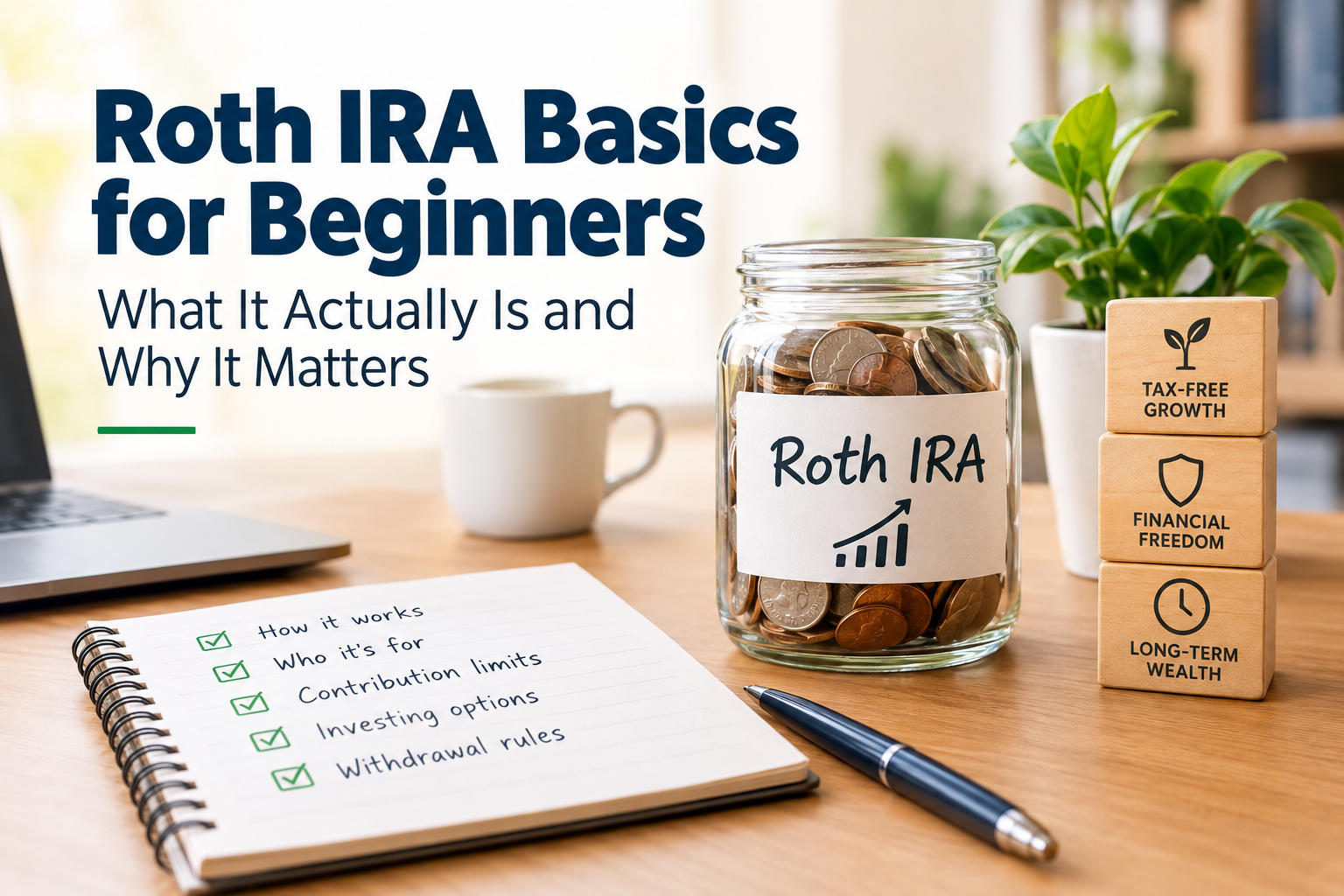
A Roth IRA gets recommended constantly in personal finance advice, usually without much explanation of what it actually is beyond “you should open one.” That vague advice does a disservice to how genuinely useful the account can be, especially for anyone still early in their career, since the core benefit — tax-free growth — compounds most powerfully over long stretches of time that younger savers happen to have more of than anyone else.
This guide covers Roth IRA basics for beginners in plain language, so the concept stops feeling like financial jargon and starts feeling like a genuinely usable tool.
What a Roth IRA Actually Is
A Roth IRA is a type of retirement account, not an investment itself — think of it as a tax-advantaged container you put money into, then use to buy investments like stocks, bonds, or index funds inside. The defining feature is how it’s taxed: you contribute money that’s already been taxed as regular income, but from that point forward, the money grows completely tax-free, and withdrawals in retirement come out tax-free too, as long as certain basic rules are followed.
Why “Pay Taxes Now” Actually Works in Your Favor
It sounds backward at first — paying taxes now instead of later seems like giving up an advantage. But the math tends to favor younger savers specifically, since money contributed early has decades to grow, and every dollar of that growth escapes taxation entirely under Roth rules. Someone contributing during a lower-income, earlier career stage is also often paying a lower tax rate on that money right now than they’d likely pay in retirement anyway, making the Roth structure a genuinely favorable trade for a large share of younger workers, not just a neutral alternative to other retirement account types.
Roth IRA vs. Traditional IRA: The Core Difference
A traditional IRA works in reverse — contributions reduce your taxable income now, but withdrawals in retirement get taxed as regular income. The Roth flips that timing: no upfront tax break, but genuinely tax-free withdrawals later. Which one makes more sense depends largely on whether you expect to be in a higher or lower tax bracket in retirement compared to right now, though for younger savers with decades of growth ahead of them, the Roth’s tax-free growth tends to be the more commonly recommended default, absent a specific reason to prioritize an immediate tax deduction instead.
Who Can Actually Contribute
Roth IRAs come with income limits that phase out eligibility for higher earners, meaning very high-income individuals may not be able to contribute directly at all, or only a reduced amount. These income thresholds adjust periodically, so checking current limits on the IRS website before assuming eligibility is worth doing, particularly if your income has changed recently or sits near where the phase-out typically begins.
Contribution Limits and Why They Matter
The IRS sets an annual maximum you’re allowed to contribute to a Roth IRA, which also adjusts periodically to account for inflation. Contributing consistently up to that limit, even if it takes a few years to work up to the full amount, tends to matter more for long-term outcomes than trying to time the market or picking the “perfect” investments inside the account. Missing a year’s contribution window means that specific year’s tax-advantaged space is gone for good — it doesn’t roll over to future years, which is part of why consistency matters more than most beginners initially realize.
What You Actually Put Inside a Roth IRA
Opening the account itself doesn’t automatically invest your money — a Roth IRA sitting in uninvested cash isn’t doing much beyond what a basic savings account would do. Once the account is open, you choose what to actually invest in, commonly a broad, low-cost index fund for beginners specifically, since diversification reduces the risk tied to any single company’s performance. If you’re unfamiliar with the basics of choosing investments, our guide on investing basics covers the underlying concepts of risk, diversification, and getting started, which applies directly once you’re deciding what to actually hold inside a Roth IRA.
Withdrawal Rules Worth Understanding Early
Contributions to a Roth IRA, the money you actually put in, can generally be withdrawn at any time without penalty, since taxes were already paid on that money upfront. Earnings — the growth on top of your contributions — are a different story, and withdrawing those before age 59 and a half typically triggers taxes and a penalty, with some specific exceptions for things like a first home purchase. This distinction matters because it means a Roth IRA isn’t purely locked away until retirement the way some people assume, though treating it as retirement-only money generally produces the best long-term outcome regardless of the technical withdrawal flexibility available.
Roth IRA vs. 401(k): They’re Not Competing, They’re Complementary
A Roth IRA and an employer-sponsored 401(k) aren’t mutually exclusive — many people use both, and if your employer offers a 401(k) match, contributing enough to capture that match first is generally recommended before prioritizing a Roth IRA, since an employer match is essentially free money that a Roth IRA can’t replicate. Beyond capturing the full match, a Roth IRA often makes sense as the next priority, particularly for savers who want more control over investment choices than many employer 401(k) plans offer, or who’ve maxed out other tax-advantaged options and want additional tax-free growth.
Common Roth IRA Mistakes Beginners Make
Leaving contributions sitting in cash without actually investing them inside the account defeats much of the purpose, since the tax-free growth benefit only compounds meaningfully if the money is actually invested rather than sitting idle.
Assuming you’re automatically eligible without checking current income limits can lead to an over-contribution that requires correcting later, an avoidable hassle that a quick eligibility check beforehand sidesteps entirely.
Withdrawing earnings early for a non-qualifying reason triggers taxes and penalties that undo much of the account’s core advantage, making it worth treating the account as retirement money except in genuinely limited circumstances.
Frequently Asked Questions
What’s the main benefit of a Roth IRA? Tax-free growth and tax-free withdrawals in retirement, since contributions are made with already-taxed income, meaning the growth on top of it never gets taxed again under normal circumstances.
Can I lose money in a Roth IRA? Yes — a Roth IRA is a tax-advantaged account, not a guarantee against investment losses. The investments held inside it, like stocks or funds, can still lose value depending on market performance.
Is a Roth IRA better than a traditional IRA for beginners? Often, yes, for younger savers specifically, since tax-free growth over a long time horizon tends to outweigh the upfront tax deduction a traditional IRA offers, though it depends on your specific income and expected future tax bracket.
Can I withdraw money from a Roth IRA before retirement? Contributions can generally be withdrawn anytime without penalty, but earnings withdrawn early typically trigger taxes and penalties, with some limited exceptions.
The Bottom Line
A Roth IRA is ultimately a simple concept wrapped in unfamiliar terminology — pay taxes now, let your money grow completely tax-free, and withdraw it tax-free in retirement. For younger savers specifically, that trade tends to work heavily in their favor, given how many years the money has to compound before it’s actually needed. Opening the account is the easy part; consistently contributing and actually investing what’s inside it is what turns the account from a good idea into real long-term growth.
For official, up-to-date contribution limits and eligibility rules, the IRS’s Roth IRA page is the most authoritative source to check before contributing.