
The Best Fluffy Pancakes recipe you will fall in love with. Full of tips and tricks to help you make the best pancakes.

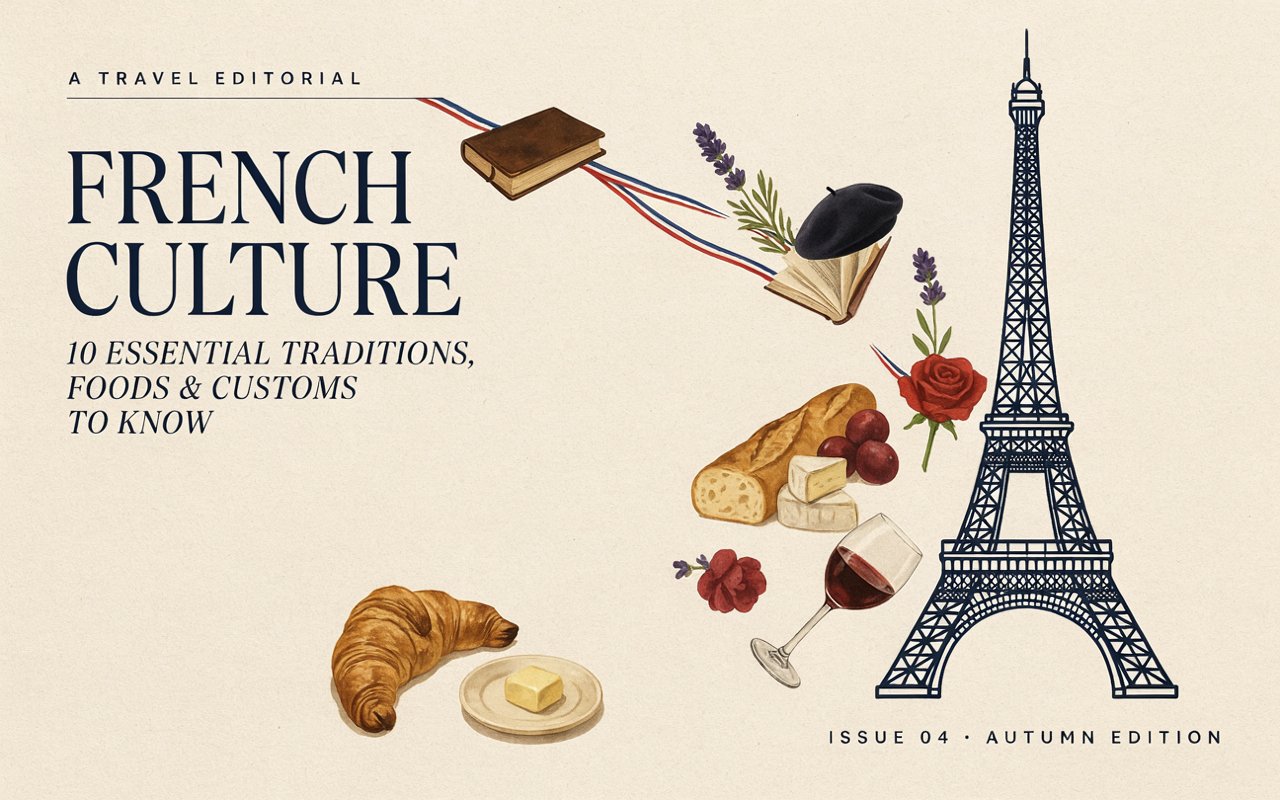
French culture is often associated with beautiful architecture, excellent food, fashion, art, and long café conversations. But there is much more to it than the familiar images of Paris and the Eiffel Tower. French culture has developed over centuries, shaped by history, regional traditions, language, art, religion, food, and changing social values.
Understanding these influences can make a trip to France more enjoyable and help explain why everyday life there can feel different from what visitors expect. From the way people greet each other to the importance of meals and regional identity, French culture places considerable value on quality, tradition, and social connection.
In this guide, you’ll discover the most important parts of French culture, including food, language, fashion, art, celebrations, and everyday customs.
What Is French Culture?
French culture refers to the traditions, values, customs, artistic expressions, food, language, and social practices that have developed across France and its regions.
In simple terms, French culture is a combination of national traditions and strong regional identities. Paris may have an international reputation, but Brittany, Provence, Normandy, Alsace, Lyon, Bordeaux, and other areas all have their own food, architecture, celebrations, and local customs.
French culture also continues to evolve. Modern France combines historical traditions with contemporary music, technology, multicultural influences, modern fashion, and changing lifestyles.
For travelers, this means France is not one single cultural experience. Each region can offer something different.
French Food and the Importance of Meals
Food is one of the most recognizable parts of French culture, but its importance goes beyond simply eating well. Meals can be an opportunity to slow down, talk, and spend time with family or friends.
French cuisine varies significantly by region. Provence is known for Mediterranean influences, while Normandy is associated with ingredients such as apples, cream, and seafood. Lyon has a strong culinary reputation, and southwestern regions are known for hearty traditional dishes.
Bread, cheese, pastries, and wine are also closely connected with French culinary traditions.
The French approach to meals can be useful for visitors to understand. A meal is often treated as an experience rather than something to rush through between activities.
If you enjoy learning about international food traditions, our guide to [Italian Culture] offers another useful comparison of how food and regional identity shape everyday life.
Popular French Foods to Try
Some foods commonly associated with France include:
- Croissants and other pastries
- Baguettes
- Crêpes
- Ratatouille
- Quiche
- Coq au vin
- Bouillabaisse
- French cheeses
- Crème brûlée
- Macarons
However, trying regional dishes can be more rewarding than limiting yourself to internationally famous French foods.
French Language and Social Etiquette
The French language is an important part of national identity. While English is widely understood in many tourist areas, making an effort to use a few French expressions can create a more positive interaction.
Simple phrases such as bonjour (hello), merci (thank you), and au revoir (goodbye) are useful in everyday situations.
One common cultural point for visitors is the importance of greetings. Saying bonjour when entering a small shop, bakery, or other establishment is generally considered polite.
French communication can also place value on courtesy and formal expressions, particularly when speaking with people you do not know.
Everyday Customs Visitors Should Know
A few simple habits can make cultural interactions easier:
- Greet people before asking for assistance.
- Use vous when formal language is appropriate.
- Say merci when receiving help.
- Avoid assuming that everyone speaks English.
- Be respectful of meal times and local customs.
- Keep your voice reasonably low in restaurants and public spaces.
These small gestures show cultural awareness without requiring you to become fluent in French.
French Fashion and Personal Style
Fashion has a major place in French culture, particularly in Paris. France has influenced global fashion through designers, fashion houses, luxury brands, and creative movements.
However, the stereotype that every French person dresses like a runway model is unrealistic. Everyday French style is often more practical than visitors imagine.
A simple wardrobe, neutral colors, well-fitting clothing, and quality basics are often associated with the classic French aesthetic. Comfort and personal taste still matter, of course.
If you are interested in building a more timeless wardrobe, you can also explore our guide to [How to Shop Secondhand] for practical ideas on finding quality clothing without overspending.
Why French Style Has Global Influence
French fashion has remained influential because it often combines simplicity with attention to detail. Rather than relying on excessive accessories or complicated outfits, many classic French looks focus on good proportions and versatile pieces.
This philosophy has influenced fashion far beyond France.
French Art, Literature, and Architecture
Art is another major part of French culture. France has played an important role in movements such as Impressionism, Romanticism, Gothic art, and modern European art.
Paris became an important center for artists and writers, attracting creative figures from France and abroad.
French museums and historic buildings also preserve centuries of artistic and architectural heritage. The Louvre, for example, houses one of the world’s most extensive collections of art.
Literature has also played an important role. French writers and philosophers have contributed influential ideas in areas ranging from politics and society to philosophy and human behavior.
Beyond Paris, architecture changes dramatically across the country. Medieval villages, Gothic cathedrals, Renaissance buildings, coastal towns, and southern stone homes all reflect different periods and regional influences.
For broader cultural context, the [UNESCO World Heritage Centre] is a useful external resource for exploring French historic and cultural sites.
French Celebrations and National Traditions
France has numerous national and regional celebrations. Bastille Day, celebrated on July 14, is the country’s national holiday and commemorates a major event of the French Revolution.
The day is marked by public celebrations, fireworks, military ceremonies, concerts, and gatherings.
Christmas and Easter are also observed, while regional festivals showcase local food, music, crafts, and traditions.
Sporting events can also become important cultural moments. Football, cycling, rugby, and tennis have large audiences in France.
Regional traditions remain especially important because France has a long history of distinct local identities.
Regional Culture Across France
One of the best ways to understand French culture is to look beyond Paris.
For example:
- Brittany has strong Celtic influences and distinctive coastal traditions.
- Provence is known for Mediterranean landscapes, food, and markets.
- Alsace reflects both French and German cultural influences.
- Normandy is famous for its coastline, historical heritage, and regional cuisine.
- Burgundy has a strong reputation for food and wine.
- The French Riviera combines Mediterranean culture with a long history of tourism and artistic influence.
This regional diversity makes France especially interesting for travelers who want experiences beyond the country’s most famous landmarks.
French Café Culture and Everyday Life
Cafés have long been associated with French social life. They can function as places to eat, meet friends, read, work, or simply watch the world go by.
The café tradition also reflects a broader cultural preference for conversation and taking time to enjoy everyday experiences.
Work-life balance, leisure, food, and social relationships are often discussed when people describe French lifestyle. However, everyday life differs considerably depending on age, profession, region, and personal circumstances.
It is better to think of French lifestyle as diverse rather than assuming that everyone follows the same routine.
Common Questions About French Culture
What Makes French Culture So Famous Around the World?
French culture is particularly well known for its cuisine, fashion, art, literature, architecture, language, cafés, and long-standing regional traditions.
What are some important French traditions?
Important traditions include Bastille Day celebrations, French culinary customs, greeting etiquette, regional festivals, café culture, and appreciation for art and historical heritage.
French Etiquette Tips Every Traveler Should Know
Visitors should generally greet people politely, use basic French expressions when possible, respect personal space, and avoid treating every part of France as culturally identical.
How Does French Culture Differ Throughout France?
No. France has significant regional diversity. Local food, architecture, accents, celebrations, and traditions can vary considerably from one region to another.
Conclusion: Experience French Culture Beyond the Stereotypes
French culture is much broader than Paris, fashion, and famous cuisine. Its real character can be found in everyday experiences: sharing a meal, greeting someone politely, exploring a local market, visiting a historic neighborhood, or discovering a regional tradition.
The best way to understand France is to look beyond the stereotypes and explore its different regions, foods, artistic traditions, and social customs.
If you’re planning a trip or simply interested in world cultures, use this guide as a starting point and explore more regional traditions, French history, food, and lifestyle. Which part of French culture would you most like to experience?