
The Best Fluffy Pancakes recipe you will fall in love with. Full of tips and tricks to help you make the best pancakes.

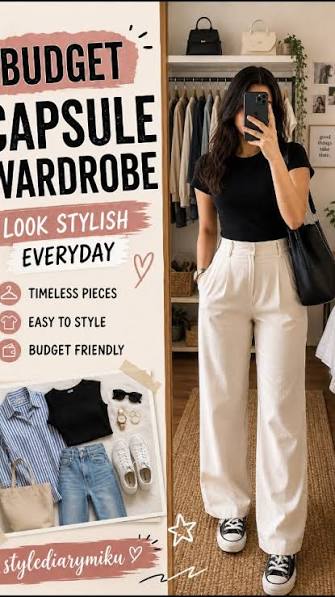
You know the feeling: a closet stuffed with clothes, and somehow still nothing to wear. Ten wasted minutes on a weekday morning, trying on and discarding one outfit after another. The problem usually isn’t a shortage of clothing — it’s too many pieces that refuse to work together, and too few that actually do. A capsule wardrobe fixes that by design: a smaller, deliberate collection of clothes built to mix and match, made up of things you’ll genuinely reach for instead of pieces that just look good hanging there untouched.
Here’s how to build one on a real budget, without a single expensive designer item required.
What This Actually Means in Practice
A capsule wardrobe is a curated, limited collection — typically somewhere in the neighborhood of 25 to 40 pieces, though the right number varies by lifestyle — chosen specifically because every item works with several others. It’s not about owning as little as possible; it’s about choosing fewer pieces that genuinely fit your lifestyle and work well together. It’s about eliminating the daily friction of staring into a packed closet and still feeling like nothing fits together or suits the occasion.
The logic behind it comes down to simple math: a wardrobe where every piece coordinates with multiple others produces exponentially more outfit combinations than the same number of pieces that don’t. Ten thoughtfully chosen items can genuinely outperform thirty randomly accumulated ones in terms of what you can actually wear.
Why “Capsule” and “Budget” Aren’t a Contradiction
People tend to associate capsule wardrobes with expensive, minimalist designer pieces, but the underlying idea — buy fewer, more versatile things — is naturally budget-friendly once you apply it correctly. The core financial win is spending less overall while getting more actual wear out of every piece, and that holds true regardless of whether individual items are expensive or affordable. A budget capsule wardrobe just takes that same selective, versatility-first mindset and applies it at accessible price points instead of premium ones.
Start by Looking at What You Already Own
Before buying anything new, go through your current closet and sort everything into three piles: what you actually wear regularly, what could work with a bit of styling effort, and what you genuinely never touch. A lot of people already own a partial capsule wardrobe buried inside a much bigger, disorganized closet — an honest audit often reveals you need to buy far less than you initially assumed.
The Color Palette Rule That Makes Everything Else Work
A cohesive color palette is the single thing that actually makes mixing and matching possible. Choose 2–3 neutral base colors — black, navy, gray, beige, or white all work as reliable anchors — plus 1–2 accent colors you genuinely enjoy wearing. Every new piece should fit within that palette. This one rule does more heavy lifting for a functional capsule wardrobe than almost any other decision, because it’s what stops pieces from becoming “orphans” that don’t pair with anything else you own.
Build the Foundation Before Chasing Trends
Before adding anything trendy or statement-making, get the basics locked in — pieces that can be styled multiple different ways:
- Tops: a handful of well-fitting t-shirts, one or two button-downs, a versatile sweater
- Bottoms: jeans or trousers in your base colors, plus a skirt or an extra pants option
- Outerwear: one jacket versatile enough to work across several different outfit combinations
- Layering pieces: a cardigan or light layer that can shift the same base outfit for different occasions or weather
- Shoes: one or two pairs that work with most of what you own — if you’re looking for a comfortable, everyday option here, our Hoka sneakers guide breaks down what pairs well with a casual capsule wardrobe.
Cheap’ and ‘Budget-Friendly’ Aren’t the Same Word
There’s a real difference between “cheap” and “budget-friendly” here. Cheap generally means the lowest possible price regardless of quality or how long it lasts. Budget-friendly means getting the best quality and versatility your money can actually buy. A few ways to shop that way:
Thrift and secondhand stores, along with resale apps, often carry well-made basics at a fraction of retail price — and since the whole point of a capsule wardrobe is timeless versatility rather than chasing trends, secondhand pieces from previous seasons work just as well as anything current.
Waiting for end-of-season sales rather than buying at full price when a new season launches can meaningfully lower the total cost of building out a capsule wardrobe over time.
For the items you’ll wear constantly — jeans, your everyday jacket, your go-to shoes — spending a bit more upfront for better construction often makes more financial sense than replacing a cheaper version two or three times over the same stretch.
And resist those tempting “just in case” buys that seem useful now but rarely earn a place in your everyday wardrobe. The biggest threat to a functional capsule wardrobe is buying something that doesn’t fit your palette or lifestyle simply because it was on sale — which quietly recreates the exact cluttered-closet problem you’re trying to solve in the first place.
Letting the Wardrobe Flex With the Seasons
A capsule wardrobe doesn’t have to mean one fixed set of clothes worn identically all year. Most people keep a core group of versatile basics constant, then rotate in a smaller number of seasonal pieces — heavier layers for winter, lighter fabrics for summer — instead of rebuilding the whole thing from scratch every few months. That keeps the approach sustainable without forcing you to wear the same jacket in July that you wore in January.
How Many Pieces Are Enough for a Capsule Wardrobe?
There’s no single magic number — it depends on your lifestyle, your climate, and honestly how often you’re willing to do laundry. A more useful way to think about it: aim for enough variety that you’re not repeating the exact same outfit combination within a typical week or two, while keeping every single piece genuinely wearable and within your palette. Some people land comfortably at 25–30 pieces; others, particularly anyone juggling separate work and casual wardrobes, need closer to 40–50.
Mistakes That Quietly Undo a Capsule Wardrobe
Building around pieces you don’t actually like is a common one — a capsule wardrobe only works if you genuinely want to wear everything in it, and forcing yourself to keep something purely because it’s “practical” leads right back to the same avoidance problem as an overstuffed closet.
Ignoring your real lifestyle is another. A capsule built around aspirational activities you don’t actually do — formal events you rarely attend, for instance — leaves real gaps in what you actually need day to day.
Treating it as a one-time project rather than something that needs periodic reassessment as your body, lifestyle, or taste shifts tends to slowly let clutter creep back in over time.
And buying everything in one go rather than building gradually, replacing worn-out pieces thoughtfully as you go, usually produces worse long-term choices — and it’s harder on a limited budget to begin with.
Keeping It Working Over Time
Once it’s built, a capsule wardrobe benefits from small, periodic check-ins — every season or two, take stock of what’s working, what’s worn out, and what no longer fits your life. Replacing pieces thoughtfully as they wear out, instead of letting impulse additions slowly expand the wardrobe back into clutter, is what keeps the whole system functional long-term rather than becoming just another organizing trend that fizzles out after a few months.
Frequently Asked Questions
How much does it actually cost to build a capsule wardrobe? It varies a lot depending on how much of your current closet is already usable and where you shop, but budget-focused strategies — thrifting, sales, buying gradually — can buildA practical capsule wardrobe can be built for far less than you’d likely spend on a season of spontaneous, unnecessary shopping.
Do I need to buy all-new clothes to build one? No — most people already own several pieces that fit right into a capsule wardrobe. Starting with a closet audit before buying anything new usually cuts down how much you actually need to purchase.
How often should I update it? A light seasonal check-in works well for most people — replacing worn items, reassessing fit or lifestyle changes — rather than a full overhaul multiple times a year.
Is this only for minimalists? Not really. While the concept has minimalist roots, it’s genuinely about intentional, versatile choices rather than owning as few items as humanly possible. People with very different personal styles can apply the same underlying principle.
Bottom Line
A capsule wardrobe on a budget isn’t about owning less purely for the sake of it — it’s about making sure everything you own actually works together and gets worn, instead of sitting untouched in a crowded closet. Start with an honest audit of what you already have, settle on a simple color palette, and build out gradually with budget-friendly, versatile pieces instead of trying to buy an entire wardrobe in one trip.
For further reading on sustainable, intentional shopping practices, Good On You’s fashion sustainability guides are a reliable, independent resource worth referencing.