
The Best Fluffy Pancakes recipe you will fall in love with. Full of tips and tricks to help you make the best pancakes.

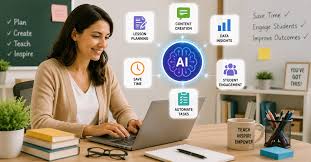
Teaching involves much more than standing in front of a classroom. Teachers spend hours planning lessons, creating worksheets, grading assignments, communicating with students, and adapting materials for different learning needs.
This is where AI tools for teachers can make a meaningful difference.
Artificial intelligence is not designed to replace teachers. Instead, it can support educators by handling repetitive tasks, generating ideas, and helping create more personalized learning experiences. When used responsibly, AI can give teachers something extremely valuable: more time to focus on their students.
In this guide, you’ll discover how AI tools can support teachers, which tasks they can simplify, and how to use artificial intelligence effectively in the classroom.
What Are AI Tools for Teachers?
AI tools for teachers are digital platforms that use artificial intelligence to assist with tasks such as lesson planning, content creation, feedback, assessment, and personalized learning.
These tools can analyze information, generate text, answer questions, create educational materials, and support classroom activities.
For example, a teacher might use AI to:
- Create a lesson plan outline
- Generate quiz questions
- Simplify difficult reading material
- Create worksheets
- Develop classroom activities
- Provide feedback ideas
- Adjust content for different learning levels
The important point is that AI should support professional judgment rather than replace it. Teachers still need to review, edit, and adapt everything for their students.
How AI Tools for Teachers Can Save Time
One of the biggest benefits of AI in education is efficiency.
Teachers often spend significant time on repetitive tasks outside the classroom. AI can help reduce some of that workload by generating a starting point for educational materials.
Lesson Planning and Activity Ideas
Creating a lesson plan from scratch can take time, especially when teachers need to design engaging activities for different learning levels.
AI can help generate:
- Lesson objectives
- Classroom activities
- Discussion questions
- Homework ideas
- Project topics
- Learning exercises
For instance, a teacher could ask an AI tool to create a 45-minute lesson plan about climate change for middle school students. The teacher can then review the suggestions and adapt them to the curriculum.
The AI provides the starting point, while the teacher adds professional experience and classroom knowledge.
Creating Worksheets and Learning Materials
AI tools for teachers can also help create classroom resources more quickly.
A teacher might use AI to generate:
- Vocabulary exercises
- Reading comprehension questions
- Mathematics practice problems
- Writing prompts
- Science quizzes
- Flashcards
Instead of spending hours creating every resource manually, teachers can use AI to build a draft and then make improvements.
This approach can be especially useful when educators need multiple versions of the same material for different student abilities.
Using AI for Personalized Learning
Every classroom includes students with different strengths, learning styles, and levels of understanding.
Personalizing lessons for every student can be challenging, particularly in larger classrooms. AI can help teachers create materials that better match individual learning needs.
Adapting Content for Different Levels
AI can simplify complex information or make basic content more challenging.
For example, a teacher could take the same reading passage and create:
- A simplified version for beginners
- A standard version for most students
- A more advanced version for stronger readers
This allows teachers to differentiate instruction without creating every version completely from scratch.
However, teachers should always review AI-generated content to ensure it is accurate and appropriate.
Supporting Students Who Need Extra Help
AI-powered educational tools can provide additional explanations and practice opportunities.
Students may use AI to:
- Ask questions about difficult topics
- Receive step-by-step explanations
- Practice language skills
- Review concepts
- Generate study materials
Teachers can guide students on how to use these tools responsibly.
The goal should not be to let AI complete students’ work. Instead, students should use technology to understand concepts and strengthen their learning.
Best Ways Teachers Can Use AI for Assessment
Assessment is another area where artificial intelligence can provide useful support.
AI can help teachers create questions, organize feedback, and identify common areas where students may need additional support.
Creating Quizzes and Practice Questions
Teachers can use AI to generate different types of assessment questions, including:
- Multiple-choice questions
- Short-answer questions
- True or false questions
- Discussion prompts
- Practice exercises
For example, after teaching a history lesson, a teacher could use AI to generate ten practice questions based on the main concepts.
The teacher should still review every question before using it in class. AI can occasionally produce inaccurate information or poorly written questions.
Supporting Feedback
Providing detailed feedback to every student can be time-consuming.
AI can help teachers create feedback templates or suggest areas for improvement. For example, a teacher may use AI to identify common writing issues or generate examples of constructive feedback.
However, meaningful feedback requires human understanding.
A teacher knows the student’s progress, effort, challenges, and learning history. AI does not fully understand those important factors.
For this reason, AI-generated feedback should be treated as assistance rather than a final evaluation.
Important Benefits of AI Tools for Teachers
When used correctly, AI can offer several practical benefits in education.
1. Less Time Spent on Repetitive Tasks
AI can help teachers create first drafts of lesson plans, worksheets, emails, and classroom activities.
This may reduce preparation time and allow educators to focus more on teaching.
2. More Creative Classroom Ideas
Sometimes teachers simply need new inspiration.
AI can suggest:
- Group activities
- Classroom games
- Project ideas
- Creative writing prompts
- Discussion topics
Not every suggestion will be useful, but AI can help generate fresh ideas quickly.
3. Better Support for Different Learning Needs
Teachers can use AI to adapt content for students with different ability levels.
This can make personalized learning more manageable and help educators prepare alternative resources more efficiently.
4. Improved Access to Educational Resources
AI tools can help teachers brainstorm and develop educational materials even when they have limited preparation time.
For busy educators, this can be a valuable source of support.
Challenges and Risks of Using AI in Education
While AI offers useful opportunities, teachers should also understand its limitations.
AI is not always accurate.
It can generate incorrect facts, outdated information, or misleading explanations. This is why teachers should never use AI-generated content without reviewing it.
Privacy and Student Data
Teachers should also be careful when using AI platforms with student information.
Avoid entering sensitive student data into tools unless the platform has been approved and follows appropriate privacy requirements.
This may include information such as:
- Full names
- Personal contact details
- Academic records
- Private student information
Schools and educational institutions may have specific policies regarding AI tools and student data, so teachers should follow those guidelines.
Academic Integrity
Students may use AI to complete assignments without actually learning.
Teachers can address this by designing assignments that encourage:
- Critical thinking
- Personal reflection
- Classroom discussion
- Research skills
- Problem-solving
Rather than simply banning AI, educators can teach students how to use it responsibly.
For example, students can use AI to brainstorm ideas but should be expected to create and explain their own final work.
How to Choose the Right AI Tools for Teachers
Not every AI platform is suitable for every classroom.
Before choosing a tool, teachers should consider several important factors.
Ease of Use
A useful tool should save time rather than create additional work.
Look for platforms with simple features and a clear learning process.
Educational Purpose
Choose tools based on what you actually need.
For example:
- Lesson planning tools for preparation
- Writing tools for content creation
- Quiz tools for assessments
- Learning platforms for student support
Using fewer tools effectively is often better than using many platforms without a clear purpose.
Accuracy and Reliability
Always check the information produced by AI.
Teachers should verify facts, examples, and educational content before sharing them with students.
Privacy and Security
Before introducing a new tool into the classroom, review its privacy practices and follow your school’s technology policies.
Student safety should always come before convenience.
Smart and Responsible Ways to Use AI in e Classroom
The most effective use of AI begins with clear boundaries.
Here are some practical guidelines for teachers:
- Use AI as an assistant, not a replacement
- Review all AI-generated content
- Protect student privacy
- Teach students responsible AI use
- Encourage critical thinking
- Check important facts using reliable sources
- Adapt AI-generated materials to your curriculum
- Be transparent about how AI is being used
Teachers bring empathy, professional experience, creativity, and human understanding to education. These qualities remain essential.
AI can make certain tasks faster, but meaningful teaching still depends on the relationship between teachers and students.
Are AI Tools for Teachers Worth Using?
Yes, AI tools for teachers can be valuable when used responsibly and with professional judgment.
They can help reduce repetitive work, generate teaching ideas, create learning materials, and support personalized education.
However, the best results come from combining AI with human expertise.
Teachers should think of AI as a helpful assistant rather than an automatic solution. The technology can provide ideas and save time, but educators remain responsible for accuracy, student safety, and learning outcomes.
Conclusion: Using AI to Support Better Teaching
AI is becoming an increasingly important part of education, and teachers have an opportunity to use it in practical and meaningful ways.
The best AI tools for teachers can support lesson planning, content creation, assessment, and personalized learning while reducing some of the pressure caused by repetitive tasks.
The key is to use AI thoughtfully.
Start with one or two simple tasks, such as creating lesson ideas or generating practice questions. Review the results carefully, adapt them to your students, and gradually explore other ways AI can support your teaching.