
The Best Fluffy Pancakes recipe you will fall in love with. Full of tips and tricks to help you make the best pancakes.

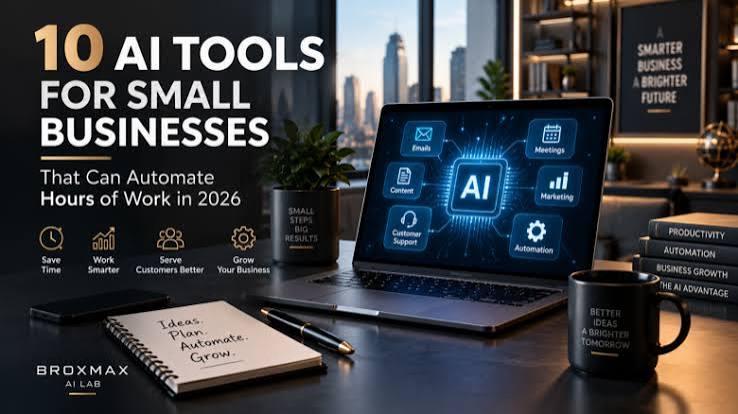
Best AI Tools for Small Businesses in 2026: Smart Solutions That Actually Save Time
Every small business owner has heard some version of “you need to be using AI” by now, usually without much explanation of what that actually means in practice. The honest answer is that AI tools genuinely save real time on specific, repetitive tasks — writing, scheduling, customer service, basic bookkeeping — without requiring a technical background or a big budget to start. The trick is knowing which tools solve an actual problem in your business rather than adding another subscription you’ll forget to use after the first week.
This guide covers the AI tools genuinely worth a small business owner’s time in 2026, organized by what they actually help with.
Writing and Content: Where AI Saves the Most Time
Drafting emails, social media posts, product descriptions, and marketing copy is one of the clearest, most immediate time-savers AI tools offer a small business. Tools like ChatGPT and Claude handle first drafts, brainstorming, and editing considerably faster than starting from a blank page, freeing up time for the strategic thinking and personal touch that still requires a human. The realistic workflow here isn’t “let AI write everything” — it’s using AI for a fast first draft, then applying your own judgment and brand voice to refine it, since AI-generated content without human review tends to read as generic and can occasionally include factual errors worth catching before anything goes out publicly.
Customer Service: Handling Routine Questions Without Hiring More Staff
AI-powered chatbots have become genuinely practical for small businesses fielding a steady stream of routine customer questions — order status, business hours, return policies — that don’t require a human’s judgment to answer accurately. Tools like Intercom and Zendesk’s AI features let a small team handle a higher volume of customer inquiries without needing to hire proportionally more support staff, routing only the genuinely complex or sensitive issues to a human. This matters most for businesses with predictable, repetitive customer questions, and matters less for businesses where most customer interactions require real judgment or relationship-building.
Scheduling and Administrative Tasks
Tools like Calendly, layered with AI-assisted scheduling features, cut down significantly on the back-and-forth email chains that used to eat up real time just trying to find a meeting slot that works for everyone involved. AI-powered virtual assistants and scheduling tools increasingly handle routine administrative coordination — meeting scheduling, basic email sorting, simple task reminders — freeing up a small business owner’s own time for higher-value work rather than administrative overhead.
Bookkeeping and Basic Financial Tasks
AI-assisted bookkeeping tools, including features built into platforms like QuickBooks, have gotten genuinely useful at categorizing expenses, flagging unusual transactions, and reducing the manual data entry that used to consume hours of a small business owner’s time each month. This doesn’t replace an accountant for anything complex — tax strategy, major financial decisions — but it meaningfully reduces the routine, repetitive bookkeeping work that used to require either significant owner time or a dedicated bookkeeper for even a small operation.
Marketing and Social Media Management
AI tools that help schedule social media posts, generate content ideas, and analyze which posts perform best have made consistent social media presence considerably more manageable for small teams without a dedicated marketing person. Tools like Canva’s AI features also speed up basic graphic design work — social posts, simple marketing materials — without requiring design skills or an outside designer for every small visual need.
What to Actually Avoid Overspending On
Not every AI tool marketed to small businesses delivers proportional value, and it’s worth being selective rather than adopting every tool that promises to “revolutionize” your workflow. Highly specialized, expensive AI platforms built for enterprise-scale operations often include far more capability than a small business actually needs, at a price point that doesn’t match the actual time saved for a smaller operation. Starting with free tiers or lower-cost plans of well-established tools, and only upgrading once you’ve confirmed genuine, regular use, tends to prevent the common trap of accumulating unused subscriptions that quietly drain a small business’s budget.
Getting Started Without Overwhelming Your Team
Rather than adopting several AI tools simultaneously, picking one specific pain point — the task eating the most time or causing the most frustration — and solving it first tends to produce better results than a broad rollout across every part of the business at once. Once that first tool is genuinely integrated into daily workflow, expanding to a second area becomes considerably easier than trying to change everything at once, both for the owner and for any staff who need to adjust to new tools alongside their existing responsibilities.
Frequently Asked Questions
Do I need technical skills to use AI tools in my small business? Generally, no — most AI tools built for small business use are designed with non-technical users in mind, prioritizing simple interfaces over the kind of technical setup enterprise AI platforms often require.
Which AI tool should a small business start with? It depends on your biggest current pain point — writing tools like ChatGPT or Claude tend to offer the fastest, most broadly applicable time savings for most small businesses starting out.
Are free AI tools good enough for small business use? Often, yes, at least to start — many well-established tools offer genuinely useful free tiers, making it possible to test whether a tool solves a real problem before committing to a paid plan.
Can AI tools replace an accountant or marketing person entirely? No — AI tools handle routine, repetitive tasks well, but complex strategic decisions in finance, marketing, and customer relationships still benefit significantly from human judgment and expertise.
The Bottom Line
The best AI tools for small business in 2026 aren’t the flashiest or most expensive options — they’re the ones that solve a specific, recurring problem in your actual workflow, whether that’s drafting content faster, handling routine customer questions, or cutting down administrative busywork. Start with one clear pain point, pick a tool built for small business use rather than enterprise scale, and expand gradually rather than trying to overhaul your entire operation with AI all at once.
For ongoing, independent coverage of business technology tools, TechCrunch’s small business coverage is a reliable source to check for current tool comparisons.