
The Best Fluffy Pancakes recipe you will fall in love with. Full of tips and tricks to help you make the best pancakes.

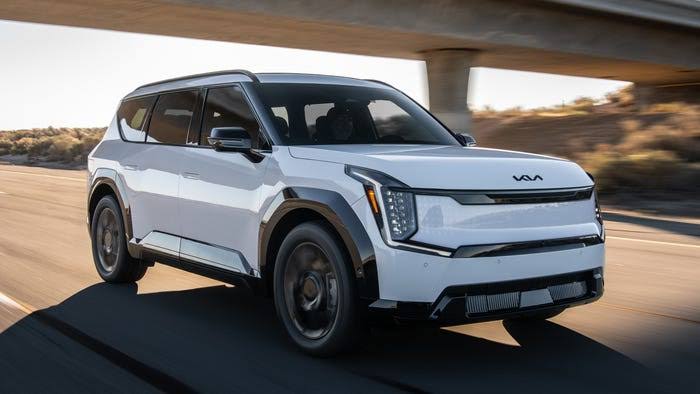
Electric SUVs have spread across a wider price range than any other EV category right now — sub-$40,000 options with genuinely usable range on one end, six-figure luxury flagships built for buyers chasing prestige as much as efficiency on the other. Asking “what’s the best electric SUV” without specifying a budget doesn’t really have a single answer, because a value-focused buyer and a luxury shopper are solving two completely different problems.
This roundup walks through the strongest options tier by tier, so you can find what actually fits your budget and how you’ll use the vehicle.
If Budget Is the Priority
This is where the real competition is happening right now. Models like the Hyundai Ioniq 5, Chevrolet Equinox EV, and Kia EV6 have pushed 300-plus miles of range and fast charging down under $50,000 — territory that would have been unthinkable a few EV generations ago. If you’re specifically shopping this range, our dedicated breakdown of electric SUVs under $50,000 goes much deeper on these exact models, including a full side-by-side comparison table.
The Default Choice: Tesla Model Y
No electric SUV sells in higher volume in the U.S. than the Model Y, and it’s not purely brand momentum keeping it there. Around 330 miles of range on the RWD trim, direct access to Tesla’s Supercharger network — still the largest and most dependable fast-charging infrastructure in North America — and continuous improvement through over-the-air updates all add up to an ownership experience that’s hard to replicate elsewhere. The stripped-down, screen-controlled interior turns some buyers off, but between practicality, charging access, and resale value, it remains the safe recommendation for a huge share of first-time EV shoppers.
For Buyers Who Actually Go Off-Road: Rivian R1S
Most “SUVs” on this list are shaped like off-roaders without really being built for it. The Rivian R1S is a genuine exception — real off-road capability, a spacious, tech-heavy cabin, and range that holds its own against more road-focused rivals. It sits well above the budget tier, competing more directly with premium SUVs than mainstream EVs, but nothing else here can match what it does off pavement.
[CHECK BEFORE PUBLISHING: Confirm current R1S trim pricing and range, since Rivian has revised its lineup and pricing more than once since launch.]
Compact Yet Capable: Subaru Trailseeker vs. Chevrolet Equinox EV
Not everyone wants a large SUV to park or maneuver. The Subaru Trailseeker brings standard all-wheel drive and a genuinely useful 3,500-pound tow rating into a smaller footprint, while the Equinox EV delivers exceptional range for its price in a similarly compact package. Neither chases maximum interior space — both are built for buyers who don’t need three rows or the largest possible cargo hold and would rather have a more manageable size.
At the Top End: BMW iX and Mercedes EQS SUV
Luxury electric SUVs play a different game entirely — premium materials, advanced driver assistance, and a refined ride matter more here than squeezing out extra efficiency or maximizing value. BMW and Mercedes’ offerings in this space typically start well above $60,000 and climb considerably with options, putting them in competition with traditional luxury SUVs rather than mainstream EVs.
[CHECK BEFORE PUBLISHING: Confirm current model-year pricing and range for the BMW iX and Mercedes EQS SUV — luxury EV pricing and trim lineups shift more often than mainstream models.]
The Thrill Factor: Why the Ford Mustang Mach-E Is Fun to Drive
Most electric SUVs prioritize a smooth, isolated ride above all else. The Mustang Mach-E doesn’t — reviewers consistently point to it as more engaging behind the wheel than most competitors in its price range. With EPA-estimated range between 240 and 320 miles depending on trim and pricing that stays competitive within the mainstream segment, it’s the pick for buyers who care as much about how a car feels to drive as what it costs or how far it goes.
Choose Your EV by What Matters Most to You
Chasing pure value? Stay under $50,000, where Hyundai, Kia, and Chevrolet have driven range and tech up without a matching jump in price. Need real practicality above all else? Lean toward proven charging access (Model Y) or genuine third-row seating (EV9) rather than getting distracted by marginal spec differences between similar rivals. Serious about off-roading? The R1S is nearly alone in actually delivering on that promise rather than just looking the part. Chasing prestige and comfort over value? BMW and Mercedes compete on interior quality and brand experience, not price-to-range efficiency.
Family SUV or Compact SUV: Size Matters More Than People Assume
It’s easy to default to the biggest SUV you can afford, but size trade-offs are worth thinking through honestly. A three-row EV like the EV9 solves a real problem for larger families, but it also means a bigger vehicle to charge, park, and maneuver daily — costs that show up in convenience, not just on the sticker. A compact option like the Trailseeker or Equinox EV sacrifices some cargo room and seating flexibility in exchange for an easier daily-driving experience and, often, meaningfully better range-per-dollar. Buyers who only occasionally need extra seating or cargo space sometimes find they’re better served by a compact SUV plus an occasional rental or rideshare for the rare oversized trip, rather than living with a larger vehicle’s downsides every single day for a need that comes up a few times a year.
Buying vs. Leasing at Different Price Points
With EV pricing and technology shifting as fast as they have this year, leasing has become a genuinely reasonable way to get into an electric SUV without committing to one specific model generation — particularly at the higher end, where next year’s version might look meaningfully different. It also sidesteps some of the resale uncertainty that’s hit EVs harder than gas vehicles, since rapid price cuts across the board (like the ones seen throughout 2026) can quietly drag down used values. At the budget end, buying outright tends to make more sense for anyone planning to keep the vehicle long-term rather than trading up every few years, while leasing appeals more to luxury shoppers who’d rather drive the newest tech than build equity in one particular SUV.
A Few Things Worth Checking Before You Buy, Regardless of Price
Charging network access matters more day-to-day than the spec sheet suggests. A slightly pricier EV with Supercharger or NACS access can end up considerably more convenient on a road trip than a cheaper model stuck with a smaller charging network.
The advertised starting price rarely reflects the trim you’ll actually want. All-wheel drive, a bigger battery, or driver-assistance packages can push the final number meaningfully higher across every tier here, from budget to luxury.
Treat EPA range as a comparison tool, not a promise. Weather, driving style, and highway speeds all affect real-world range — useful for comparing models side by side, less useful as an exact guarantee for a specific trip. You can check certified figures for any model on the official EPA fuel economy database.
Frequently Asked Questions
What’s the best electric SUV overall in 2026? There isn’t one universal answer — the Tesla Model Y leads on charging access and proven reliability, the Hyundai Ioniq 5 leads on budget-tier value, and the Kia EV9 leads for families needing three-row seating. The right pick depends on your specific priorities and budget.
Which electric SUV has the longest range? Range leaders shift by price tier, but several mainstream and luxury models now clear 300 miles of EPA-estimated range, with the Tesla Model Y and Hyundai Ioniq 5 among the strongest options under $50,000 specifically.
Are luxury electric SUVs worth paying extra for over mainstream options? It depends what you value — luxury models generally don’t offer dramatically better range or charging speed than a well-equipped mainstream competitor, so the extra cost mostly buys interior materials, brand experience, and comfort features rather than core EV performance.
Which electric SUV is best for road trips? Models with native NACS access to Tesla’s Supercharger network — including the Tesla Model Y and increasingly Ford and Hyundai models with NACS adapters — tend to offer the most dependable road-trip charging experience given the size of that network.
Bottom Line
Which electric SUV counts as “best” in 2026 depends almost entirely on which tier you’re shopping. Budget-focused buyers have more genuinely good options than ever, families finally have real three-row EV choices, and luxury shoppers can get a premium SUV experience with an electric powertrain underneath it. Instead of chasing one universal answer, match your actual priority — budget, practicality, off-road ability, or luxury — to the right category, and the right SUV gets a lot easier to find.
For independent testing, trim-by-trim comparisons, and current pricing across every tier mentioned here, Edmunds’ electric SUV rankings are a reliable source to check before buying.