
The Best Fluffy Pancakes recipe you will fall in love with. Full of tips and tricks to help you make the best pancakes.

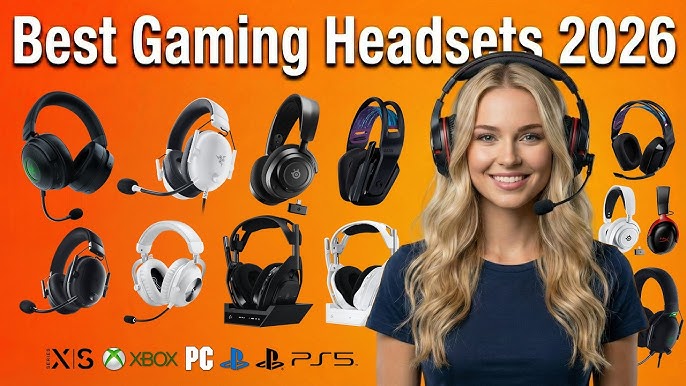
A good gaming headset does more than play sound — it lets you pinpoint footsteps in a competitive shooter, hear every detail in a story-driven game, and talk clearly with teammates without needing separate gear. In 2026, there’s a strong headset at nearly every price point, from budget wired options under $50 to premium wireless headsets built for enthusiasts who want the best audio money can buy.
This guide breaks down the best gaming headsets of 2026 by category, based on sound quality, comfort, latency, and value, so you can find the right pick for your setup and budget.
What Actually Matters in a Gaming Headset
Wired vs. wireless — Wired headsets are simpler, usually cheaper, and have zero latency by design, while modern wireless headsets using dedicated low-latency connections now perform close enough to wired that most players won’t notice a difference during gameplay.
Driver size and sound signature — Larger drivers generally allow for richer bass and clearer detail, but tuning matters more than size alone — some competitive-focused headsets intentionally emphasize footsteps and directional cues over deep bass.
Microphone quality — A detachable or retractable boom mic with good noise handling matters more than most players expect, especially for anyone who plays with a team regularly.
Comfort for long sessions — Weight, clamping force, and cushion material matter enormously for headsets worn for hours at a time, sometimes more than raw audio specs.
Open-back vs. closed-back — Open-back headsets let in some outside air and sound, creating a wider, more natural soundstage, while closed-back designs isolate sound better for noisy environments or shared living spaces.
Best Overall Gaming Headset: Razer BlackShark V3
The Razer BlackShark V3 has emerged as one of the most well-rounded picks of 2026, combining strong audio quality, low wireless latency, and a comfortable, lightweight design at a reasonable price relative to premium competitors. It builds on the well-regarded BlackShark V2 Pro lineage while refining comfort and mic clarity.
Best for: Players who want a balanced, no-compromise headset without paying flagship prices.
Best Premium Gaming Headset: Audeze Maxwell 2
For players who want audiophile-grade sound in a gaming headset, the Audeze Maxwell 2 blends genuinely high-end audio performance with gaming-specific features, standing out from most gaming-first headsets that prioritize convenience features over raw sound quality.
Best for: Enthusiasts who care as much about music and general listening quality as gaming performance.
Best Wireless Gaming Headset: SteelSeries Arctis Nova Pro Wireless
The Arctis Nova Pro Wireless remains a top pick for players who want the best wireless experience available, with strong audio, hot-swappable batteries, and detailed parametric EQ control. It sits at a premium price point, but for players who want zero compromises, it delivers.
Best for: Players who want top-tier wireless performance and don’t mind paying for it.
Best Value Wireless Headset: HyperX Cloud III Wireless
Delivering roughly 80% of the sound quality of headsets nearly double its price, the HyperX Cloud III Wireless has become one of the strongest value picks in 2026’s wireless headset market. For most players, the jump from this price tier to premium options like the Arctis Nova Pro delivers diminishing returns relative to the extra cost.
Best for: Players who want strong wireless performance without paying enthusiast-tier prices.
Best Budget Gaming Headset: HyperX Cloud Stinger 2
A reliable, comfortable wired headset that covers the essentials well without unnecessary extras, the HyperX Cloud Stinger 2 remains one of the best entry points for players upgrading from basic earbuds or TV audio for the first time.
Best for: Budget-conscious players who still want a genuine gaming-focused audio experience.
Best Wired Gaming Headset: Corsair HS80 RGB USB
For players who prefer the simplicity and reliability of a wired connection, the Corsair HS80 RGB USB pairs solid audio quality with Corsair’s typical build reliability, making it a strong pick for players who don’t want to think about battery life.
Best for: Players who want dependable, zero-latency audio without wireless complexity.
Best for Competitive Play: Logitech G Pro X 2 Lightspeed
Precision imaging and directional accuracy give the Logitech G Pro X 2 Lightspeed a genuine edge for competitive players who need to pinpoint enemy positions quickly by sound alone, making it a favorite among more serious and esports-focused players.
Best for: Competitive players who prioritize positional audio accuracy above all else.
Wired vs. Wireless: Which Should You Choose?
Modern wireless gaming headsets using dedicated low-latency connections now measure well under 20ms of latency in most testing — below the threshold most players can consciously perceive. For the vast majority of gamers, this means wireless is no longer a meaningful performance compromise the way it was several years ago. The main tradeoffs now are price, battery management, and personal preference rather than a real gap in responsiveness.
That said, wired headsets remain the simpler, cheaper, and more reliable option if you don’t want to think about charging schedules or potential wireless interference, and they’re often the better starting point for players trying a proper gaming headset for the first time.
How Much Should You Spend?
Value tends to flatten out sharply above roughly the $200 price point. Headsets in the $150–200 range typically deliver the large majority of the sound quality available at premium price points, with the remaining gains — marginally better audio detail, hot-swappable batteries, advanced EQ controls — coming at a steep additional cost. Unless you’re a dedicated audio enthusiast or competitive player chasing every possible edge, the mid-range tier is where most players get the best overall value.
If you’re building a complete competitive setup, your headset is just one piece — pairing it with the right gear matters too. Check out our guides to the best gaming keyboard and best gaming mouse to round out a setup built for serious play.
Open-Back vs. Closed-Back: Does It Matter for Gaming?
Open-back headsets, which let some air and outside sound pass through the ear cups, tend to create a wider, more natural soundstage that many players find helps with spatial awareness in games. The tradeoff is weaker noise isolation and more sound leakage, meaning people nearby can often hear what you’re playing. Closed-back headsets isolate sound better, making them a more practical choice for shared spaces, noisy environments, or anyone who plays late at night around others.
Getting the Most Out of Your Headset Long-Term
A well-made gaming headset should last several years with reasonable care, but a few habits help preserve both sound quality and comfort over time. Storing your headset on a stand or hook rather than leaving it flat on a desk helps ear cushions keep their shape longer, since foam and pleather materials tend to compress and wear faster when left under pressure. For wireless headsets, avoiding letting the battery fully drain repeatedly can help preserve battery capacity over the headset’s lifespan, similar to how it’s generally better for phone batteries.
If you use your headset for long sessions regularly, replaceable ear cushions — available for many mid-range and premium models — are worth checking for before buying, since they let you refresh comfort and hygiene years down the line without replacing the entire headset.
Frequently Asked Questions
Is a wireless gaming headset worth it over wired in 2026? For most players, yes — modern wireless headsets have closed the latency gap enough that the difference is imperceptible during normal gameplay, though wired options remain simpler and often cheaper for the same audio quality tier.
Do expensive gaming headsets actually sound that much better? Value diminishes noticeably above roughly $200. Mid-range headsets in the $150–200 range typically capture most of the audio quality available at premium price points, with the extra cost at the top end paying for smaller refinements rather than dramatically better sound.
What’s more important for competitive gaming: sound quality or microphone quality? Both matter, but many competitive-focused headsets prioritize directional audio accuracy — helping you pinpoint footsteps and gunfire — over pure bass or music-listening quality, which is a different priority than headsets built primarily for entertainment.
Should I choose open-back or closed-back for gaming? Open-back headsets generally offer a wider, more immersive soundstage, while closed-back headsets isolate sound better for shared or noisy environments — the right choice depends more on your listening environment than on gaming performance alone.
Related Reading
Complete your setup with our guides to the best gaming keyboard and best gaming mouse, covering the rest of the gear that matters for serious PC gaming.
Conclusion
The best gaming headset for you comes down to how you play and what you value most: the Razer BlackShark V3 offers the strongest all-around balance, the SteelSeries Arctis Nova Pro Wireless leads for players who want zero compromises, and the HyperX Cloud Stinger 2 proves a genuinely good gaming headset doesn’t have to be expensive. Whatever your budget, 2026 offers more genuinely good options at every price point than ever before.
For detailed testing methodology and full specs on the headsets mentioned here, RTINGS’ gaming headset reviews are a reliable source to cross-check before buying.