
The Best Fluffy Pancakes recipe you will fall in love with. Full of tips and tricks to help you make the best pancakes.

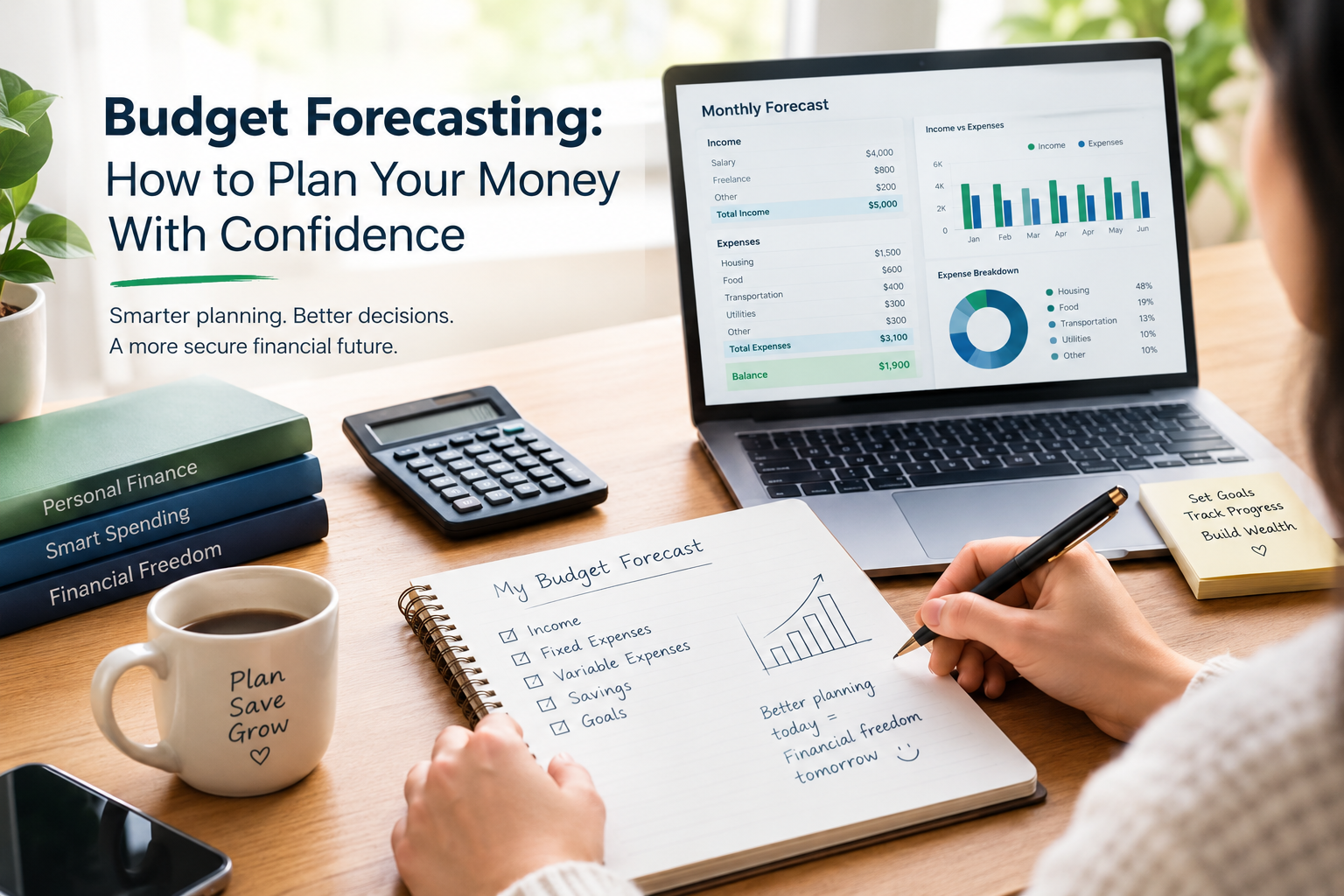
Planning where your money will go is much easier when you have a clear idea of what may happen next. That is where budget forecasting becomes useful. Instead of simply looking at what you spent last month, forecasting helps you estimate future income, expenses, and cash needs so you can prepare before financial problems appear.
Whether you are managing a small business, planning household finances, or trying to control irregular expenses, a good forecast can turn financial guesswork into a more organized process.
In this guide, you will learn what budget forecasting means, how it differs from a traditional budget, what information you need, and how to create a simple forecast that you can actually maintain.
What Is Budget Forecasting?
Budget forecasting is the process of using current financial information, historical data, and expected changes to estimate future income and expenses.
A traditional budget usually describes what you plan to spend and earn during a specific period. A forecast goes one step further by asking what is likely to happen based on the information currently available.
For example, imagine a small online business expects $10,000 in monthly sales. However, recent sales have fallen, advertising costs are increasing, and a seasonal slowdown is approaching. A forecast can reflect those changes instead of continuing to assume that every month will look the same.
This makes forecasting a practical planning tool rather than just a spreadsheet exercise.
Why Budget Forecasting Matters
Financial problems often become easier to manage when you identify them early.
A useful budget forecast can help you:
- Anticipate periods when expenses may rise
- Estimate future cash requirements
- Identify potential cash shortages
- Prepare for seasonal changes
- Adjust spending before problems become serious
- Set more realistic financial goals
- Compare expected results with actual performance
Cash flow is particularly important for businesses. A company can appear profitable on paper but still experience difficulty paying bills if money does not arrive at the right time.
For personal finances, the same basic idea can be applied to irregular expenses such as insurance, annual subscriptions, school costs, travel, or major purchases.
If you’re also building a financial safety net, use our Emergency Fund Calculator to estimate how much you may want to set aside for unexpected expenses.
Budget vs. Forecast: What’s the Difference?
The terms budget and forecast are sometimes used interchangeably, but they serve slightly different purposes.
A Budget Sets the Plan
A budget establishes what you intend to earn, spend, save, or allocate during a particular period.
For example, you might plan to spend $500 on groceries, $200 on transportation, and $300 on entertainment each month.
It gives you a target against which you can measure your actual results.
A Forecast Estimates What May Happen
A forecast is more flexible. It uses updated information to estimate future results.
If your electricity bill suddenly increases, your sales decline, or an unexpected expense appears, you can update the forecast instead of waiting until the end of the year.
This distinction is especially useful for businesses because forecasts can be updated more frequently than annual budgets.
What Should You Include in a Budget Forecast?
You do not need complicated financial software to create a basic forecast. The quality of your forecast depends more on the information you use than on the tool itself.
Start by collecting the following:
Historical Income and Expenses
Look at your previous financial records to identify normal spending patterns.
For a business, this could include sales, payroll, rent, advertising, inventory, utilities, and other operating expenses.
For personal finances, consider salary, freelance income, rent, groceries, transportation, subscriptions, debt payments, and savings.
Fixed and Variable Costs
Separate costs that generally stay the same from those that change.
Fixed costs might include rent, insurance, or subscription payments.
Variable costs could include groceries, utilities, inventory, advertising, or travel.
This makes it easier to understand which expenses are likely to change when circumstances change.
Seasonal Patterns
Some financial activity is predictable but does not occur evenly throughout the year.
A retailer may earn more during the holiday season. A travel business may experience stronger demand during certain months. A household may face higher expenses during school enrollment periods or holidays.
Historical records can help reveal these patterns.
Expected Changes
Do not rely only on the past. Consider changes that are already likely to affect your finances.
These could include:
- A planned price increase
- A new employee
- A change in rent
- A new loan payment
- Expected salary changes
- New equipment purchases
- Expansion into a new market
The aim is not to predict every outcome with perfect accuracy. It is to create a reasonable picture of what your finances could look like.
How to Build a Practical Budget Forecast From Scratch
Creating a budget forecast can be straightforward if you break it into manageable steps.
Start With Your Current Numbers
Gather recent income and expense information. Ideally, use several months of records rather than relying on a single month.
This gives you a more realistic starting point and helps reduce the impact of unusual one-time expenses.
Estimate Future Income
List the income you reasonably expect to receive during each future period.
If income is unpredictable, avoid automatically using your best month as the baseline. A conservative estimate may give you a more useful planning figure.
Estimate Future Expenses
Break expenses into categories and estimate when each payment is likely to occur.
For a business, this could include payroll, supplies, rent, marketing, taxes, and loan payments.
For personal finances, you could include housing, food, transportation, debt payments, savings, and discretionary spending.
Calculate Expected Cash Position
Compare expected incoming money with expected outgoing money.
A simple cash flow forecast can help identify months when cash may be tight. The U.S. Small Business Administration’s guidance on budgets and forecasts also highlights the importance of reviewing financial expectations against actual results and updating forecasts when circumstances change.
Review the Forecast Regularly
A forecast becomes less useful when it is created once and forgotten.
Review your assumptions regularly and compare your forecast with actual results. If your income or expenses change, update the numbers.
Common Budget Forecasting Mistakes to Avoid
Even a simple forecast can become misleading if the assumptions are unrealistic.
Relying Too Heavily on the Past
Historical data is useful, but it does not guarantee that future conditions will remain the same.
Consider changes in prices, demand, income, interest costs, and other factors that could affect your numbers.
Forgetting Irregular Expenses
Annual or occasional expenses can easily be overlooked when you only review monthly spending.
Include expenses such as insurance renewals, equipment replacement, taxes, repairs, holidays, or other predictable large payments.
Making Overly Optimistic Income Estimates
It can be tempting to assume that income will increase every month. A better approach is to base projections on realistic evidence and clearly identify assumptions.
Never Updating the Forecast
A forecast is not supposed to be permanent. New information should lead to new estimates.
Regular reviews make it easier to spot changes before they become financial surprises.
Ways to Get More Value From Your Budget ForecastBudget Forecasting: How to Plan Your Money With Confidence
You do not need dozens of spreadsheets or complicated financial models.
Keep your forecast simple enough that you will actually maintain it.
A useful system can include:
- Monthly income estimates
- Fixed expenses
- Variable expenses
- Expected savings or debt payments
- One-time expenses
- Opening and expected closing cash
- Notes explaining major assumptions
You can also compare your forecast with your actual results each month. If you consistently spend more than expected in one category, investigate why rather than simply changing the number.
If debt reduction is another financial goal, our guide on How to Pay Off Credit Card Debt Fast can help you explore practical ways to approach outstanding balances.
Is Budget Forecasting Only for Businesses?
No. The same basic principles can be useful for individuals and households.
A personal forecast could estimate your income and expenses for the next three, six, or twelve months. This can help you prepare for large purchases, seasonal expenses, debt payments, or changes in income.
For example, if you know that an annual insurance payment is due in six months, you can include it in your forecast now instead of treating it as a surprise later.
The important thing is to use realistic numbers and update them when your financial situation changes.
Final Thoughts on Budget Forecasting
Budget forecasting is not about predicting the future perfectly. It is about making better financial decisions with the information you have today.
A useful forecast starts with reliable financial records, realistic assumptions, and a clear understanding of upcoming income and expenses. From there, regular reviews can help you identify problems early and adjust your plans when circumstances change.
Whether you are managing household money or running a business, the simplest forecasting system you consistently maintain is often more useful than a complicated model you rarely update.
Start with your recent income and expenses, build a basic forecast, and review it regularly. Over time, those small habits can give you a much clearer picture of where your money is going and what may be coming next.