The Best Fluffy Pancakes recipe you will fall in love with. Full of tips and tricks to help you make the best pancakes.

How to Dress for a Job Interview When the Dress Code Isn’t Clear
Knowing how to dress for a job interview can feel difficult when the company hasn’t provided a clear dress code or explained what employees typically wear.Interview invitations almost never specify a dress code, which leaves candidates guessing between two competing instincts — dress conservatively and risk looking stiff or out of touch with a company’s actual culture, or dress more casually and risk reading as underprepared for the moment. Neither guess is unreasonable, which is exactly the problem. The right answer depends heavily on the specific industry, company, and role, more than any single universal rule ever could.
This guide covers how to figure out what actually fits a given interview, rather than a single fixed outfit that’s supposed to work everywhere.
Look Into the Company Culture Before Choosing Your Interview Outfit
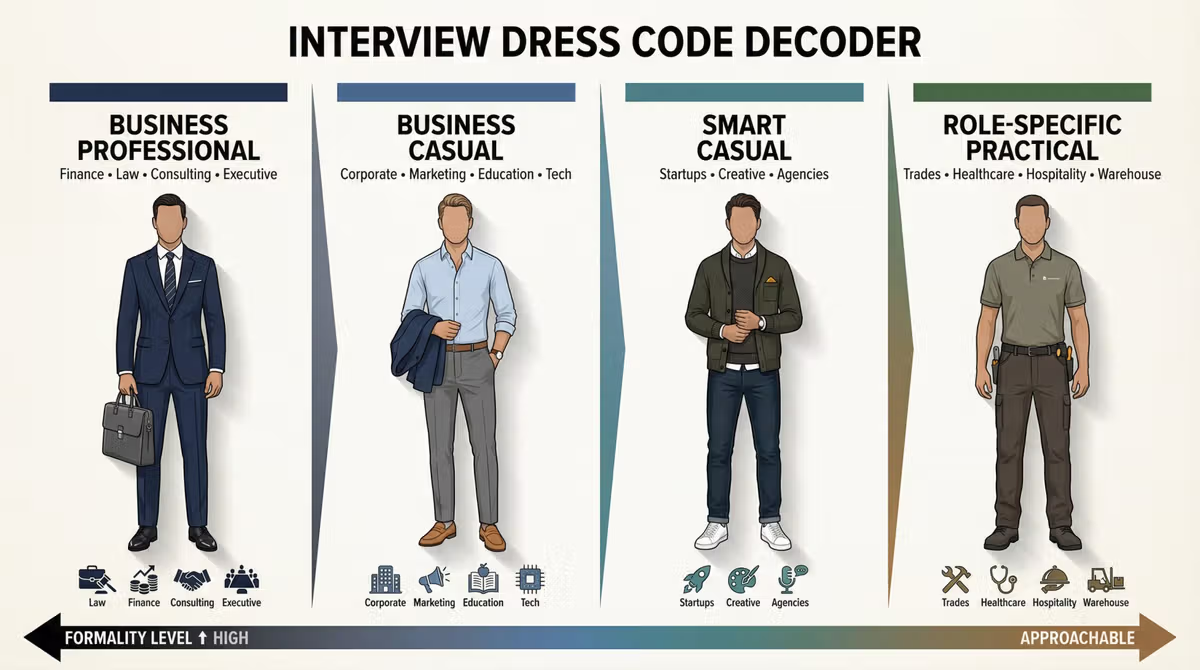
The company’s own visual culture is usually the best clue available, and it’s worth checking before defaulting to guesswork. A company’s website, LinkedIn page, and social media presence often show what employees actually wear day to day, which tends to be a far more reliable signal than industry stereotypes alone. A law firm or bank still generally calls for traditional business formal, while a tech startup or creative agency often runs considerably more casual, sometimes to the point where a full suit would read as overdressed and slightly out of touch with the office’s actual norms.
When in Doubt, Dress Slightly Above the Company’s Everyday Norm
If research doesn’t turn up a clear answer, a reliable default is dressing one notch more formal than what employees appear to wear day to day, without going all the way to a level that feels disconnected from the company’s actual culture. This shows respect for the interview as a genuinely important occasion without signaling that you’ve misread the company’s actual environment entirely. Overdressing slightly is generally safer than underdressing, since it reads as effort and preparation rather than the alternative, which can read as not taking the interview seriously enough.
Business Formal: Still the Safe Default for Traditional Industries
For law, finance, consulting, and other traditionally conservative industries, a well-fitted suit remains the standard expectation, and deviating from it carries real risk in these specific contexts. Neutral colors — navy, charcoal, black — read as safest and most broadly appropriate, and a conservative tie or simple accessories complete the look without introducing anything that could distract from the actual interview conversation. Shoes matter more than people expect here too, since polished, well-maintained dress shoes signal the same attention to detail traditional industries tend to value in the work itself.
Business Casual: The Safe Middle Ground for Most Job Interviews
Most industries and companies fall somewhere in business casual territory for interviews — tailored trousers or a skirt, a blazer, a button-down or blouse, without requiring a full suit. This tends to be the safest default for interviews at companies with unclear or genuinely mixed dress cultures, since it reads as put-together and professional without overcommitting to a formality level that might not actually match the office. If you’re unsure exactly where a specific company falls, this middle ground tends to work reasonably well across a wider range of situations than either extreme.
Casual and Creative Industries Still Expect Some Effort
Even at companies with genuinely casual everyday dress codes — many tech startups, creative agencies, and similar workplaces — showing up in the exact same clothes you’d wear on a random Tuesday can still read as underprepared for an interview specifically, even in an otherwise relaxed environment. A step up from daily casual wear — clean, well-fitted clothing, perhaps a blazer or structured piece layered over a more casual base — signals effort without feeling disconnected from the company’s actual relaxed culture. The goal in these settings is looking intentional rather than simply formal for its own sake.
Video Interviews Still Deserve Real Attention
Remote and video interviews have become common enough that it’s worth addressing directly — the same dress code principles apply, even though only the upper body is typically visible on camera. Dressing fully, not just from the waist up, tends to help mentally shift into interview mode rather than a casual at-home mindset, and it also protects against an awkward moment if you need to stand up unexpectedly during the call. Solid colors generally read better on camera than busy patterns, which can look distracting or even visually strobe on lower-quality video connections.
A Polished Appearance Goes Beyond the Clothes You Wear
Clothing choices matter, but overall grooming and presentation carry real weight too — neat, well-maintained hair, minimal and appropriate accessories, and clean, unwrinkled clothing all contribute to a polished first impression that a technically correct outfit alone doesn’t fully deliver on its own. Testing an outfit ahead of time — sitting down in it, checking it in different lighting for a video interview specifically — helps catch fit or wrinkle issues before the actual interview rather than discovering them in the moment.
If you’re building out a broader professional wardrobe rather than dressing for a single interview, our guide on smart casual wear covers a related, slightly more relaxed dress code that comes up frequently once you’ve landed the job and need everyday work outfits beyond interview-specific attire.
Common Interview Outfit Mistakes
Wearing something brand new and completely untested to the actual interview risks discovering a fit issue, an uncomfortable seam, or a color that doesn’t photograph well on camera at the worst possible moment.
Overdoing cologne or perfume can be genuinely distracting in a small interview room, and it’s worth erring toward minimal or no fragrance rather than risking an interviewer’s sensitivity to strong scents.
Ignoring shoes, assuming they’re less visible or less important than the rest of the outfit, is a mistake — worn-out or poorly maintained shoes stand out more than people expect, particularly in more traditional, formal industries.
Frequently Asked Questions
Is it better to overdress or underdress for a job interview? Generally, overdressing slightly is safer — it reads as effort and preparation, while underdressing can suggest you haven’t taken the interview or the company’s culture seriously enough.
Do I need to dress formally for a video interview? Yes, generally the same dress code principles apply as an in-person interview, dressed fully rather than just from the waist up, both for mindset and in case you need to stand during the call.
How do I find out a company’s actual dress code before an interview? Checking the company’s website, LinkedIn, and social media for photos of employees at work is usually more reliable than guessing based on industry stereotypes alone.
Is business casual appropriate for most job interviews? Yes, it’s generally a safe middle ground for companies without a clearly defined formal or casual dress culture, reading as professional without overcommitting to a formality level that might not match the office.
The Bottom Line
Dressing for a job interview comes down to research and a reasonable default, more than memorizing a single universal outfit — check what the company’s culture actually looks like if you can, and when in doubt, dress one notch more formal than the everyday norm rather than risking underdressing. Getting this right removes one more variable to worry about, so the actual interview conversation gets your full attention rather than a lingering concern about whether the outfit was the right call.
For further reading on professional dress codes and interview preparation, The Muse’s career advice section offers reliable, practical guidance worth referencing alongside this.