The Best Fluffy Pancakes recipe you will fall in love with. Full of tips and tricks to help you make the best pancakes.

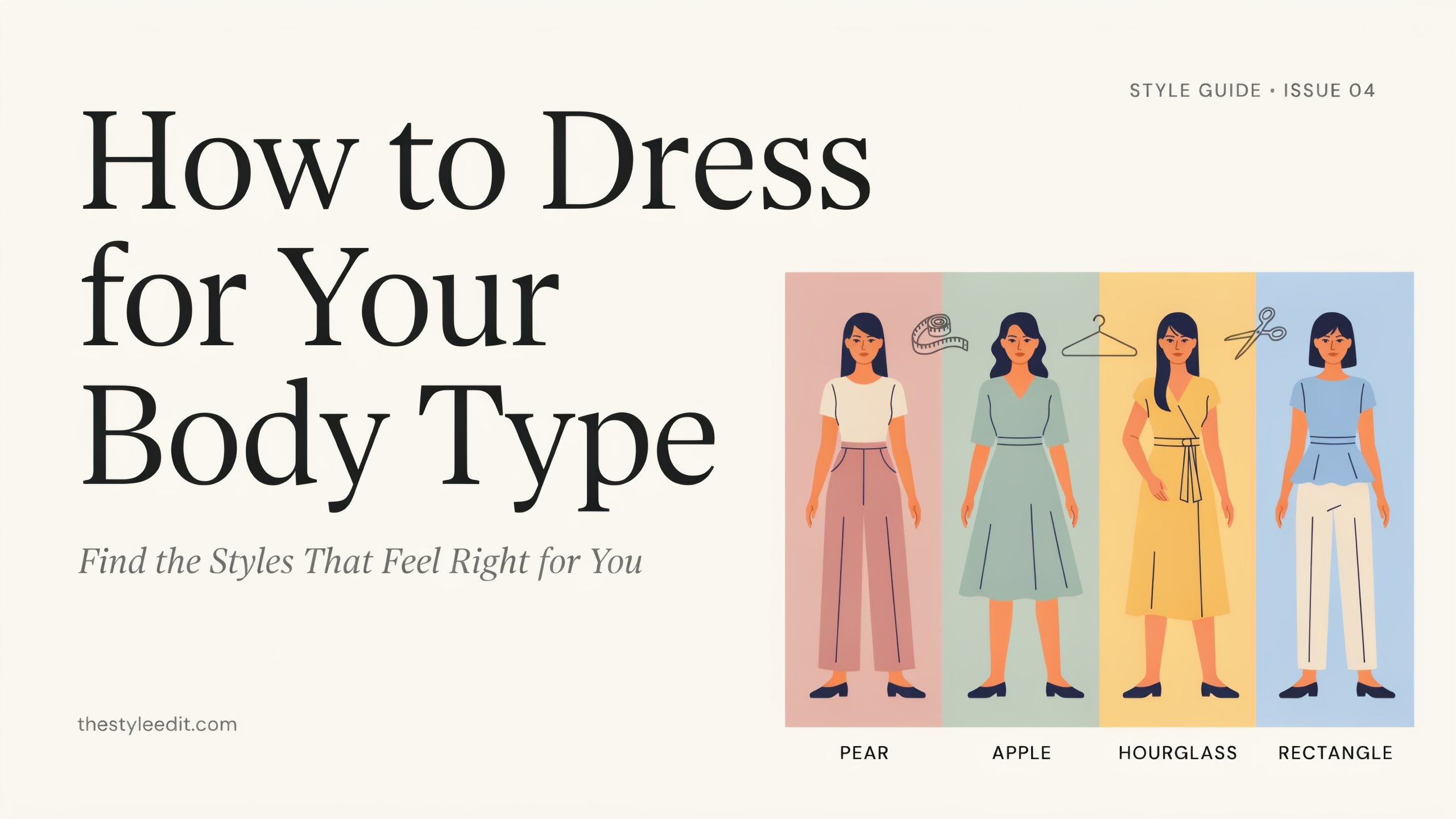
Learning how to dress for your body type does not have to mean memorizing confusing rules or trying to fit yourself into a category like pear, apple, rectangle, or hourglass.
The truth is much simpler: the best clothes are the ones that fit well, feel comfortable, and create a silhouette you genuinely enjoy wearing.
Instead of following a strict body-shape chart, it is more helpful to understand a few important styling principles. Fit, proportion, fabric, volume, and the placement of different design details can all change the way an outfit looks and feels.
This guide will help you understand how to dress for your body type in a more practical and flexible way—without turning fashion into a list of rules.
Start With Your Own Proportions, Not a Label
Traditional body-type advice often encourages people to identify themselves with a specific shape. While those categories can sometimes provide a basic starting point, they do not tell the full story.
Two people with the same so-called body type can have completely different proportions. Their shoulder width, torso length, waist placement, leg length, and personal style preferences may all be different.
That is why it is better to look at your individual proportions.
Pay attention to questions like:
- Where does your natural waist sit?
- Do you prefer more definition around the waist?
- Which areas do you like to highlight?
- Do you prefer balanced or oversized silhouettes?
- What features do you naturally enjoy drawing attention to?
Once you start noticing these details, shopping and styling become much easier.
The goal is not to hide or “fix” your body. The goal is to understand how different clothes create different visual effects.
Focus on How It Fits, Not the Size on the Label
One of the most important lessons in learning how to dress for your body type is that fit matters more than the size written on a label.
Clothing sizes are not consistent across brands. A medium in one store may fit completely differently from a medium somewhere else.
Instead of focusing too much on the number, pay attention to how the garment fits your body.
Look for details such as:
- Shoulder seams sitting comfortably in the right place
- Waistbands that do not dig in or gap
- Pants that move comfortably when you sit and walk
- Shirts that do not pull across the chest or back
- Sleeves and hemlines that feel proportionate
A well-fitted affordable item can often look more polished than an expensive piece that does not fit properly.
Tailoring can also make a significant difference. Small adjustments to the waist, sleeve length, or trouser hem can completely improve the appearance of an outfit.
Use Proportion to Create the Look You Want
Proportion is one of the most useful tools in personal style.
Every outfit creates a visual balance between the upper and lower body. Changing the volume, length, or fit of one piece can completely change the overall silhouette.
For example, you might combine:
- A relaxed top with fitted pants
- A fitted shirt with wide-leg trousers
- A cropped jacket with high-waisted bottoms
- A loose sweater with a structured skirt
None of these combinations are universally “correct.” They simply create different visual effects.
If you wear an oversized piece on top and another oversized piece on the bottom, the result may feel relaxed and modern. If you pair one loose piece with something more fitted, you may create stronger contrast and definition.
Experiment with different combinations until you find proportions that feel natural to you.
Think Carefully About Where Clothing Adds Volume
The placement of volume can significantly affect an outfit.
Structured shoulders, puff sleeves, wide-leg pants, layered skirts, oversized jackets, and flowing fabrics all add visual volume in different areas.
For example, a jacket with more structure around the shoulders can draw attention upward. Wide-leg trousers can create more volume in the lower half. A fitted waist combined with a fuller skirt can create stronger definition.
The important thing is to use volume intentionally.
Ask yourself what kind of silhouette you want to create.
Do you want something relaxed and oversized? More defined around the waist? Balanced from top to bottom?
Once you know the effect you want, it becomes easier to choose the right clothing pieces.
Choose Necklines and Hemlines That Work for You
Small details can make a surprisingly big difference when dressing for your body.
Necklines can change the appearance of the upper body, while hemlines influence where the eye naturally moves.
You might experiment with:
- V-necks
- Crew necks
- Square necklines
- Boat necks
- Collared shirts
- Higher or lower necklines
Similarly, the length of a shirt, jacket, skirt, or pair of shorts can affect the overall proportion of an outfit.
Try paying attention to where a hemline ends. A slightly shorter or longer jacket may create a completely different visual effect.
The best approach is to try different options rather than assuming one style will always work better.
Understand How Lines Influence an Outfit
Lines naturally guide the eye, which means they can influence how an outfit appears.
Vertical details often create a sense of length. These might include:
- Vertical seams
- Long coats
- Open jackets
- Pinstripes
- Monochrome outfits
Horizontal details can create emphasis across a particular area. Examples include:
- Wide belts
- Horizontal stripes
- Contrasting waistbands
- Cropped tops
Neither effect is automatically good or bad.
A horizontal detail may be exactly what you want if you are trying to add visual interest to a specific area. Vertical elements may help create a longer, cleaner silhouette.
The key is understanding the effect rather than following a rule that says you should always avoid or always wear something.
Pay Attention to Fabric and Structure
The same clothing design can look completely different depending on the fabric.
Structured fabrics tend to hold their shape. They can create sharper lines and more definition.
Soft fabrics usually move more naturally with the body. They may drape, flow, or skim the body differently.
For example, a blazer made from a structured material creates a very different silhouette from a soft cardigan. Similarly, wide-leg trousers in a heavy fabric may look more tailored, while a lightweight fabric may create a flowing appearance.
When shopping, do not look only at the style of the garment. Pay attention to how the material behaves.
Understanding fabric can make it much easier to choose clothes that match the look you want to achieve.
Build Outfits Around What Makes You Feel Confident
The best way to develop your personal style is to notice patterns.
Which clothes do you repeatedly reach for?
Which outfits make you feel comfortable and confident?
Which cuts consistently work well for your lifestyle?
Instead of relying on a body-type chart, build your wardrobe around those observations.
You can also apply this approach when creating a more practical wardrobe. For example, if you are trying to buy fewer but more useful pieces, our guide on building a capsule wardrobe on a budget can help you choose clothing that works well together.
A strong wardrobe does not need to contain every trend. It should contain pieces that you can actually wear and style in multiple ways.
Explore Different Silhouettes Before Settling on Your Style
Many people avoid certain clothing styles because they assume those styles will not suit their body.
But fashion can be surprising.
You may think wide-leg pants will not work for you and then discover that you love them. You might avoid cropped jackets until you try one with high-waisted trousers and find that the combination feels perfect.
That is why experimentation matters.
When trying new clothes, focus on:
- Comfort
- Movement
- Overall proportion
- Personal preference
- How easy the item is to style
Do not reject something simply because a traditional style guide says it is not recommended for your body shape.
Your personal experience matters more than a generic chart.
Avoid These Common Body-Type Dressing Mistakes
Following Fashion Rules Too Strictly
Fashion advice should be used as inspiration, not as a permanent rulebook.
If you like a particular silhouette, there is no reason to avoid it simply because someone says it is not designed for your body type.
Ignoring Proper Fit
An outfit can have a great design and still look uncomfortable if the fit is wrong.
Always prioritize how the garment sits on your body.
Letting Trends Dictate Every Clothing Choice
Trends change quickly. Instead of buying something simply because it is popular, think about whether it works with your existing wardrobe.
A useful question to ask is: Will I realistically wear this more than once?
Wearing Only One Type of Silhouette
It is easy to get comfortable with one style of clothing. However, experimenting with different proportions can help you discover new looks that you genuinely enjoy.
Try different combinations before deciding that a certain style is not for you.
How to Choose Clothes That Work With Your Natural Shape
Shopping becomes easier when you focus on fit and versatility instead of categories.
Before buying something, ask yourself:
- Does this fit comfortably?
- Can I move easily in it?
- Does the fabric feel good?
- Can I style it with clothes I already own?
- Would I wear it in my everyday life?
- Do I actually like how I feel wearing it?
These questions are more useful than simply asking whether a clothing item is suitable for a specific body type.
You can also improve your shopping decisions by learning more about creating a functional wardrobe and choosing pieces that work with your existing clothing.
Fashion publications such as Who What Wear also provide useful inspiration for exploring different outfit ideas and styling approaches.
Frequently Asked Questions
How do I know how to dress for my body type?
Start by focusing on your individual proportions rather than trying to fit yourself into a strict category. Experiment with different fits, silhouettes, fabrics, and outfit combinations to discover what makes you feel comfortable and confident.
Do body-type categories really matter?
They can provide a basic starting point, but they are not essential. Understanding fit, proportion, and personal preference is often more useful than following a specific body-shape label.
Should I always follow fashion rules for my body type?
No. Fashion rules should be treated as suggestions rather than strict requirements. Personal style is about finding clothes and silhouettes that work for you.
Does clothing size matter when choosing an outfit?
The number on the tag is less important than how the garment actually fits. Sizes vary between brands, so focus on comfort and fit instead of a specific number.
Can tailoring improve how clothes look?
Yes. Small adjustments can significantly improve the fit and appearance of clothing, especially around the waist, sleeves, shoulders, and trouser length.
Final Thoughts
Learning how to dress for your body type is not about finding the perfect category or following a list of fashion rules.
It is about understanding your proportions, choosing clothes that fit properly, experimenting with different silhouettes, and paying attention to what makes you feel confident.
Fit, fabric, volume, and proportion are useful tools, but personal style should always leave room for experimentation.
The best outfit is not necessarily the one that follows every fashion rule. It is the one that feels comfortable, suits your lifestyle, and helps you feel like yourself.
Start with the clothes you already own, try new combinations, and pay attention to what works for you. Over time, you will naturally develop a clearer understanding of your personal style—and that is far more useful than any body-shape chart.