
The Best Fluffy Pancakes recipe you will fall in love with. Full of tips and tricks to help you make the best pancakes.

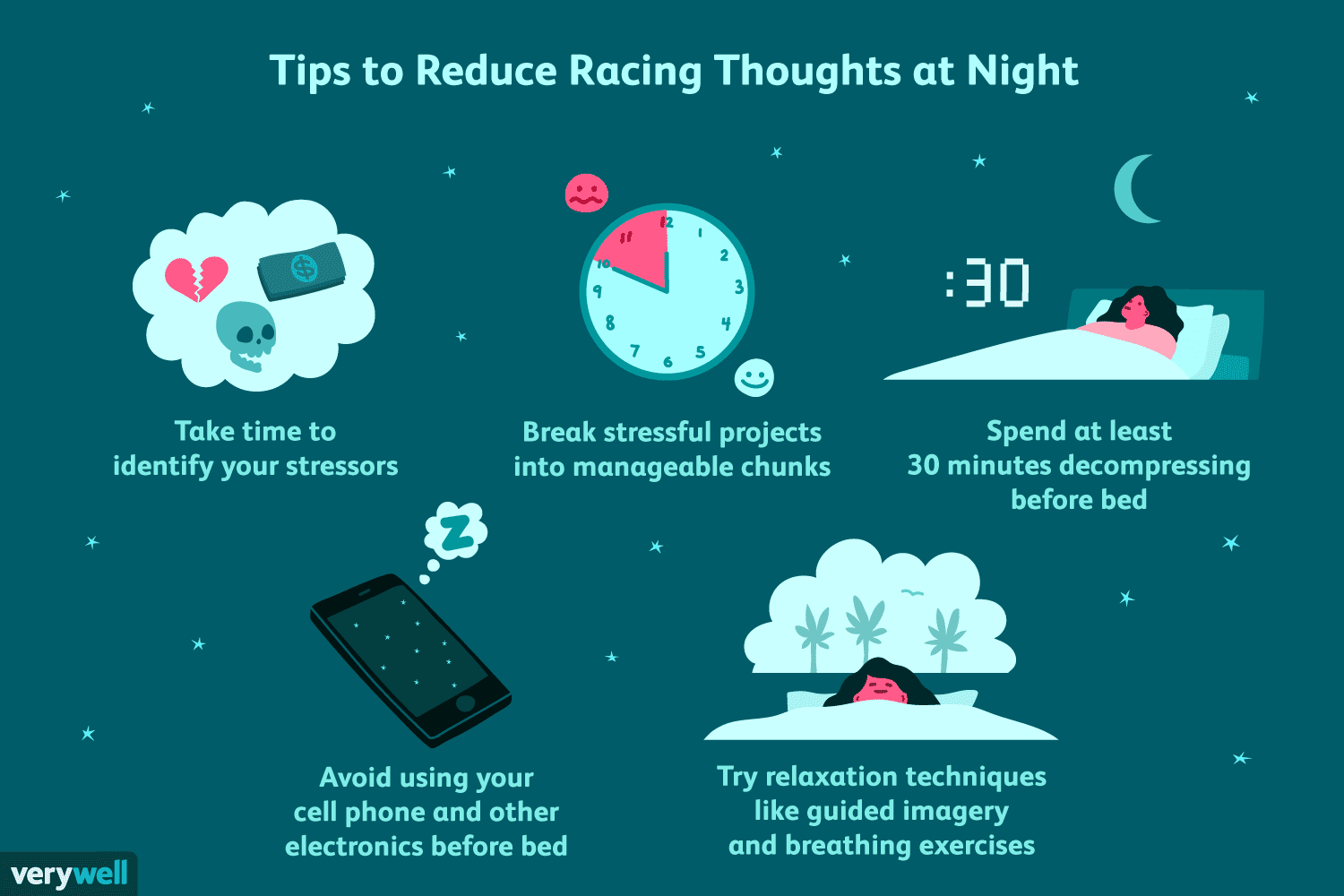
The moment your body finally slows down, your mind speeds up. A conversation from earlier replays on a loop, tomorrow’s to-do list expands into a dozen worst-case scenarios, and sleep — which felt so close a minute ago — suddenly feels far away. Overthinking at night is one of the most common reasons people struggle to fall asleep, and it has almost nothing to do with how physically tired you are.
This guide explains why overthinking specifically ramps up at night, and walks through techniques that actually interrupt it — both in the moment and as a longer-term pattern.
Why Overthinking Gets Worse at Night Specifically
During the day, your attention is pulled in dozens of directions — work, conversations, screens, errands. At night, once that external noise disappears and you’re finally lying still, your brain has nothing left to compete with your own thoughts for attention. Add to that the natural daily rhythm of cortisol, a stress hormone that’s supposed to taper off in the evening — for some people it doesn’t drop as cleanly as it should, leaving the nervous system running slightly hotter right at the moment it’s supposed to power down.
In other words, nighttime overthinking usually isn’t a sign that something is uniquely wrong with you. It’s what tends to happen when an unprocessed, still-activated mind finally gets quiet enough to be heard.
The Difference Between Normal Nighttime Thoughts and a Real Problem
Occasional racing thoughts before sleep are extremely common and not something to worry about on their own. It becomes more of a concern when it happens most nights, significantly delays falling asleep, or comes with physical symptoms like a racing heart or shallow breathing. Frequency and intensity matter more than the fact that it happens at all.
In-the-Moment Techniques (Use Tonight)
1. Do a Quick “Brain Dump”
Keep a notebook by your bed and spend a few minutes writing down whatever’s circling in your head — tasks, worries, random thoughts. Externalizing a thought onto paper reduces your brain’s need to keep actively holding onto it, which is often enough to quiet the loop on its own.
2. Try the 4-7-8 Breathing Pattern
Inhale for 4 seconds, hold for 7, exhale slowly for 8. Repeat 4–5 times. Slow, controlled breathing activates your parasympathetic nervous system — the body’s “rest and recover” state — while the counting itself gives your mind something concrete to focus on besides your worries.
3. Use a Grounding Exercise
The “5-4-3-2-1” method pulls your attention out of your head and into your physical surroundings: silently name 5 things you can hear, 4 things you can feel, 3 things you can smell, 2 things you’re aware of, and 1 thing you can taste. This multi-sensory shift makes it hard for racing thoughts to keep dominating your attention.
4. Separate What You Can Act On From What You Can’t
When a thought surfaces, ask: is there anything I can actually do about this right now? If yes, jot it down to handle tomorrow. If no — it’s outside your control tonight regardless — consciously naming that can loosen its grip, even if it doesn’t make the thought disappear entirely.
5. Get Up If You’ve Been Lying Awake Too Long
If you’ve been overthinking in bed for more than 20 minutes, get up and do something calm in dim light — light stretching, reading a physical book, sitting quietly — and go back to bed only once you feel genuinely drowsy. This prevents your brain from associating your bed itself with the frustration of lying awake overthinking.
Longer-Term Habits That Reduce How Often It Happens
Build a Consistent Wind-Down Routine
A predictable pre-sleep routine signals to your brain that the day is ending and it’s safe to switch off, making it harder for your mind to justify staying “on.” If sleep more broadly has been a struggle, our guide on how to improve sleep quality naturally covers the full picture of evening habits that support this.
Address Daytime Stress, Not Just the Symptom
If overthinking at night happens most nights, it’s often a sign stress isn’t being processed during the day — it’s being pushed down until things get quiet enough for it to surface. Short breaks, a few minutes of journaling, or even a daily walk can reduce how much unprocessed mental load builds up by bedtime.
Reduce Screens in the Hour Before Bed
Scrolling before bed does double duty against you — it delays melatonin release through light exposure, and it frequently introduces new things to worry about right when you’re trying to wind down. Keeping your phone out of arm’s reach removes the easiest path back into a thought spiral.
Practice Structured Reflection Earlier in the Evening
Moving your mental processing earlier — writing down tomorrow’s tasks or today’s lingering worries an hour or two before bed — can prevent the same loop from starting fresh once you’re finally trying to fall asleep. This pairs well with the broader habit-building approach in our self-improvement tips guide if you want to build it into a consistent nightly practice.
What to Do in the Moment vs. What to Build Long-Term
It helps to think of these two categories separately. Tonight: brain dump, breathing exercises, grounding techniques, getting out of bed if needed. This month: a consistent wind-down routine, daytime stress management, reduced evening screen time, and improving sleep quality overall. Relying only on in-the-moment techniques without addressing the daytime stress underneath them tends to produce relief that keeps returning night after night — combining both approaches works better than either alone.
Your Bedroom Environment Plays a Bigger Role Than You’d Think
A cluttered nightstand covered in unfinished tasks, a laptop sitting open across the room, or a glowing clock display can all act as small, subconscious reminders of things left undone — quietly feeding a racing mind before you’ve even noticed the trigger. Keeping your bedroom reserved as much as possible for sleep, and moving visible reminders of work or responsibilities out of your direct line of sight, removes some of these background triggers that keep your brain leaning toward “thinking mode” instead of “rest mode.”
Catastrophic Thinking: Why Small Worries Escalate at Night
Nighttime overthinking has a habit of jumping straight to worst-case scenarios — a minor work mistake becomes “I’m going to lose my job,” a small disagreement becomes “this relationship is falling apart.” When you catch this pattern, gently ask yourself what the most likely outcome actually is, not just the worst one. This isn’t about forcing false positivity — it’s about interrupting the automatic leap to the most extreme possible version of events, which tends to feel far more urgent at 1 a.m. than it will in daylight.
When to Consider Talking to Someone
Occasional overthinking is a normal part of being human. But if it’s severe, happens most nights, comes with physical symptoms like a racing heart or difficulty breathing, or is connected to broader anxiety affecting your daily life, it’s worth talking to a doctor or therapist rather than relying on self-help techniques alone. According to the National Institute of Mental Health, persistent, difficult-to-control worry that interferes with daily functioning is a common and treatable condition — not something you’re expected to just push through indefinitely on your own.
Frequently Asked Questions
Why do I only overthink at night and not during the day? Daytime distractions keep your attention occupied elsewhere. At night, with fewer distractions and a quiet room, your brain finally has space to process thoughts it didn’t get to earlier — which often surfaces as worry or rumination.
Is overthinking at night always a sign of anxiety? Not necessarily. It’s extremely common even in people without a diagnosed anxiety condition. Frequency and severity matter — occasional racing thoughts are normal, while nightly, distressing overthinking that affects your daily life is worth discussing with a professional.
How quickly do these techniques work? Some, like breathing exercises and grounding techniques, can help within minutes. Others, like reducing daytime stress or building a wind-down routine, typically take a couple of weeks of consistency before you notice a meaningful shift.
Should I try to just force the thoughts away? Actively suppressing a thought tends to make it more persistent, a well-documented psychological effect. It’s usually more effective to redirect attention — through breathing, grounding, or writing thoughts down — than to fight the thought head-on.
Conclusion
Overthinking at night isn’t really about your thoughts being wrong — it’s about timing. Your brain finally has quiet space to process everything it didn’t get to during the day. A brain dump, breathing techniques, and grounding exercises can help tonight, but addressing daytime stress and building a consistent wind-down routine is what actually reduces how often it happens in the first place. Start with one technique tonight, and build the rest gradually from there.
This article is for general informational purposes and is not a substitute for professional medical or mental health advice. If overthinking is significantly affecting your daily life, consider speaking with a doctor or therapist.