
The Best Fluffy Pancakes recipe you will fall in love with. Full of tips and tricks to help you make the best pancakes.

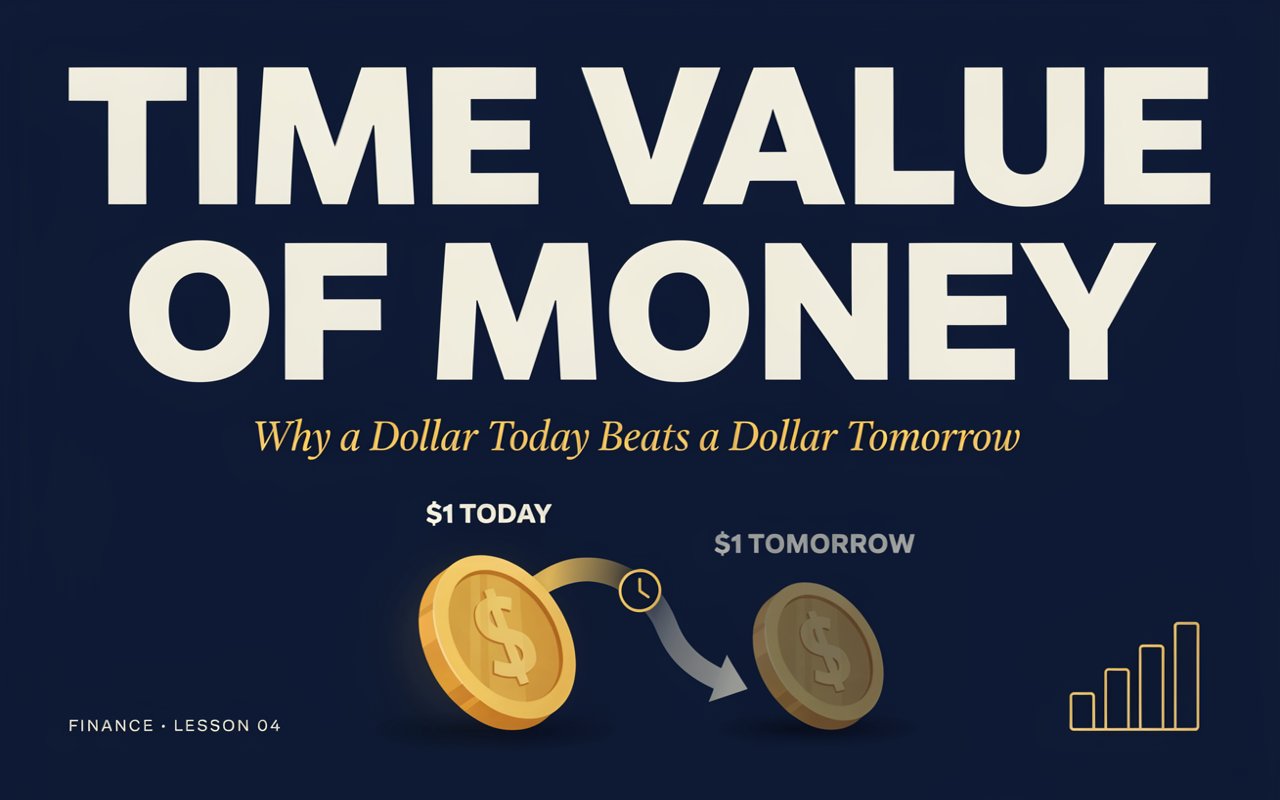
Would you rather have $1,000 today or $1,000 a year from now? Most people instinctively say “today” — and that instinct is actually one of the most important concepts in finance, known as the time value of money (TVM).
It’s the foundation behind why interest exists, why investing early matters more than investing large amounts later, why loans cost more the longer you take to repay them, and why financial advisors keep telling you to start saving now instead of “later.” This guide breaks the concept down in plain language, with real numbers, so you can actually use it in your own financial decisions.
What Is the Time Value of Money?
The time value of money is the idea that a specific amount of money is worth more right now than the same amount in the future, because money available today can be invested, earn interest, or grow in value over time. A dollar today has earning potential that a dollar received a year from now simply doesn’t have yet.
This isn’t just a theoretical idea — it’s the core principle behind almost every financial product you interact with: savings accounts, loans, mortgages, retirement accounts, and business investment decisions all rely on time value of money calculations.
Why Money Loses Value Over Time
Three forces work against money sitting idle:
Inflation — Prices generally rise over time, meaning the same amount of money buys less in the future than it does today. Even a modest 3% annual inflation rate meaningfully erodes purchasing power over a decade.
Opportunity cost — Money you could have invested today, but didn’t, means missing out on the returns that money could have earned. That missed growth is a real cost, even though it doesn’t show up on a receipt.
Risk — A dollar promised to you in the future carries some risk it may not actually materialize — a person could fail to repay a debt, a company could go under, or circumstances could change. Money in hand today carries no such uncertainty.
The Two Core Concepts: Present Value and Future Value
Future Value (FV)
Future value tells you what a sum of money today will grow to be worth at a future date, assuming a certain interest or growth rate. This is the concept behind compound interest — the idea that your money doesn’t just grow, it grows on its own growth.
Simple formula: FV = PV × (1 + r)^n
Where PV is the present value (starting amount), r is the interest rate per period, and n is the number of periods.
Example: If you invest $1,000 today at a 7% annual return, in 10 years it grows to roughly $1,967 — nearly double, without adding another cent.
Present Value (PV)
Present value works in the opposite direction — it tells you what a future sum of money is worth today, given a certain discount rate (essentially, the return you could otherwise earn). This is useful for answering questions like: “Is $10,000 five years from now actually a good deal, or would I be better off with less money today?”
Simple formula: PV = FV / (1 + r)^n
Example: $10,000 received 5 years from now, discounted at a 7% rate, is worth about $7,130 in today’s money — meaning if someone offered you $7,500 today instead, taking the cash today would actually be the better deal.
Real-Life Examples of Time Value of Money
1. Why Starting to Invest Early Matters More Than Investing More Later
Someone who invests $200/month starting at age 25 will typically end up with significantly more money by retirement than someone who invests $400/month starting at age 35 — even though the second person contributed more total money — simply because the first person’s money had more time to compound. This is the single biggest argument for starting retirement savings as early as possible, even with small amounts.
2. Why Loan Interest Adds Up So Much Over Time
When you borrow money, the lender is essentially charging you for the time value of the money they’re giving up. The longer the loan term, the more total interest you pay — which is why a 30-year mortgage costs significantly more in total interest than a 15-year mortgage on the same amount, even at a similar rate.
3. Why “Buy Now, Pay Later” Isn’t Always as Good as It Sounds
Deferring payment feels like a win, but if that same money could have been invested or used to pay down higher-interest debt in the meantime, delaying payment isn’t automatically the better financial move — it depends on what the money would otherwise be doing.
4. Why Lottery Winners Often Choose the Lump Sum Over Annual Payments
Lottery jackpots are often advertised as a large total paid out over decades, but the lump-sum option (a smaller amount paid immediately) reflects the present value of those future payments. Financially sophisticated winners often take the lump sum specifically because they can invest it and potentially end up ahead of the total annuity payout.
How to Use Time Value of Money in Everyday Decisions
You don’t need to run formulas for every purchase, but the underlying logic is worth applying to bigger decisions:
- Retirement savings: Every year you delay contributing meaningfully reduces the compounding time your money has to grow — this is why starting even small contributions early tends to outperform larger contributions started later.
- Debt payoff order: High-interest debt (like credit cards) effectively “grows against you” the same way investments grow for you, which is why paying it off aggressively is usually a better use of extra money than most other financial moves.
- Big purchases: When comparing financing options, look at total cost over time, not just the monthly payment — a lower monthly payment stretched over more years can cost significantly more overall.
- Negotiating settlements or payouts: If you’re ever offered a choice between a smaller amount now or a larger amount later, running a rough present-value comparison can clarify which option is actually better, rather than relying on gut instinct.
If you’re working through bigger financial decisions like these, our business finance guide covers the broader framework for building a solid financial foundation, which pairs well with understanding time value of money specifically.
Common Mistakes People Make With Time Value of Money
Ignoring inflation when comparing offers. A raise that sounds impressive can still represent a pay cut in real terms if it doesn’t keep pace with inflation.
Underestimating how much early investing matters. Many people assume they’ll “catch up later” with bigger contributions, without realizing how much of an advantage time itself provides — no later contribution fully replaces years of lost compounding.
Overvaluing money in hand without considering what it could do. Choosing a smaller amount today just because it feels safer isn’t always wrong, but it should be a deliberate choice, not a default one made without comparing the numbers.
A Simple Way to Remember It
Think of money like a plant seed rather than a static object. A seed planted today has years to grow into something much bigger. The same seed planted five years from now starts from zero, years behind. Time value of money is really just this idea applied to dollars instead of plants — the earlier money is “planted,” the more time it has to grow into something larger.
Frequently Asked Questions
What is a simple definition of time value of money? It’s the financial principle that money available today is worth more than the same amount in the future, because it has the potential to grow through interest or investment returns.
What’s a good discount rate to use for present value calculations? It depends on context — often a realistic expected investment return (commonly 5–8% for long-term calculations) or a specific interest rate relevant to the decision, like a loan rate. There’s no single “correct” rate; it should reflect what your money could reasonably earn elsewhere.
Does time value of money apply to savings accounts too? Yes — it’s the same principle behind compound interest in a savings account. The earlier money is deposited, the more time it has to earn interest on interest.
Is time value of money only relevant for investors? No — it applies to loans, mortgages, retirement planning, insurance payouts, and even everyday decisions like whether to pay a bill early or take a payment plan. Anyone who deals with money over time is affected by it, whether they realize it or not.
Related Reading
For a broader look at building financial habits beyond this single concept, check out our business finance guide, which covers budgeting, planning, and financial fundamentals in more detail.
Conclusion
The time value of money isn’t just an academic finance term — it’s the reason starting to save early matters more than saving a lot later, why loan terms affect total cost so heavily, and why comparing “money now vs. money later” deserves more than gut instinct. Once you understand this one principle, a surprising number of financial decisions — from retirement accounts to loan terms to lump-sum payouts — start making a lot more sense.
According to Investor.gov, the U.S. Securities and Exchange Commission’s official investor education site, understanding how compounding works over time is one of the most important foundations of long-term investing — which is precisely the mechanism behind the time value of money.